Quick understanding
- Why is Huazang Temple connected to the Golden Summit?
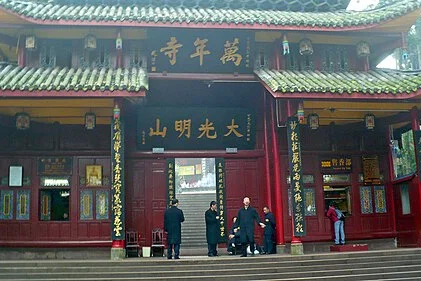
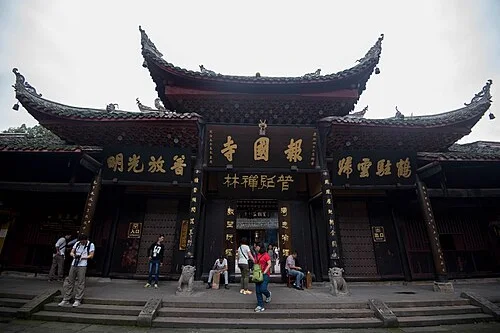
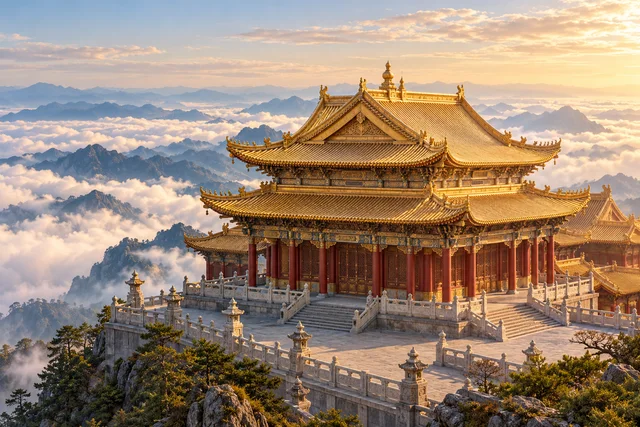
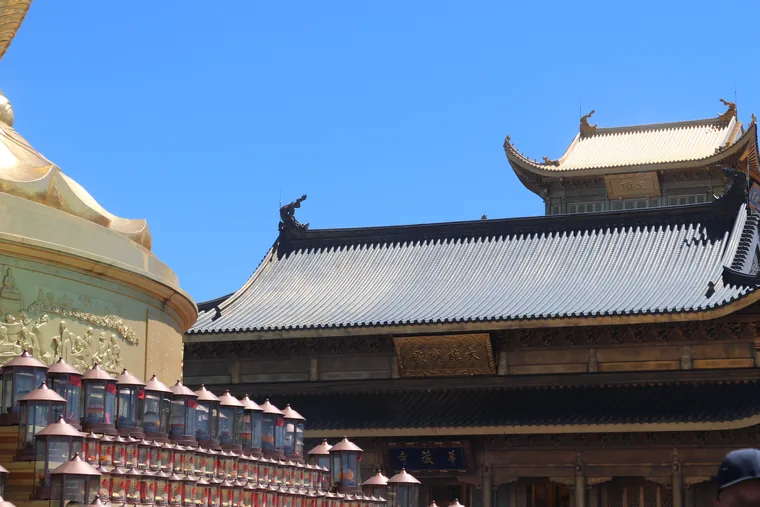
The Golden Temple is an important temple in Huazang Temple, and the Golden Summit has also become the name of the area. There are also independent spaces such as Woyun Temple in the area, so all the temples on the Golden Summit cannot be regarded as the same temple.
- Who is the main person being honored here?
Samantabhadra is an important theme in the Golden Hall and the modern ten-direction statue. Maitreya and other halls provide further themes near the entrance.
- Are the Samantabhadra of the Ten Directions ten different Bodhisattvas?
The artistic theme of Samantabhadra's vows is presented here in the shape of ten faces. They are not ten unrelated Bodhisattvas, nor do they promise different realistic results according to each face.
- Location
- Mount Emei, Sichuan·Golden Summit
- Complete temple name
- Yongming Huazang Temple
- Notable figures venerated
- Golden Palace Samantabhadra and Ten Directions Samantabhadra theme
- Building Hierarchy
- Memory and modern reconstruction of the Bronze Palace in the Ming Dynasty
In Huazang Temple, put the things you care about
Huazang Temple’s Samantabhadra Wishes are an important clue to understanding the Golden Summit of Emei. If you hope to have a stable career, take care of your family for a long time, or express your gratitude for a wish that has been fulfilled, you can start by reading how wishes can become continuous actions.
Long-term aspirations and immediate steps
Follow the Samantabhadra's vows and sort out the things you are willing to continue to undertake in your career, studies and family.
Continue to learn →Distinguish between the golden temple and the open-air statues
Both belong to the theme of Samantabhadra, each has its own specific space and history, so do not lump all the golden-roofed buildings into one place.
Continue to learn →Compare Yamashita Wannian Temple
We are both in Mount Emei and have the same respect for Samantabhadra, but we also have different statues and original wish locations.
Continue to learn →From the Bronze Palace to the Golden Dome, names and places are interconnected
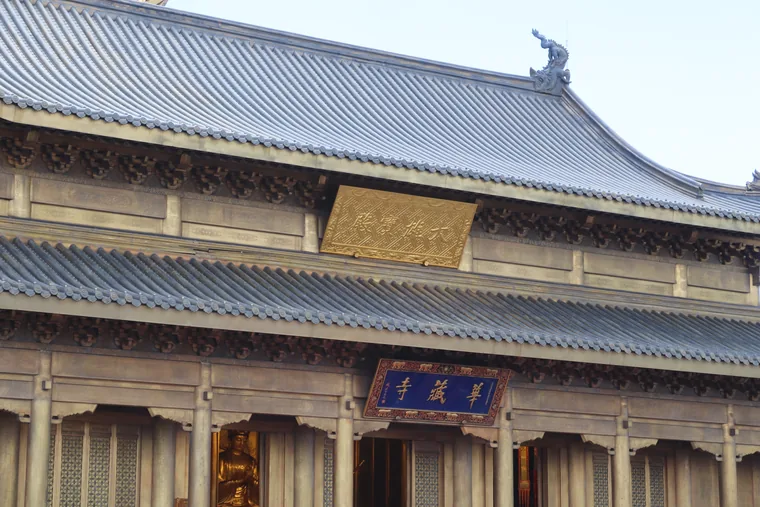
The early cultural narration of Huazang Temple is connected with stories such as the dandelion chasing the deer; the more detailed memories of the construction of the Bronze Temple enter the history of the Ming Dynasty. During the Wanli period of the Ming Dynasty, they were cast, assembled, and awarded, making the names of Yongming Huazang Temple and the Golden Temple an important clue to understanding the temple on the top of the mountain.
The Golden Hall's earlier gilded copper construction contributed to the Golden Summit name. Today the name can refer to the mountaintop area or the particular hall. Identify the place to distinguish temples, viewing areas and devotional images encountered on a summit visit.
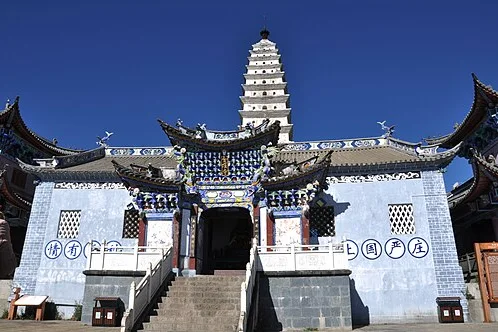
Woyun Temple is located in this mountain top environment and has its own history and silver-top memory. It is adjacent to Huazang Temple, but it does not lose its independent identity; Jinding Temple in Jizu Mountain, Yunnan is another place. The names of the top of the mountain are similar and cannot be used to replace the specific temple name.
Follow history and understand Huazang Temple
- Wanli period of Ming Dynasty
Bronze Temple and Yongming Huazang Temple
The construction of the Bronze Hall and the granting of the temple have become important historical aspects of the Golden Summit Huazang Temple. The specific casting, assembly and granting of the temple have separate processes.
- 1972
Fire caused heavy losses
The golden-domed Huazang Temple suffered a fire, and its subsequent reconstruction became an important project to continue the temple.
- 1986-1989
Rebuilding Huazang Temple
Various parties support the reconstruction of the temple and the restoration of the temple space and traditional architectural style on the top of the mountain.
- 1990
Hold a ceremony related to the inauguration
The rebuilt Huazang Temple held an inauguration ceremony and a consecration ceremony for the Buddha statue.
- 2006
Samantabhadra and renovation project completed
The modern Samantabhadra statues of the ten directions, the renovation of Huazang Temple and related environmental projects form a new cultural landscape of Jinding.
After fire and reconstruction, existing buildings also have their own history
Buildings in alpine environments have long faced challenges from wind, lightning, cold and maintenance. Huazang Temple has been damaged and repaired many times, and a fire in 1972 caused heavy losses. Understanding the continuity of the ancient temple requires simultaneously understanding the surviving cultural relics, reconstructed buildings and later added spaces.
In the late 1980s, the reconstruction of Huazang Temple was gradually completed, and a completion ceremony was held in 1990. The palaces on the central axis from low to high are connected by steps, courtyards and cloisters, and the building volume unfolds according to the terrain; the solemnity in front of you comes from new construction and inheritance, and also inherits the memory of the old space.
Entering the 21st century, the renovation of Huazang Temple, the environmental improvement of the Golden Summit and the construction of Samantabhadra in all directions have once again changed the viewing experience here. New icons and ancient temple traditions can meet in the same place, but their respective ages should be clearly stated. Respecting a temple also includes seeing the labor that goes into its ongoing care and reconstruction.
The Samantabhadra of the Ten Directions brings the vast desire back to one thing that can be done
Samantabhadra culture is an important clue to Mount Emei. The golden-domed statue of Samantabhadra in ten directions forms a distinctive image with ten faces, multiple layers and six-tusked elephant shapes, which connects with the theme of making wishes in the ten directions. Modern icons and Wannian Temple Song Dynasty bronze statues, each of their own era, craftsmanship and space, present rich expressions of the same monastic tradition.
It is also necessary to distinguish the specific space between Samantabhadra in the Golden Palace and Samantabhadra in the open air. There is also a bronze statue of a riding elephant from the Northern Song Dynasty in the Wuliang Hall of Wannian Temple, and the Baoguo Temple at the foot of the mountain has its own Samantabhadra Hall. They are jointly connected to the Emei tradition, but each preserves different eras, architecture and sculpture experiences.
Samantabhadra’s vows can be broad, or they can start from daily life. Responding to a request seriously, keeping a promise, and taking care of a family member are all ways to make your wishes come true. Even if you can't climb high, or if clouds and fog obscure the view when you visit, your thoughts can still be concrete and complete, and their value is not measured by whether you see a certain scene.
Recognize the Golden Summit of Emei, and then make your long-term wishes concrete
Huazang Temple is located on the Golden Summit of Mount Emei in Sichuan. The Golden Temple and the open-air statues of Samantabhadra form a different understanding space. Samantabhadra's vows of action emphasize the implementation of wishes into practice. Therefore, long-term study, career growth and taking care of family members can all find specific cultural sustenance from perseverance and commitment.
Compared with the Samantabhadra riding an elephant in Wannian Temple, the image, palace and mountain top environment of Samantabhadra in Jinding have their own characteristics; compared with Jinding Temple in Jizu Mountain, Yunnan, the location and main objects of worship are different. First write about the Huazang Temple in Mount Emei, Sichuan, and then talk about your own concerns. This can avoid the misunderstanding caused by just writing about "Golden Summit".
To give thanks, recall your original wish, what has actually changed and the kindness you want to carry forward. If the wish was made in the Golden Hall or before the outdoor statue, identify that place when speaking with our support team. Confirm special promises separately; a basic visit does not automatically cover every devotional space on the mountain.
Understanding the halls and the figures within them
| Palace or space | Figures and cultural roles |
|---|---|
| Golden Palace (Puxian Palace) | Samantabhadra Bodhisattva |
| The statues of Samantabhadra in all directions and the worship space | Samantabhadra Bodhisattva’s Theme of Ten Directions Vows |
| Front Maitreya Hall | Maitreya theme |
Golden Palace (Puxian Palace)
Principal figures: Samantabhadra Bodhisattva
Samantabhadra Bodhisattva is known for his vast aspiration, echoing the wisdom of Manjushri. The contents of Samantabhadra's Vows, such as paying respect, making offerings, rejoicing, always following Buddhism and dedicating it to others, are concerned with how to transform the understanding of Buddhism into continuous practice. People rely on this to have persistent goals, be responsible for their careers, and realize their good wishes. They also put gratitude, family care, and helping others into the same line of aspirations.
Huazang Temple The Golden Temple envoy Puxian Xingyuan has a specific temple on the Golden Summit of Emei. The names of Bronze Hall, Jinjin and Golden Dome preserve the historical connection, and today the buildings have been restored and rebuilt by later generations. The ancient monastery and its continuous construction allow the salute to also include the willingness to continue practicing goodwill and cherish the efforts of those who protect and restore it, and also give the long-term commitment a clear cultural sustenance. The statues of Samantabhadra in the Golden Temple and the statues of Samantabhadra in the open air should not be regarded as the same statue; the same belief theme can be developed through different buildings and images.
Associated wishes: You can pray for perseverance for a responsibility or good wish, indicating who you most want to take care of and what you want to continue to accomplish. If you express your feelings for your family members, you can also wish to take good care of them and get along with them with understanding, so that your wishes will be based on true family affection and support. Both career and family wishes can be written about long-term responsibilities, indicating the stable step you most want to take, and the people you are willing to continue to take care of.
The statues of Samantabhadra in all directions and the worship space
Principal figures: Samantabhadra Bodhisattva’s Theme of Ten Directions Vows
The theme of the Samantabhadra of the Ten Directions uses a multi-faceted shape to present the wishes for a wide range of sentient beings, and the "Ten Directions" express the pervasiveness of space. Samantabhadra's great spirit cares about respect, learning, rejoicing and dedication, and the multi-faceted overall image makes extensive care intuitive. It carries the theme of the same Bodhisattva’s vows and helps people extend their personal expectations to family, companions and more lives.
The modern outdoor ten-direction Samantabhadra at the Golden Summit and the figure within Huazang Temple's Golden Hall have separate devotional spaces. Mountain surroundings and expansive aspirations provide a setting for long-term intentions about family wellbeing, responsibility and sharing kindness. Distinguish the indoor hall from the outdoor statue when planning a visit.
Associated wishes: You can name a long-term wish and the person you care about most, and pray for patience, wisdom and support. If the vision is very big, you can also write down a specific relationship that you cherish the most, so that your broad wishes can still retain care for the people around you.
Front Maitreya Hall
Principal figures: Maitreya theme
Maitreya, free translation of Cishi, is the future Buddha in Buddhism. The common images of joy and cloth bags in the Han region make compassion and hope for the future appear close; the image of generosity also carries the desire for family harmony, good encounters, and a calm life. Paying homage to Maitreya can be understood from two clues: the expectation for a stable future and the wish to get along with others in good faith.
Huazang Temple The Maitreya Hall in the front and the Main Hall and the Golden Hall in the rear form a central axis sequence. The compassion of the future Buddha and the wishes of Samantabhadra have their own places. The court ceremony starts with hope and harmony, and then moves into the theme of education and practice, so that in the new stage, the wishes can not only hope for a smooth future, but also cherish the generosity, good luck and calmness of getting along today.
Associated wishes: You can wish for stability when moving, studying or family changes, and explain what you most hope to gradually adapt to. If you have different opinions with your family, you can also pray for more patience and gentle communication from both parties, so that future expectations can become the hope of continued companionship.
Write down the concerns in culture as your own wishes
Aspirations are big, actions start small
Samantabhadra of the Ten Directions·Theme of Practicing Wish
Samantabhadra's vows include extensive care through respect, learning and dedication, and the theme of the ten directions expresses the vastness of the wishes through the pervasiveness of space. The Golden Temple of Huazang Temple and the open-air icons together provide a clear cultural sustenance for long-term wishes: I hope that I will grow, and that my relatives, friends and more people will be stable, so that my vows include the intention of continuous practice. The "action" of making a wish also reminds people to cherish preparation and accumulation; a long-term wish can also include goals, help received, and responsibilities that one is willing to assume.
Describe your present stage of life, the longer-term direction that matters most and what you are preparing now. To give thanks, add what has changed and your original promise.
Example of wish expression
I hope that I can see the direction clearly in my new career stage, keep my word and fulfill my responsibilities, and meet colleagues who are willing to help. I also hope that I will persist in learning and not neglect my family and the things I have promised because of my eagerness for success.
Take more care of your family
Golden Palace·Samantabhadra Practice and Altruistic Theme
The altruism and dedication in Samantabhadra’s vows allow personal wishes to be directed towards family members and more sentient beings. What Jinding Dojo provides for family affection is the sustenance of long-term care: May parents be well, children grow, caregivers receive support, and may you cherish the time you can spend together. This culture allows families to maintain gentleness and responsibility.
You can write down which kind of care your family needs most at present, and pray for physical and mental stability and good luck in taking care of you. When you live overseas, you can also express your gratitude or concern, hoping that each other can understand the difficulties caused by the distance, so that both the person who cares about you and the person who takes care of you can be remembered.
Example of wish expression
May my family be safe, and may I take care of myself as usual; listen more to the current situation, leave less concern for the future, and be more proactive when I can share the burden.
Stay calm when encountering changes
Maitreya Temple·Theme of Hope and Tolerance
Maitreya's identity as the future Buddha and the name of Tzu Shi tie the hope, generosity and future harmony together. The Maitreya Hall in the front of Huazang Temple has a welcoming theme, providing close sustenance for people facing changes. I hope that the new life will gradually stabilize, which can include consideration for one's own adaptation, and also include the hope of continuing to maintain goodwill with relatives and friends.
It can explain the changes you are going through and pray for physical and mental stability, good companions and appropriate guidance. If changes affect your family members, you can also write down how you hope to continue to understand each other, so as to express blessings for the future while tenderly caring for each other in the present.
Example of wish expression
I hope that when facing changes, I will not rush to deny myself, nor pass on my anxiety to others; I will learn when I need to learn, adjust when I need to adjust, and slowly and steadily move forward.
Thanks for persevering and repairing what is left behind
Samantabhadra Vows and Temple Reconstruction Culture
The history and later restoration of Huazang Temple make the continuation of Jinding culture visible through the support of different generations. Puxian Xingyuan attaches great importance to continuous practice, and thanks the restorers and preservers, which also echoes this theme: only when someone is willing to take on the responsibility can architecture and culture continue to be known to later generations. Gratitude can therefore cherish specific labor and hope that important things will be taken care of for a long time.
You can thank the people who continue to take responsibility in your own life, wish them well, and also express the hope that the culture and environment will be properly protected. If you have ever been helped in a difficult situation, you can write down the help and hope that the kindness will continue when you are able.
Example of wish expression
Thank you to those who did not give up when times were difficult, and thank you to those who patched up and supported me along the way. May I cherish these efforts and protect the relationships that are still around me.
In the image, continue to get to know each other Huazang Temple
Sichuan Emeishan travel guide, detailed route information, 3D map disassembly!
Through three-dimensional map navigation, learn about the mountain environment where Mount Emei’s Golden Summit and Huazang Temple are located.
一勺世界 · Bilibili · in Bilibili Watch original video
The video is an introduction to the overall route of Mount Emei, including Baoguo Temple, Wannian Temple, Huazang Temple and other different places; each has its own independent temple history. The main text focuses on Huazang Temple, and does not consider the entire mountain attractions or all the temples along the way as this temple.
If playback is restricted by the network or platform, the original video entrance can be used.
Commissioned services and fees
$227 USD · Basic service fee
In Jinding Huazang, write down the points in life for Samantabhadra’s vows
The basic commission includes tickets, incense, Buddha worship and making wishes; pictures and video visit records correspond to the specific temple, the selected offerings and this commission, and are delivered privately.
You can also entrust your family together. It is recommended that there be no more than 3 people per order, so that you can express your feelings one by one.
A private visit record will be provided 1-2 working days after the service is completed.
Anxin provides entrusted services independently and does not represent the temple. Huazang Temple, Woyun Temple, Wannian Temple and other temples are confirmed separately; the basic commission does not automatically include the entire mountain itinerary, special rituals or specific weather landscapes.
Select your wish, desired date and offerings and submit the request, then add official customer service for verification. Submission does not mean successful reservation, payment or seat reservation.
Yes Submit request and confirm with our team . There is no need to log in for consultation; the appointment has not been successful after submission.
About Huazang Temple , you may also want to know
Do all the temples in Golden Summit belong to Huazang Temple?
Golden Summit also refers to the entire mountain top area, which includes different spaces such as Huazang Temple, Woyun Temple and viewing areas, which need to be understood separately according to the specific location.
Are the Samantabhadra of the Golden Palace and the Samantabhadra of the Ten Directions the same place?
They are separate spaces. Samantabhadra in the Golden Hall and the modern outdoor ten-direction statue have distinct locations; explain a particular preference before agreeing special arrangements.
Is the Samantabhadra of the Ten Directions a Northern Song Dynasty statue?
No. The Golden Dome and Ten Directions Samantabhadra belong to modern construction; the bronze statue of Samantabhadra riding a six-tusked elephant in the Northern Song Dynasty is in the Beamless Hall of Wannian Temple in Mount Emei.
Are all the current Golden Palaces original from the Ming Dynasty?
No. Huazang Temple has experienced fire, restoration and modern reconstruction. The antiquities, existing temples and modern new icons should be explained separately.
Is it guaranteed to see the sunrise, sea of clouds or Buddha's light?
No. The scenery on the top of the mountain is related to actual conditions such as weather and light. The entrusted service does not guarantee a specific natural scenery, nor does it evaluate the feelings based on the scenery.
Can Huazang Temple and Jizushan Jinding Temple replace each other?
No. Huazang Temple is on Mount Emei in Sichuan, while Jinding Temple is on Mount Jizu in Yunnan. Confirm the figures and itinerary for each separately.
How can Samantabhadra's traditions connect with my career or study wishes?
Can express clear direction, perseverance in learning, cooperation and trustworthiness, and conscientious performance of responsibilities. First write down the step you are currently taking, and then write down the actions you are willing to continue to take, so that your long-term wishes have understandable content.
I only remember making a wish at Mount Emei's Golden Summit. What should I identify before arranging to give thanks?
First recall whether it is in the Golden Hall of Huazang Temple, the open-air statue of Samantabhadra in all directions, or another specific space, and then fill in the original wish and agreement of thanks. You can describe the memory to customer service and check the location and arrangements first.