Quick understanding
- Is the Jinding Temple here in Mount Emei?
Not here. This page is the Jinding Temple on the Tianzhu Peak of Jizu Mountain in Binchuan, Dali, Yunnan, which is a different temple from the Huazang Temple on the Jinding Summit of Emei Mountain in Sichuan.
- Which figure is venerated in the Golden Hall?
Jinding Temple on Mount Jizu has Thousand-Armed Guanyin in its Golden Hall and the horizontal Three Buddhas in the main hall behind. Do not transfer Mount Emei's Samantabhadra tradition simply because both halls are called Golden Hall.
- Why are there three official halls in Buddhist temples?
The Sanguan Hall is dedicated to the three officials of heaven, earth, and water. It uses Taoist traditions of blessing, forgiveness of sins, and relief from disasters to present the history of the encounter of multiple cultures in the mountains.
- Location
- Tianzhu Peak of Jizu Mountain in Binchuan, Dali, Yunnan
- Early Construction
- Temple clues from the Hongzhi period of the Ming Dynasty
- Representative pattern
- The palace and Surangama Pagoda unfold along the axis
- Cultural intersection
- Kasyapa tradition, Buddhist and Taoist themes and Bai crafts
In Jinding Temple, put the things you care about
This is Jinding Temple on Mount Jizu in Yunnan. Thousand-Armed Guanyin, the Three Officials and the Buddhist halls have distinct traditions. Identify the place and figures before expressing intentions about travel, family care or learning.
Confirm the specific Jinding Temple
This page is in Jizu Mountain, Yunnan; it is understood separately from the temple at Jinding, Emei, Sichuan.
Continue to learn →Understanding different figures within one complex
The Three Officials, the Golden Palace Thousand Arms Guanyin and the Buddhist Palace have their own roles and cannot be lumped together in the same system.
Continue to learn →Organize wishes for family members far away
From the memory of compassion and pilgrimage, write down the care you hope to receive and the peace you travel with.
Continue to learn →The Kasyapa tradition of Jizu Mountain, first distinguish the legend and local history
The cultural connection between Jizu Mountain and Lord Kasyapa is an important entrance to understanding famous mountains. Drinking light is another name of Kasyapa, and stories such as holding flowers, passing on clothes and waiting for Maitreya also bring the theme of inheritance into local narration. The spread of Buddhist tradition in Yunnan has formed rich cultural memories due to the connections between characters, stories and the space in the mountains.
The name and related narratives of Jizu Mountain in Yunnan have been gradually enriched in local literature since the Ming Dynasty. The Jizu Mountain in Indian classics and the mountain in Yunnan need to be understood separately; the value of local culture does not rely on forcibly describing the two places as the same geographical location.
Jinding Temple is located at the top of Jizu Mountain. The Zhusheng Temple halfway up the mountain, other temples along the way and the temple on the top of the mountain each have their own independent history and space. Famous mountains jointly preserve the culture of Kasyapa and Chaoshan, and different temples carry out specific rituals. From the entire mountain to the architecture and statues of a temple, you can understand the rich layers of tradition.
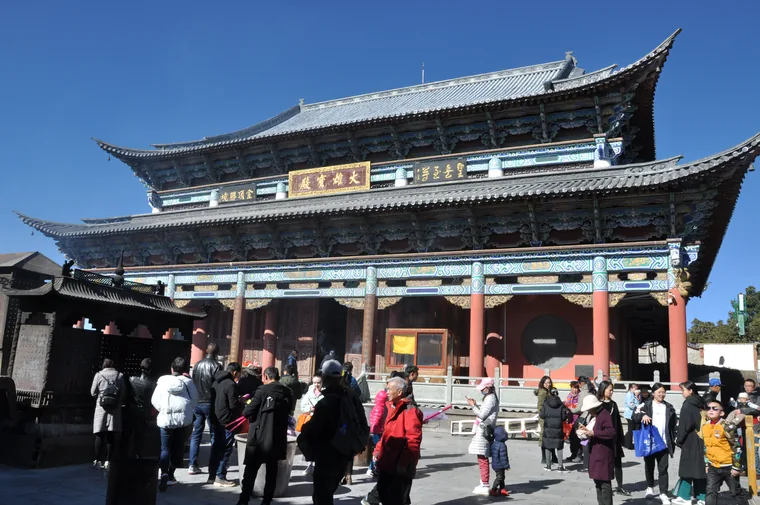
Follow history and understand Jinding Temple
- Hongzhi period of Ming Dynasty
Early construction of the mountaintop temple
Jinding Temple’s history can be traced back to the Ming Dynasty, and the temples and courtyards have experienced continuous development and changes in later generations.
- Late 20th century
Different levels of preservation and restoration
The temple has experienced damage, but the Surangama Pagoda and gates and other relics continue the historical memory of the mountain top pattern.
- 2003
Cultural relic protection of Surangama Pagoda
The Surangama Pagoda in the temple has been announced as a state-level key cultural relic protection unit, and the protection objects and the entire temple are separately explained.
- 2004
Temple reconstruction
Jinding Temple was rebuilt to continue the temple space on the top of the mountain. The existing building contains layers of different ages.
The coaxial compact layout of the tower hall responds to the limited space on the top of the mountain
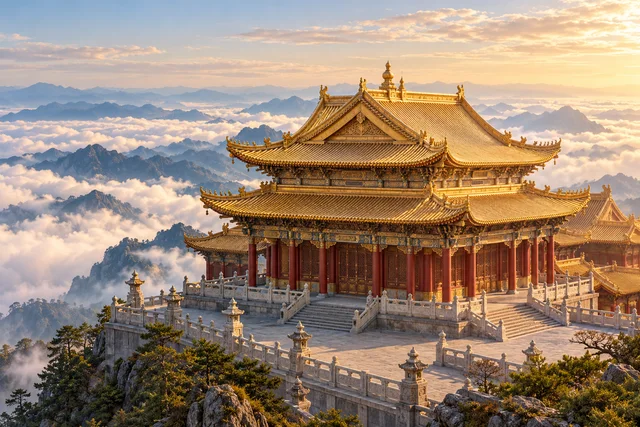
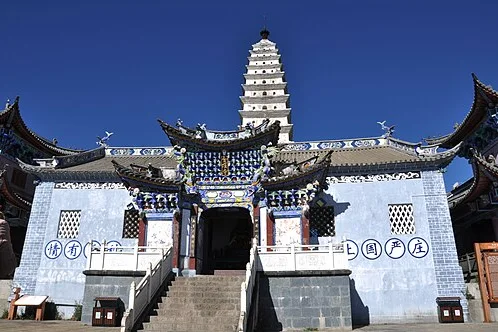
Jinding Temple The buildings are arranged along the topography of Tianzhu Peak. Maitreya Hall, Golden Hall, Surangama Pagoda, Yinguang Hall and Mahavira Hall form the main spatial sequence. The tower and the temple are co-located on the axis, and the Surangama Pagoda becomes the visual center, making the limited space on the top of the mountain still rich in layers.
The viewing platform and surrounding views expand the courtyard to the larger landscape, and the sunrise, Cang'er Lake and distant mountains retain the traditional viewing imagery. The actual visible scene changes with the weather, light and on-site conditions. The experience of going to the mountain is also composed of architecture, journey and companionship. Each visit has its own time and feelings.
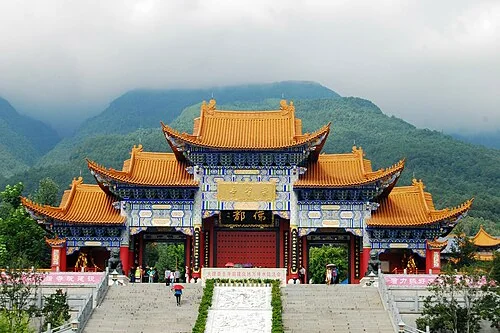
The alpine environment also affects plants and architecture. The greenery here is not as lush as the temples at the foot and belly of the mountain, and the hard courtyard forms a distinct relationship with the open sky. The details of the mountain gate formed by Bai craftsmen also give the central axis layout a local aesthetic. The characteristics of the mountaintop monastery exist in the mutual response of these specific conditions.
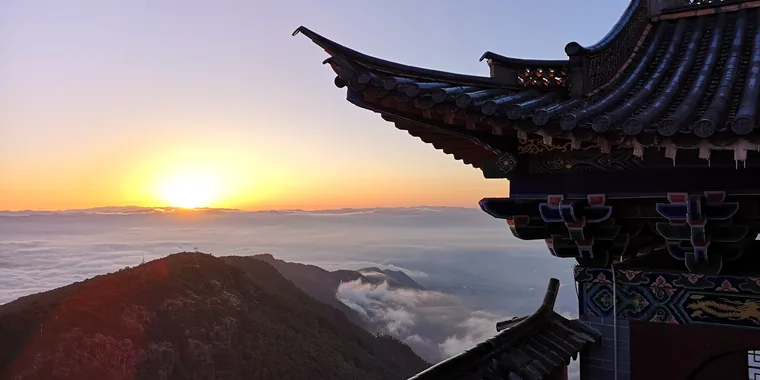
Three officials, Guanyin and three Buddhas, each has a specific identity
The Sanguan Hall is dedicated to Heavenly Officials, Earth Officials, and Shuiguan Officials, which is a distinct Taoist theme of Jinding Temple in Jizu Mountain. Blessing, forgiveness of sins, and relieving misfortunes are respectively associated with good fortune, saving time, and overcoming difficulties. Together with Buddhism Guanyin and the Three Buddhas, they present the cultural landscape of the mountains where different traditions have their own place and coexist with each other.
The Thousand-Armed Guanyin in the Golden Hall is a different theme from the Three Buddhas in the Main Hall behind. Guanyin is associated with compassion and rescue, and the combination of three Buddhas expresses different worlds in Buddhism; the golden temple with the same name may be dedicated to Samantabhadra elsewhere, but here we must go back to the specific temple and statues to understand.
The temple has been damaged and rebuilt, and the ancient pagodas, later palaces and new restorations have combined to form what it looks like today. The relics are preserved in the past, and subsequent construction and continued use ensure that there is still concrete space for pilgrimage and study. Reading ancient temples from different historical levels, one can also see the true commitment behind the inheritance.
Jizu Mountain Golden Summit and Emei Golden Summit must be recognized separately
“Golden Summit” can describe a mountain peak and does not identify a unique place. This Jinding Temple is on Mount Jizu in Yunnan, distinct from Huazang Temple at Mount Emei's Golden Summit in Sichuan. Keep both mountain and temple names when submitting a request or giving thanks so your wish is linked to the right place.
In addition to the inherited memory of Jizu Mountain and the courtyard on the top of the mountain, the Golden Palace Thousand Arms Guanyin, the Sanguan Palace and the Buddha Palace provide different levels of understanding. Guanyin contacted Merciful and responded that each of the three officials has a Taoist cultural background, and the Buddhist temple has begun practice and enlightenment; even though they are in the same courtyard, their identities and stories should still be understood separately.
For family care, learning or travel, choose the tradition you want to explore and describe your relative's circumstances. To give thanks, recall the mountain and temple where you made the wish and any promise, avoiding confusion between the two Golden Summits.
Understanding the halls and the figures within them
| Palace or space | Figures and cultural roles |
|---|---|
| Sanguan Hall | Heavenly Official, Earthly Official and Water Official |
| Golden Palace | Thousand Hands Guanyin Bodhisattva |
| Main Hall | Across the Three Buddhas; on both sides the Eighteen Arhats |
| Surangama Pagoda and the courtyard on the top of the mountain | Pagoda layout, cultural relics and landscape culture |
Sanguan Hall
Principal figures: Heavenly Official, Earthly Official and Water Official
The Heavenly Official, the Earthly Official and the Shuiguan are collectively known as the Three Officials. Taoist tradition expresses their respective functions with the Heavenly Official blessing, the Earthly Official forgiving sins, and the Shuiguan relieving misfortune, and are connected with the Three Yuan Festivals of Shangyuan, Zhongyuan and Xiayuan. Blessings are associated with peace and good wishes, forgiveness of sins and concern for correction, and relief from adversities carry hope in the face of adversity. The three together present people's expectations for blessings, reflection and overcoming difficulties.
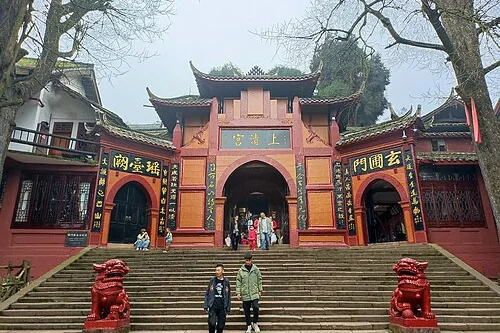
Sanguan Hall near the entrance to Jinding Temple reflects the coexistence of traditions. Further within are Guanyin's Golden Hall and the main Buddhist hall. The Three Officials have distinct Taoist identities; learning about them helps explain how different faiths share the site while providing settings for wishes about stability, self-cultivation and coming through difficulty.
Associated wishes: You can pray for the stability of your family, the resolution of difficulties and the correction of mistakes, and explain the most worrying situation. If your words or deeds have recently affected others, you can also express your willingness to sincerely make amends and hope that the relationship will gain understanding and a chance to get along again.
Golden Palace
Principal figures: Thousand Hands Guanyin Bodhisattva
Thousand Hands and Thousand Eyes Guanyin is the image expression of Guanyin (Avalokiteshvara)'s compassionate will: the many eyes symbolize seeing the different sufferings of all living beings, and the many arms symbolize the widespread relief. It turns the sound of rescuing the suffering into a visible image, so that family members can be healthy, have support in difficult situations, and have someone to take care of them, which has become a familiar prayer for the public. It also reminds people to cherish their ability to care for others.
Jinding Temple The Jinding Temple is a copper temple located between the Maitreya Hall and the Surangama Pagoda. The Thousand-Hand Guanyin constitutes its main worship theme. The architecture on the top of the mountain meets the statue of compassion, allowing timely help for the care and concern of family members far away and the hope of distant family members. It has a clear reverence and sustenance; it is also different from the Golden Palace culture centered on Samantabhadra at the Golden Summit of Emei. The Thousand-Hand Guanyin in the Golden Temple and the statue of Samantabhadra on the Golden Summit of Emei should be recognized separately. The similar titles such as Mountain Top or Golden Summit do not mean that the objects of worship are the same.
Associated wishes: You can wish for your relatives and friends to be taken care of, have a safe journey, and have understanding in your relationship. If you are far away from home, you can write down who needs support and what you want to convey most, so that your thoughts to Guanyin include being heard, having someone to accompany you, and being kind to you. When praying for a loved one who needs support, you can write down what kind of care you hope to receive; write down both Jizu Mountain and Jinding Temple as the original wish location.
Main Hall
Principal figures: Across the Three Buddhas; on both sides the Eighteen Arhats
Groups of Buddhas associated with different realms express a Buddhist view of the world, often connecting Shakyamuni's teaching, the eastern Medicine Buddha's vows and the western Pure Land. Arhats beside them represent discipleship, practice and lineage. Together they connect awakening with learning, providing context for wisdom, wellbeing and remembrance.
Jinding Temple The Three Buddhas and the Eighteen Arhats across the main hall form an important Buddhist salute theme in the rear; the Sanguan Hall and the Guanyin Golden Hall in the front have their own identities and spaces. The sequence of halls makes visiting a high place a process of understanding traditions at the same time. Perseverance in learning, gratitude for teachings, and blessings for relatives can all start from the main hall to learn culture.
Associated wishes: You can pray for your studies, life choices, and family stability, and explain the wisdom and guidance you hope to receive. You can also thank those who have taught you along the way, and hope that you will cherish what you have learned, have determination in your heart, and continue to grow amidst travel and changes.
Surangama Pagoda and the courtyard on the top of the mountain
Cultural role: Pagoda layout, cultural relics and landscape culture
Surangama Pagoda is the architectural center of Jinding Temple’s mountaintop courtyard. The tower and surrounding temples jointly preserve cultural relics, landscapes and memories of mountain pilgrimage. The name of the Drinking Light Hall behind the pagoda is related to Kasyapa: "Drinking Light" is one of the traditional translations of Kasyapa, and Kasyapa is respected in the Buddhist heritage. The name of the building brings learning and inheritance into the space on the top of the mountain, helping visitors understand its cultural level.
Looking at the courtyard from the Surangama Pagoda, one can identify the respective positions of the Golden Palace, the Mahavira Palace and other buildings; the history of the tower and the mountain scenery also constitute the mountain experience. Visiting cultural relics and paying respect to the palace have their own contents. The actual entry, photography and opening range must be arranged according to the on-site arrangements. Cherishing the preserver, expressing gratitude for the teachings, and hoping for a safe journey together can all be expressed in this memory of the mountains.
Associated wishes: You can use this to thank teachers, elders or fellow travelers, and pray that important culture will be properly preserved and that fellow travelers will return safely. If you particularly want to record the pagoda or cultural relic space, you can first explain your needs and let customer service confirm the feasible visit range.
Write down the concerns in culture as your own wishes
In the face of difficulties, do what you can change first
Sanguan Palace·Reflection and Daily Order Theme
The belief in the three sense organs expresses the wish of blessing, pardoning sins, and relieving misfortunes, as well as the desire to save and overcome difficulties. Jinding Temple Sanguan Temple makes people have a clear goal when facing difficulties: I hope that life will gradually stabilize, and I am also willing to recognize my own mistakes, so that correction and peace can be carried out together. For people who are under pressure in an unfamiliar environment, this tradition can also accommodate the desire for understanding and support.
You can explain the most difficult thing recently, praying for peace, discernment and good luck; if it involves your own mistakes, you can also express your willingness to seriously make up for it. Write the person you care about the most, and let your mind seek relief from misfortune while taking care of the feelings and responsibilities in the relationship.
Example of wish expression
I hope that the difficulties in front of me will gradually turn around, and I hope that I will not avoid the things I should bear, but will conscientiously correct what can be corrected, and speak frankly and clearly about what needs to be explained.
Let the concerned people get timely help
Golden Palace Thousand Hands Guanyin Compassion Theme
Thousand-Hand Guanyin uses multiple hands to express the compassion of wide-ranging rescue. The tradition of hearing the sound and rescuing the suffering also attaches great importance to responding to different situations. The Guanyin in the Bronze and Gold Temple of Jinding Temple gives the concerned person concrete hope for their loved ones to get help in time. The distance, care needs and mutual concern of overseas families can all be expressed through the culture of compassion and good karma. Timely help can mean that relatives and friends have someone to take care of them when they are recuperating, or someone to respond when they are having trouble abroad. The expression of compassion can then fall back to concrete life.
Explain who you are praying for, the support you currently need, and the companionship you want to pass on; if you are grateful for the help you have received before, add your true experience and original wishes.
Example of wish expression
May my family far away have someone to take care of them when they are in trouble, have safe travels, and have support in my heart; I also hope that I will respond to their needs seriously and continue to pass on the goodwill I have received to those around me.
Stay humble in learning and inheritance
Mahavira Hall·Study; Kasyapa culture inheritance
The Kasyapa culture of Jizu Mountain attaches great importance to inheritance, and the name of the Yinguang Hall behind the pagoda also preserves this clue; the group of arhat statues in the main hall show the different aspects of what practitioners hear, understand, and practice. Therefore, the pursuit of learning and gratitude to teachers can be carried out at the same time: I am willing to meet kind teachers, and I am also willing to cherish what I have learned, and let the teachings continue to spread goodwill through me.
You can tell about an important learning experience, thank those who gave you direction, and pray for their well-being. If you are starting a new field overseas, you can also explain what you want to learn most. You would like to have humble, focused and trustworthy guidance, and keep asking for advice in unfamiliar situations.
Example of wish expression
May I cherish the moment when someone is willing to teach, learn clearly and do it steadfastly; when I encounter different opinions, I first understand and then think carefully.
Be calm when climbing high, and take care of your peers
Mountain top courtyard and mountain worship culture
Climbing the mountain connects the physical journey with the inner respect. The layout of the Jinding Temple on the top of the mountain also gives the climb a cultural relic and inheritance content. Different themes such as Guanyin's compassion, Buddhist protection and the three sense organs' relief from disasters all carry the expectation of peace and mutual care. May the journey be smooth, and you can also thank those who have helped you along the way, and cherish the fate of arriving together.
You can wish peace to your family and friends who are traveling with you, and explain the people and things that concern you most during the trip. If you are expressing your feelings for your relatives far away, you can also write down your expectations for a safe return and reunion, so that the blessings from the pilgrimage can connect your experiences in the mountains with your daily companionship.
Example of wish expression
May those traveling together have a safe journey, and may we respect each other’s physical strength and rhythm; cherish the scenery when you can see it, and be calm when you can’t.
In the image, continue to get to know each other Jinding Temple
Aerial photography of Binchuan Jizu Mountain Jinding Temple
Understand Jinding Temple and the mountain top environment in Jizu Mountain, Yunnan through aerial photography.
宾川飞飞电脑 · Bilibili · in Bilibili Watch original video
The footage shows Jinding Temple on Mount Jizu in Binchuan and the surrounding mountains. Aerial views explain the setting rather than details of figures inside halls, and do not establish current weather or entry arrangements.
If playback is restricted by the network or platform, the original video entrance can be used.
Commissioned services and fees
$227 USD · Basic service fee
On the Golden Summit of Jizu Mountain, write down your thoughts for caring and moving forward steadily.
The basic commission includes tickets, incense, Buddha worship and making wishes; pictures and video visit records correspond to the specific temple, the selected offerings and this commission, and are delivered privately.
You can also entrust your family together. It is recommended that there be no more than 3 people per order, so that you can express your feelings one by one.
A private visit record will be provided 1-2 working days after the service is completed.
Anxin provides entrusted services independently and does not represent the temple. Jizu Mountain Jinding Temple, Zhusheng Temple and other temples are confirmed separately and are not interchangeable with Emei Mountain Jinding Huazang Temple; the basic entrustment does not automatically include the entire mountain itinerary.
Select your wish, desired date and offerings and submit the request, then add official customer service for verification. Submission does not mean successful reservation, payment or seat reservation.
Yes Submit request and confirm with our team . There is no need to log in for consultation; the appointment has not been successful after submission.
About Jinding Temple , you may also want to know
Is Jizushan Jinding Temple Huazang Temple?
No. Jinding Temple is located in Jizu Mountain, Yunnan, and Huazang Temple is located at the Golden Summit of Mount Emei, Sichuan. They cannot be used interchangeably because the names of the tops of the mountains are similar.
Are the Three Buddhas the Three Buddhas?
No. The Three Buddhas are the Taoist belief combination of Tianguan, Diguan and Shuiguan, while the Three Buddhas belong to Buddhism. The two are recognized in different temples.
Is the Golden Temple dedicated to Samantabhadra Bodhisattva?
Jinding Temple's Golden Hall on Mount Jizu has a Thousand-Armed Guanyin theme. Do not transfer the Samantabhadra tradition of Mount Emei's Golden Hall to this site.
Is Drinking Light the name of another God of Wealth?
Drinking Light is the traditional nickname of Venerable Kassapa, which connects the Buddhist inheritance stories and commemorations of characters in Jizu Mountain.
Is the story of Kassapa's entry into concentration equivalent to on-site historical proof?
It belongs to Buddhism and local cultural narration. The history of Jizu Mountain in Yunnan, Indian classic geography and faith stories should be understood separately and not as verified on-site events.
Does the commission include consecrating the temple or guaranteeing seeing the sunrise?
The basic commission does not automatically include other temples in Jizu Mountain, and the weather and scenery on the top of the mountain cannot be guaranteed. The specific location, intention and scope need to be confirmed first.
Are the Jinding Temple of Jizu Mountain and the Golden Summit of Mount Emei the same place?
No. This Jinding Temple is on Mount Jizu in Yunnan; Huazang Temple at Mount Emei's Golden Summit is in Sichuan. Their principal figures, images and histories also differ. Check both mountain and temple names when selecting a visit or giving thanks.
Does a shrine to the Three Officials mean every hall in this Buddhist temple is Taoist?
It cannot be judged this way. The Three Officials have a Taoist cultural background, while the Thousand-Hand Guanyin and the Buddhist Hall have Buddhist identities and themes. Read according to the specific hall name and main deity, retaining the differences between different traditions in the same hall.