Quick understanding
- Is the Chenghuang Temple the entire Yuyuan business district?
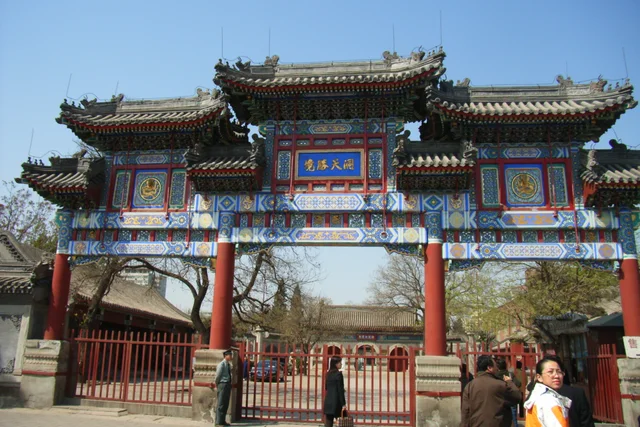
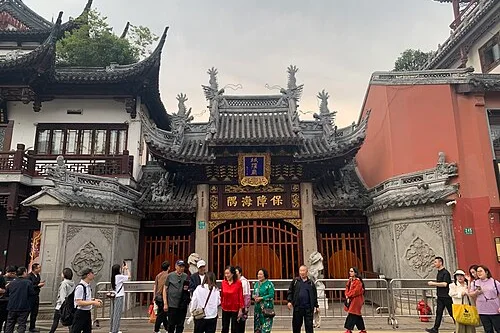
"City God Temple" in daily spoken language often refers to a block containing Taoist temples, Yuyuan Garden and shops; the service destination of this page is the Shanghai City God Temple Taoist Temple at No. 249 Fangbang Middle Road, which does not include the entire business district or Yuyuan Garden.
- Which principal figures are venerated at Shanghai City God Temple?
Shanghai archives record that Qin Yubo, Huo Guang, and Chen Huacheng were three historical city gods, and explain that Qin Yubo and Huo Guang are still worshiped in the temple today. Don't write down the three figures in history as the three statues currently in the same hall.
- Is this a Buddhist temple or a Taoist temple?
Shanghai City God Temple is a Taoist temple managed by Zhengyi priests after restoration. The City God is a deity in traditions of urban protection; not every figure here is a Buddha.
- City where you are located
- Shanghai · Old Town, Huangpu District
- Religious Tradition
- Taoism · Zhengyi Temple
- Main worship tradition
- City God figures including Qin Yubo and Huo Guang
- Cultural Focus
- City God traditions, protection and urban life
In Shanghai City God Temple, put the things you care about
The City God, God of Wealth, Yuelao and Wenchang in Shanghai City God Temple each have their own roles. Business, relationships, family safety and study can be understood separately according to one's life stage, and the entire Yuyuan business district should not be regarded as the same palace.
Management and honest cooperation
Understand Zhao Gongming’s God of Wealth theme, expressing responsibility, credit and livelihood stability.
Continue to learn →Relationships and family relationships
From the theme of Yue Lao and family home, write about the specific situations of acquaintance, long-distance, marriage and understanding.
Continue to learn →Compare Shanghai Longhua Temple
Taoist and Buddhist temples have distinct figures and memories; consider your existing connection when choosing.
Continue to learn →How to distinguish the three names of Chenghuang Temple, Yu Garden and Old City?
“City God Temple” may refer to the Taoist temple or more loosely to the surrounding tourist and commercial area. Shanghai City God Temple has its own halls and religious heritage; Yuyuan is the neighbouring classical garden; surrounding streets form the old-town shopping district. Keep these spaces distinct when exploring history and figures venerated.
The history of Shanghai City God Temple is usually traced back to the Yongle period of the Ming Dynasty. Since then, temples, gardens and citizens’ commercial life have gradually influenced each other, making it a city landmark familiar to ordinary people. Its value lies not only in the ancient architecture, but also in how people organize transactions, festivals, charity and public interactions around the temple, thereby bringing the beliefs that protect the city into daily life.
Follow history and understand Shanghai City God Temple
- Yongle period of Ming Dynasty
The historical starting point of the City God Temple
The important temple building history and local belief traditions that formed Shanghai City God Temple.
- Ming and Qing Dynasties
Temples, gardens and markets develop together
The temple has become increasingly connected with surrounding urban life, and has gradually become an important cultural space in the old city.
- Since the 20th century
Restoration and inheritance
The building has undergone construction and restoration, and the religious space and urban memory continue to exist.
- Contemporary
Temple view and community life
Rituals, cultural activities and charity jointly demonstrate the public connection of local temples.
The historical memory of Huo Guang, Qin Yubo and three city gods in one city
Huo Guang, Qin Yubo and Chen Huacheng each appear in Shanghai's City God traditions, but belong to different periods and histories. Qin Yubo's local connections give his City God image a particular Shanghai identity; Huo Guang represents a separate tradition. Understanding their backgrounds is clearer than treating them as one figure.
“Three City Gods in One City” summarises a historical tradition; it does not establish that three statues are displayed together in one hall today. Huo Guang Hall centres on Huo Guang, while City God Hall relates to Qin Yubo. Distinguish historical figures, folk memory and current spaces.
From the abacus to the God of Wealth, why does commercial culture enter the temple?
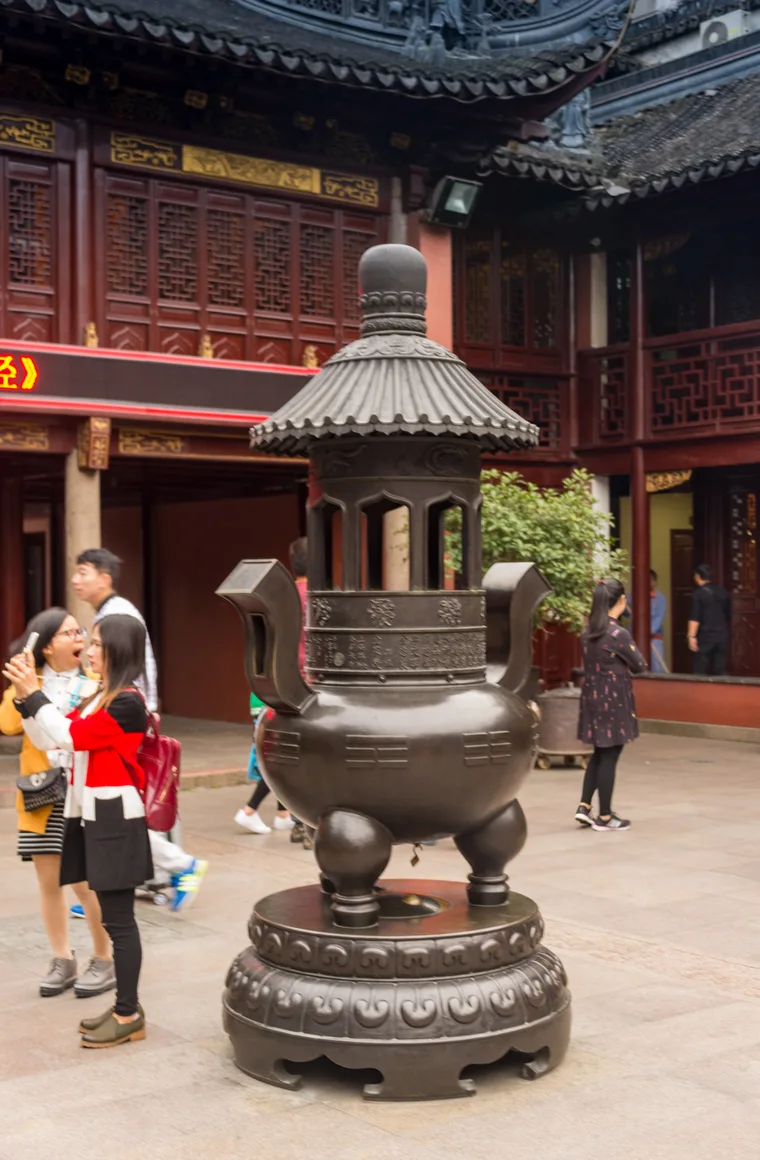
City God Temple's connection with Shanghai's commercial life brings wealth deities, trust and fairness into conversation. The large abacus at Yimen symbolises calculation, gains and losses, and conduct. Wishes may concern stable business, income that supports a family and reliable long-term cooperation.
The City God belief also has the aspect of protecting the place and caring about common life. Temple festivals, commemorative events, and charitable practices connect individual prayers to community relations. For people living overseas, choosing Shanghai City God Temple may also be a connection with the hometown city, family life or childhood memories; these specific emotions can better explain where the wish comes from than a general label of seeking money.
In the Chenghuang Temple, express the hope in career and relationship concretely
This page refers to the Shanghai City God Temple, which is recognized separately from Yuyuan Garden, the commercial street and the entire tourist area. Themes such as the city god and the local guardian, Zhao Gongming, the God of Wealth, the Old Man under the Moon and Wenchang have their own backgrounds, and do not combine different deities in the same courtyard into a vague "ask for everything".
Business wishes can describe cooperation, work and household expenses. Relationship wishes can concern meeting someone, distance, marriage and shared responsibility. For studies, identify your stage and the guidance you hope for. Clarify your concerns before exploring the figures associated with these traditions.
To give thanks, retain the original hall, wish and any promise you made, then describe what has actually changed. Offerings are optional. Taoist rituals, memorial tablets, lantern events or visits around the commercial district are not included simply because this page discusses their cultural context.
Understanding the halls and the figures within them
| Palace or space | Figures and cultural roles |
|---|---|
| Huo Guangdian | Huo Guang |
| City God’s Hall | Qin Yubo |
| Temple of Wealth | Zhao Gongming and the Five Direction Wealth Deities |
| Yuelao Temple | The old man under the moon |
| Sanguan Hall | Tianguan, Diguan, Shuiguan |
| Wenchang, Yuanchen and other halls | Wenchang and Yuanchen traditions |
Huo Guangdian
Principal figures: Huo Guang
Huo Guang was a Han-period historical figure and is also honoured in Shanghai's local traditions as Lord of Jinshan and a city guardian. Understand both his historical identity and local devotion. He and Qin Yubo are distinct figures within Shanghai's City God traditions.
The protective meaning of Huo Guangdian is suitable to be associated with the wishes of a safe family, stable access, and less twists and turns in life. For those who have left their hometown, the patron saint of the city often carries the concern for their relatives and familiar life in their hometown. You can wish well for your parents who are still living in Shanghai, or you can write your own wishes for settling down, returning home, and reuniting in a distant place in the same heart.
Associated wishes: Common prayers are for peace in the place, safety for the family, smooth travel in and out, and a stable life with relatives and friends in the hometown. You can explain who you are paying tribute to this time and which concern you hope to bring back to a familiar city.
City God’s Hall
Principal figures: Qin Yubo
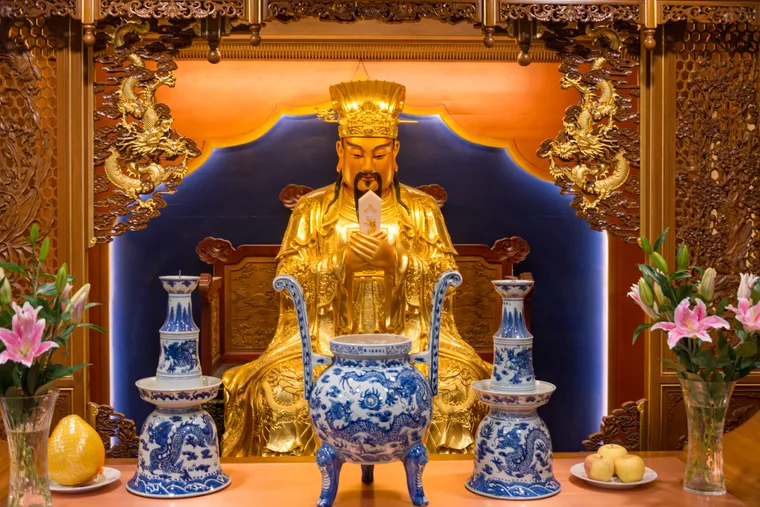
Qin Yubo of the City God’s Hall is closely related to Shanghai’s local historical memory. The city god was originally believed to protect a city, and the people gave him the responsibility of observing good and evil, protecting the place, and caring about the lives of the people. Qin Yubo's image of the city god gave the abstract city guardian a concrete figure and gave people a familiar place to rest their expectations for safety, justice and peaceful living.
Salute to the city god can often express the wish for a stable home, a safe family, a smooth life and peace of mind in doing things. When people are in other places or overseas, this kind of protection is not only a geographical city, but may also be connected to parents in their hometown, their childhood life, and the family ties they want to maintain. Writing down your family and people clearly can better express why you chose Shanghai City God Temple than just leaving a word about praying for peace.
Associated wishes: It is suitable to express the wish for a safe home, stability for relatives and friends, a stable life, and the ability to handle things clearly and fairly. The concerns at both ends of the hometown and the distant place can also be put into the same wish.
Temple of Wealth
Principal figures: Zhao Gongming and the Five Direction Wealth Deities
Wealth Deity Hall centres on Zhao Gongming, accompanied by Xiao Sheng, Cao Bao, Chen Jiugong and Yao Shaosi, commonly understood as the Five Direction Wealth Deities. Zhao is also called Marshal Zhao. Their traditions concern livelihoods, fair trade and hopes for a prosperous business, with individual titles associated with attracting wealth and supporting trade.
When praying to the God of Wealth, common contents include prosperity in business, success in career, trustworthiness in dealings, and dependence on food and clothing for the family. For today's users, this can be about running a store and starting a business, or it can be a stable job, business expansion or finding a suitable cooperation. Putting fair dealing and integrity in the wish for wealth is closer to the culture of Shanghai City God Temple that has long been connected with business life.
Associated wishes: It can express the desire for stable business, progress in work, smooth cooperation and sufficient legitimate income. Writing down your industry or current stage and the family responsibilities you need to bear will make your financial wishes more concrete and preserve your life background.
Yuelao Temple
Principal figures: The old man under the moon
The Old Man under the Moon is a god in charge of marriage and marriage in Chinese folk beliefs. The red thread and the marriage book are familiar cultural images. Legends about Yue Lao describe acquaintance, encounter and partnership as a matter of fate. Therefore, Yue Lao belief widely carries the expectation of a good relationship, stable relationship and long-term companionship.
People pray to Yue Lao, not only for meeting the right person, but also for the existing relationship to become more harmonious. For partners living in different places or across countries, the wishes may be more specific: smooth communication, reduced misunderstandings, smooth reunion, and common plans for the future. Yuelao's marriage culture can provide familiar expressions for these intentions, and sincerity, respect and mutual understanding can also be written into wishes.
Associated wishes: Suitable for wishing for a good encounter, emotional harmony, stable marriage and long-distance reunion. It can explain the current stage of the relationship and how to cherish it, and let the wishes revolve around the real relationship and each other's feelings.
Sanguan Hall
Principal figures: Tianguan, Diguan, Shuiguan
The Three Officials refer to the Heavenly Official, the Earth Official and the Shuiguan. Traditionally, their religious duties are summarized in terms of blessing, forgiveness of sins and relief from misfortunes respectively. They are also related to the culture of the Shangyuan, Zhongyuan and Xiayuan. The Heavenly Official carries the auspicious wish to receive blessings, the Earthly Official is associated with reflection and forgiveness, and the Water Official is connected with the desire to seek protection in times of distress; the three of them jointly care about people's lives, behaviors, and situations.
Therefore, salutes to the three officials can have different emphasis: hoping that the whole family will be blessed and live a harmonious life, which can express the blessings from the heavenly officials; looking back on past mistakes and wanting to start over solemnly, can be expressed through reflection and correction; when experiencing difficulties, traveling far, or turning around in life, one can place one's wish for a safe solution and a proper way through the difficulties. Just choose language that suits your situation, without using complicated terminology.
Associated wishes: Common prayers are for blessings, peace for your family, reduction of worries and a fresh start. You can describe what you most want protection from, and you can also express your reflections, gratitude, and future plans.
Wenchang, Yuanchen and other halls
Principal figures: Wenchang and Yuanchen traditions
Emperor Wenchang is associated with literary fortune, scientific titles and fortunes in Taoism and folk beliefs, and is therefore respected by scholars and scholars; Yuan Chen is associated with the year of the stems and branches, natal life and peace of the year. The two faith clues each have their own emphasis: Wenchang focuses on learning, literary thoughts and growth opportunities, while Yuanchen focuses on a person's stability in this year and this stage.
For studies, exams, professional qualifications or work involving writing, Wenchang traditions provide a setting for wishes about understanding, concentration and doing your best. Moving, travel or a new stage of life may connect with Yuanchen traditions of seasonal wellbeing and safety. These different themes can help you choose a figure meaningful to your concern.
Associated wishes: For academic and career growth, you can pray for clear thinking, diligent study, and smooth performance in exams; for years of age and new stages, you can pray for peace of mind, family stability, and smooth life. You can also combine the two thoughts into a complete growth wish.
Write down the concerns in culture as your own wishes
Business and Management
God of Wealth · Zhao Gongming and related five-way God of Wealth
Zhao Gongming's wealth-deity traditions concern wealth and fair trade; the Five Direction Wealth Deities also reflect hopes for prosperous livelihoods. Within Shanghai's commercial history, wishes can concern reliable cooperation, orderly business and supporting a family, alongside income itself.
Operators can explain the industry and current stage, and pray for stable business, honest dealings, and long-term cooperation; those seeking jobs or changing jobs can also express their hope for job success and career progress. If you care most about family responsibilities, write down clearly the people you want to take care of and the steps you need to take, so that your career aspirations can have specific and legitimate life goals.
Example of wish expression
I hope that the business will be stable, the cooperation will be long-term, and the income will be enough to take care of my family. I also hope that I can maintain integrity and propriety.
Feelings and Marriage
Yue Lao Temple · The Old Man Under the Moon
Yuelao is familiar with the belief in marriage and marriage. The legend of the red thread and the marriage book carries the expectation of encounter, acquaintance and companionship. You can make a wish for a good match that has yet to come, or you can pray for harmony, understanding and longevity in an existing relationship; waiting and reunion in transnational and remote life can also be included in this cultural clue.
When you are single, you can explain what kind of sincerity and getting along you cherish; when you are with a partner, you can pray for smooth communication, fewer misunderstandings, and smooth progress in joint arrangements. Wishes can also include changes you are willing to make, such as listening more patiently, expressing candidly, and connecting your expectations for marriage with each other's feelings.
Example of wish expression
I hope to meet someone who is willing to treat each other sincerely. I also hope that I know how to listen and cherish, and let the relationship slowly grow with understanding.
The home and peace of the year
City God Hall · Qin Yubo; Huo Guang Hall · Huo Guang; Yuanchen figures
The local guardian belief of Chenghuang and Huo Guang connects family, hometown and the desire to live in peace; the Yuanchen belief puts peace wishes into traditional years and personal life stages. For people living overseas, it is easy for these two thoughts to meet: they care about their parents in their hometown, and they also hope that their new home far away will gradually become more stable.
You can write down the people and things you care about most in your hometown and far away, such as parents working less hard, home arrangements in place, moving and traveling safely, and reunion going smoothly. If you are preparing to start a new year or stage of life, you can also express that work and family are in order, relatives and friends take care of each other, and that peace at home is more than just an abstract blessing.
Example of wish expression
May the family in my hometown be safe, may life in the distance gradually become more stable, and may we always remember each other.
Academic and life direction
Wenchang halls · Wenchang Dijun; Yuanchen figures
Emperor Wenchang is associated with literary fortune, scientific titles, and learning, so it is suitable for wishes regarding further education, examinations, research, and professional qualifications. Yuan Chen's age-old culture can also take care of safety and smoothness when entering higher education, moving, and entering a new stage. One focuses on ability and literary thoughts, and the other focuses on staged stability. The two can form a clear wish for growth.
You can write down what you are preparing for, which part you need to focus on most, and pray for clear thinking, solid learning, and stable performance. You also hope to meet good teachers and suitable opportunities. If studying is accompanied by a cross-border life, write down how to adapt to the new environment, take good care of yourself, and make your family feel at ease, so that the learning goals are connected with the direction of life in this journey.
Example of wish expression
May I learn to focus, choose to be sober, and maintain the power of solid growth in the new city and stage.
In the image, continue to get to know each other Shanghai City God Temple
On-site visit to Shanghai City God Temple
From the images of Shanghai City God Temple, continue to understand the temple culture in the old city.
Amy爱你的每一天 · Bilibili · in Bilibili Watch original video
When viewing, pay attention to the difference between the temple and the surrounding business district, and then compare the cultural clues of Huo Guang, City God, God of Wealth and Yuelao to understand the various spaces.
If playback is restricted by the network or platform, the original video entrance can be used.
Commissioned services and fees
$221 USD · Basic service fee
Putting your heart in it also connects you with your hometown.
The basic commission includes tickets, incense, Buddha worship and making wishes; pictures and video visit records correspond to the specific temple, the selected offerings and this commission, and are delivered privately.
You can also entrust your family together. It is recommended that there be no more than 3 people per order, so that you can express your feelings one by one.
A private visit record will be provided 1-2 working days after the service is completed.
Anxin provides independent entrusted services and does not represent Taoist temples; this item does not include Yu Garden tours, lantern festivals, Taoist rituals or Tai Sui tablets. Optional offerings are priced separately.
Select your wish, desired date and offerings and submit the request, then add official customer service for verification. Submission does not mean successful reservation, payment or seat reservation.
Yes Submit request and confirm with our team . There is no need to log in for consultation; the appointment has not been successful after submission.
About Shanghai City God Temple , you may also want to know
Is the Chenghuang Temple the entire Yuyuan business district?
The everyday name sometimes includes an entire neighborhood, but this page is dedicated to the Taoist Temple of the City God Temple. Yuyuan gardens, commercial streets and Taoist temples have their own cultures and experiences.
Are the three historical city gods of Shanghai all worshiped together now?
This cannot be inferred. Shanghai archives record that Qin Yubo, Huo Guang, and Chen Huacheng are three historical figures, and explain that Qin Yubo and Huo Guang are still enshrined in the temple today.
Can I express my emotional wishes to Yue Lao?
You can first explain to customer service what you want to express about your relationship or marriage. Delegation does not guarantee that the specific object will change his or her will, nor does it require filling in the other party's ID or other privacy information.
Does $221 include Yu Garden Tour or Lantern Festival?
Not included. The US$221 on this page is the basic quotation for the independent entrustment of the Chenghuang Temple Taoist Temple, which revolves around Taoist salutes, wish expressions and photo/video visit records.
Is the Chenghuang Temple only suitable for seeking wealth?
Its cultural core includes city protection, peace, good deeds and community connections, as well as different temples such as the God of Wealth and the Moon. The entire palace cannot be reduced to a wish-making place with a single outcome.
Does the general commission include Taoist ceremony or Tai Sui tablet?
Not included. Ordinary on-site entrustment and Taoist rituals and tablet registration are different items. Special requirements will be explained separately by customer service.
Is Yuelao's wish only suitable for single people? How to write it for married or long-distance partners?
It can also express understanding, trust, shared responsibility and hope for reunion. Explain the stage of your relationship and how you want both parties to support each other. It doesn't have to be just about finding a partner.
We are all concerned about career, marriage and family, so how can we avoid writing wishes that are too general?
Write down the object and stage of each matter separately, such as the agreement to be kept in cooperation, the partner's feelings of wanting to be understood, and the immediate daily needs of the family. Different concerns can clearly coexist.