Quick understanding
- Who do you mainly worship in Longhua Temple?
Maitreya is an important theme in the name of the temple and the front hall. The main hall is dedicated to Vairocana Buddha, Manjusri and Samantabhadra Bodhisattva. The three holy halls in the rear also have the theme of the Western Three Saints.
- Are the Three Saints of Huayan the three Buddhas?
The main hall of this temple is dedicated to the three sages of Avatamsaka: one Buddha and two Bodhisattvas. Vairocana Buddha, Manjushri and Samantabhadra jointly develop enlightenment, wisdom and aspirations.
- Are the current palaces all original structures from the Song Dynasty?
Most of the existing palaces contain architectural layers from the Tongzhi and Guangxu periods of the Qing Dynasty. The layout retains clues to the Jialan seven-hall system of the Song Dynasty. The layout needs to be separated from the age of the existing buildings.
- Location
- Shanghai Xuhui·Longhua area
- Temple name theme
- Maitreya and the Longhua Sanhui Tradition
- Main hall combination
- Vairocana, Manjusri and Samantabhadra
- Cultural clues
- Ancient Pagoda, Evening Bell and Sutra Collection
In Longhua Temple, put the things you care about
Shanghai Longhua Temple develops different worship themes with Maitreya, the Three Saints of Huayan and the Three Saints of the West. The new stage of life, pursuit of knowledge and action, and the stability of relatives far away can all be understood one by one along the hall.
Hope and calmness in the new stage
From Maitreya compassion, organize hope in the changes of moving, work and family.
Continue to learn →Distinguish between two groups of Three Saints
Vairocana with Manjusri and Samantabhadra forms one group; Amitabha with Guanyin and Mahasthamaprapta forms another. Their themes are distinct.
Continue to learn →Compare Jing'an Temple
These Shanghai Buddhist temples have different principal figures and city histories; consider your own connection when choosing.
Continue to learn →The name of Longhua brings attention to Maitreya and the future
The name Longhua Temple is associated with the Buddhist tradition of Maitreya attaining Buddhahood under the Longhua tree. There are different legends about the early establishment of the temple, and the origin of the Three Kingdoms should be understood based on the legend. Real objects such as the boundary stone of Kongxiang Temple in the Northern Song Dynasty provide more specific clues for understanding the history here.
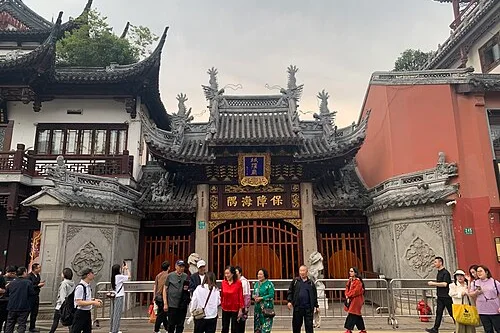
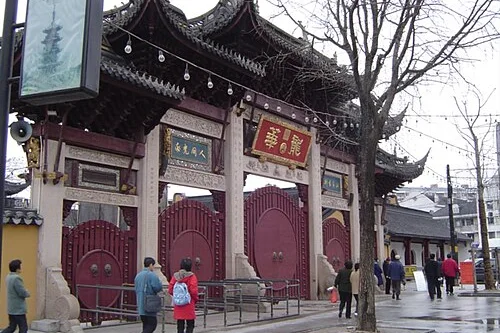
The theme of seeing Maitreya before entering the mountain gate is an important feature of the front space of Longhua Temple. Maitreya does not only belong to one fixed shape, but its different expressions in the temple are linked to tolerance, the future and learning. Slowly identifying the sculptures can also help readers understand why the same theme can have different artistic languages.
Future expectations don’t just stop at waiting for something good to happen. For ordinary people, it can also mean being less impatient when facing changes, having more leeway in getting along, being willing to learn and adjust, and connecting hopes with what can be done now.
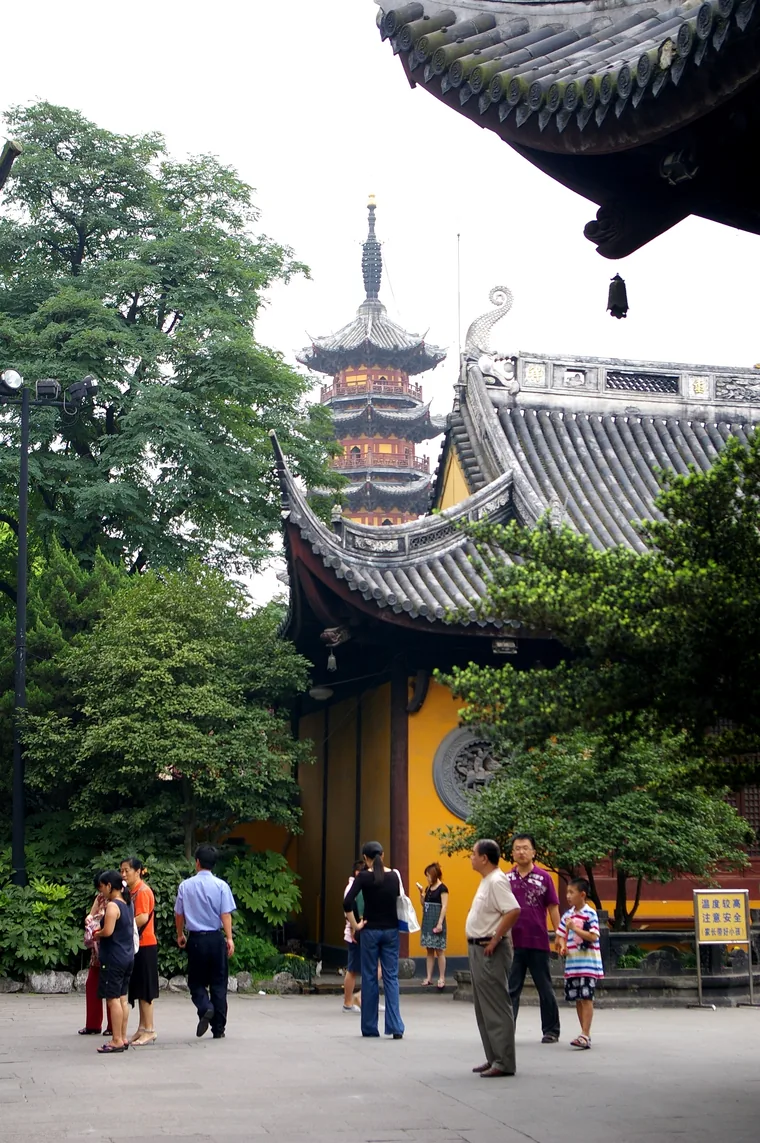
Follow history and understand Longhua Temple
- Early founding narrative
The origin memory of Longhua Temple
The creation theory of the Three Kingdoms period has been circulated for a long time and needs to be understood separately from the verifiable objects and the reconstruction levels of later generations.
- Northern Song Dynasty
Physical clues of Kongxiang Temple
The boundary stones related to Kongxiang Temple provide specific basis for understanding the existence of the temple in the Northern Song Dynasty.
- Tongzhi and Guangxu years of Qing Dynasty
Important architectural layers of the existing palace
Many temples have been rebuilt, continuing the layout and functions of the temple.
- 1979
Repair the temple
Temples and temples are restored to continue the position of ancient temples in urban culture.
- 1980
Municipal cultural relics protection
Longhua Temple has been announced as a cultural relic protection unit in Shanghai, and ancient buildings and cultural relics have been continuously cared for.
In the sequence of palaces on the central axis, the Three Saints also have different combinations
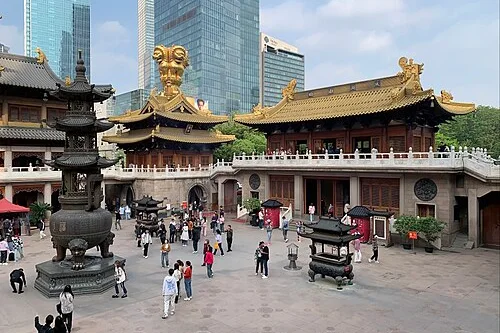
Longhua Temple arranges the Maitreya Hall, the Heavenly King Hall, the Mahavira Hall, and the Three Sacred Halls along the central axis. The Bell and Drum Towers form a horizontal connection with the side courtyards. The seven-hall system of Jialan in the Song Dynasty preserves the traditional layout, and most of the existing halls have levels of reconstruction in the Qing Dynasty; the spatial order and construction age together help to understand the current layout of the ancient temple.
The main hall's Avatamsaka Triad comprises Vairocana with Manjusri and Samantabhadra, connecting wisdom, practice and teaching. It differs from other temples' groups of three Buddhas; identify the figures actually honoured here.
The Three Holy Temples at the rear are related to the theme of the Western Three Holy Temples. It is also called the Three Saints, but the reference still needs to be combined with the specific temple and tradition. If you only search for a general photo by name, it will be easy to confuse the Three Saints of Huayan, the Three Saints of the West, and the Three Buddhas, while ignoring the rich layers of the temple itself.
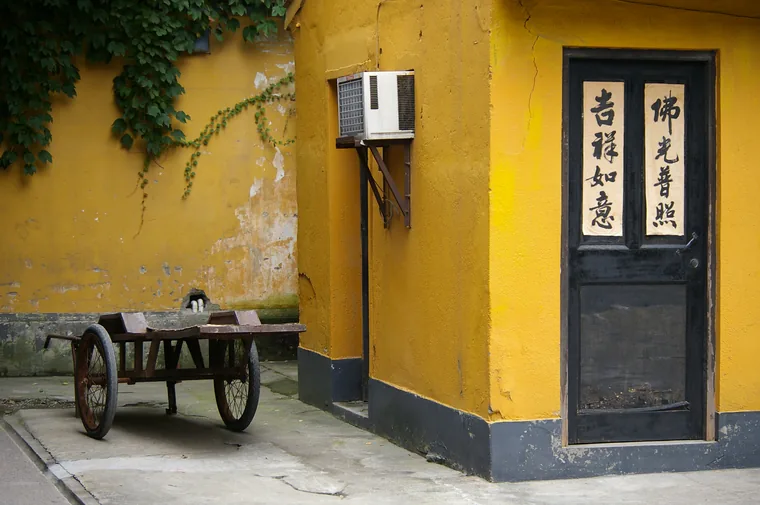
Towers, evening bells and scripture collections leave the memory of the city in different carriers
Longhua Pagoda is located outside the mountain gate and together with the temple constitutes the local landscape. The image of the ancient pagoda helps people identify this place, but it does not mean that the pagoda and all the temples were built at the same time. To understand the relationship between temples and pagodas, it is still necessary to retain their respective construction and maintenance levels.
The Longhua Evening Bell has entered the local landscape memory of Shanghai very early, and its sound connects rhythm, text and urban culture. The casting of the ancient bell, the literary image of the evening bell, and today's bell-ringing activities each have their own content; visitors can understand the place through cultural relics and sounds, and the specific experience time is based on the actual arrangement of the temple.
The Sutra Collection places inheritance in words. Preserving, reading and studying make temple culture not only a matter of grand architecture, but also a matter of continuous learning. When writing thoughts for your family, personal growth, or gratitude, you can make yourself simple and specific, and bring the inspiration you received from the ancient temple back to your daily life.
We are both in Shanghai, how to choose your wish from the palace of Longhua
Longhua Temple is located in Xuhui, Shanghai. The name of the temple is connected with Maitreya's belief in future Buddhahood. The front Maitreya hall gives a familiar image of hope, generosity and a new stage; when facing relocation, job change or living in two places, it can express the willingness to gradually adapt and understand each other, rather than just writing "all goes well" in general.
The three sages of Huayan in the Mahavira Hall connect enlightenment, wisdom and aspiration, while the three sages of the West in the three holy halls unfold the tranquility of the pure land, compassion and wisdom. A clear understanding of the two sets of characters can help prepare for study and career, care for family members, and express gratitude for the deceased.
Longhua Temple, Jing'an Temple and Shanghai City God Temple all form part of Shanghai's cultural memory, but Buddhist and Taoist temples venerate different figures. To give thanks, identify the original temple, wish and promise. Sharing a city does not permit an automatic change of location.
Understanding the halls and the figures within them
| Palace or space | Figures and cultural roles |
|---|---|
| Maitreya Temple | Maitreya |
| Tianwang Palace | Maitreya Theme, Skanda and the Four Heavenly Kings |
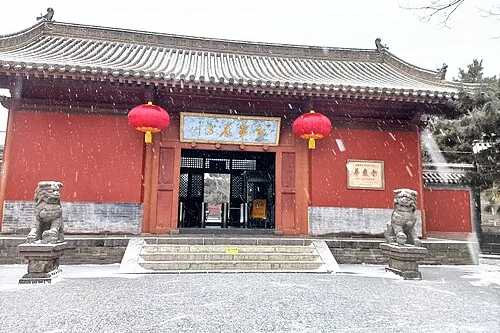
| Main Hall | Vairocana Buddha, Manjushri and Samantabhadra Bodhisattva |
| Three Holy Temples | Western Three Saints Theme |
Maitreya Temple
Principal figures: Maitreya
Maitreya, free translation of Cishi, is the future Buddha in Buddhism. The common images of joy and cloth bags in the Han region make compassion and hope for the future appear close; the image of generosity also carries the desire for family harmony, good encounters, and a calm life. Paying homage to Maitreya can be understood from two clues: the expectation for a stable future and the wish to get along with others in good faith.
The name Long Hua is associated with the Maitreya belief, and the temple presents this theme in the separate Maitreya Hall in the front. Maitreya also has viewing clues in the subsequent Tianwang Temple. The artistic expressions in different spaces jointly preserve the yearning for compassion and the future. Understanding Maitreya from the name of the temple to the statue can express wishes for a new stage of life, family harmony and peace of mind.
Associated wishes: You can pray for good luck and peace for moving, work or family changes, and explain the thing you most hope to stabilize. If you live in two places with your family temporarily, you can also communicate with each other in an open manner, expect to get together, and cherish the present together with hope for the future.
Tianwang Palace
Principal figures: Maitreya Theme, Skanda and the Four Heavenly Kings
Maitreya, free translation of Cishi, is the future Buddha in Buddhism. The familiar image of joy is associated with generosity, good deeds and future harmony. Wei Tuo is the heavenly general who protects the Dharma and the temple; the Four Heavenly Kings, Zhi Guo, Zeng Zeng, Guang Mu, and Duo Wen respectively contact the guardians of the four directions. Maitreya's compassion and the solemnity of the protector together form the theme of welcome and protection, giving cultural suspense to the new stage of auspiciousness, family harmony and safe entry and exit.
Longhua Temple The Heavenly King Hall and the independent Maitreya Hall in front form two spaces, where compassionate welcome and solemn protection unfold layer by layer. The role of Wei Tuo and the Four Heavenly Kings in guarding the study makes the blessings of peace not only oriented to the journey, but also concerned about the care in the common life. Holding pestles and utensils belong to the sculpture culture, and accommodation, visits and specific services are arranged according to the actual situation on site.
Associated wishes: You can wish for safety in traveling and commuting, and pray for mutual understanding for family members traveling with you. If you are facing a new life overseas, you can also write down the arrangements you are most worried about, wishing you good luck, have determination in your heart, and let your protective thoughts connect you with your relatives and friends.
Main Hall
Principal figures: Vairocana Buddha, Manjushri and Samantabhadra Bodhisattva
Vairocana Buddha, Manjusri and Samantabhadra Bodhisattva are collectively known as the Three Saints of Huayan. Vairocana is associated with the Dharmakaya and perfect enlightenment, Manjusri represents the wisdom of knowing things, and Samantabhadra emphasizes putting what you know and want into practice with his vast aspiration. This combination connects awareness, wisdom and action. It is not only suitable for academic studies and literary thoughts, but also can carry long-term goals, responsibility and good wishes.
The Main Hall of Longhua Temple uses the Three Saints of Huayan to unfold the theme of the main hall. The enlightenment of Vairocana, the wisdom of Manjusri and the wishes of Samantabhadra echo each other. The relationship between the three gives a complete cultural background to study and long-term goals: I am willing to see clearly, and I am willing to practice patiently, so that knowledge can become the power to take care of myself, my family and others. The Three Saints of Huayan, with Vairochana Buddha, Manjusri and Samantabhadra as their themes, should be recognized separately from the Western Three Saints in the Three Holy Temples. Their identities cannot be interchanged just because they have three Saints in their names.
Associated wishes: It can explain something that you are trying to understand or undertake, and pray for clarity, perseverance and reliable guidance. If your studies and responsibilities are heavy at the same time, you can also express your wish to have a clear direction and good support, so that what you have learned can gradually enter your life. The transition to higher education or career can express clear direction, careful preparation and continuous practice, allowing wisdom and action to support each other.
Three Holy Temples
Principal figures: Western Three Saints Theme
Amitabha Buddha, Avalokitesvara and Mahasthamaprapta Bodhisattva are collectively known as the Three Saints of the West. Amitabha Buddha is the main deity of Pure Land belief, and his name is associated with infinite light and infinite life; Guanyin responds to suffering with compassion, and is respected for his wisdom and power. The main Buddha and the two attendants jointly express the yearning for light, peace and happiness, and practice, so they always carry the thoughts of peace, support and gratitude for the deceased, relatives and friends.
Longhua Temple The Three Holy Temples are at the back of the central axis, continuing the theme of pure land peace, compassion and wisdom with the Three Saints of the West. It has its own main deity and combination with the three saints of Huayan in the main hall, allowing the temple to retain rich levels of worship: it can not only study and fulfill vows, but also provide peace of mind to relatives and friends, inner refuge and gratitude to the old friends.
Associated wishes: You can wish your family good health, you can also thank those who accompany you and remember your old friends. If there are still unfinished words, you can familiarize yourself with the language to express gratitude and wish him peace, so that Pure Land culture can carry concrete thoughts and treasures.
Write down the concerns in culture as your own wishes
Remain calm amidst changes
Maitreya Temple·Theme of Hope and Tolerance
Maitreya's identity as the future Buddha and the name of Tzu Shi tie the new stage of hope and generosity together. Longhua Temple preserves this culture from the name of the temple to the independent Maitreya Temple, so the changing prayers can care about the future and become more stable, and also hope that you can be more patient with the current people and situations. The adjustment to life away from home can also be expressed tenderly.
You can write down the changes you are experiencing and pray for physical and mental stability and good luck. If family members are also affected, you can explain the understanding you most hope to gain, and hope that each other will retain the expectation of communication and reunion, so that the hope can be carried by a concrete relationship.
Example of wish expression
I hope that when facing changes, I will not rush to deny myself, nor pass on my anxiety to others; I hope that I can prepare well and give each other some time to adapt.
Learn clearly and be willing to do it seriously
Main Hall·Theme of Manjusri and Samantabhadra
The Avatamsaka Triad connects Vairocana's awakening, Manjusri's wisdom and Samantabhadra's aspiration in practice. At Longhua Temple, this provides a setting for wishes to understand deeply and apply learning with perseverance. Studies, professional growth and family responsibilities can all connect with turning understanding into everyday action.
Describe what you are learning or taking on, the most difficult step and the support you need, and write down the preparations and responsibilities you are willing to persist in.
Example of wish expression
I hope that in the new stage I can learn clearly, be practical, and meet people who are willing to cooperate; I also hope that I can keep my promise, turn my clear direction into action, and not ignore the needs of my fellow travelers and family members.
People traveling together are safe and take care of each other
Temple of the Heavenly King·Protective Theme
Wei Tuo and the Four Heavenly Kings present a solemn theme by protecting the Dharma and guarding the practice. The Maitreya in the Palace of Heavenly Kings adds compassion and hope. These characters in the front of the Longhua Temple connect colleagues with safety and mutual understanding: I hope that long journeys will be safe, and that those who get along will receive reliable support, and that worries at home will be at ease.
You can write down who is traveling or adapting to a new environment, and pray for safe travel, good luck and a stable mind. If the trip requires taking care of different family members, we can also be willing to understand each other's pace and let the blessings be remembered by everyone who shares the burden.
Example of wish expression
May those traveling together have safe travels, and may we not neglect each other because we are on the road; wait when we need to, and help in time when needed.
Thank you for being with me, and I will miss you
Three Holy Temples·Pure Land Culture and Compassion Theme
Amitabha Buddha among the Three Saints of the West is associated with infinite light, infinite life and happiness in the Pure Land. Guanyin and Mahasthamaprapta are respectively accompanied by compassion and wisdom. The Three Holy Temples of Longhua Temple thus provide a clear sustenance for gratitude and remembrance: May the old friends be in peace, and may those who are still with us have some support in their hearts, and cherish the time we have spent together.
You can write down the name of the person you want to thank or miss, retain a shared experience, and express your blessings and unfulfilled thoughts. If you are unable to say goodbye in person while living overseas, you can still express your concern in familiar languages. May your family members support each other in commemoration.
Example of wish expression
Thanks for the care and companionship you gave me. I still remember those ordinary moments. May this feeling be peaceful for a long time, and may I cherish the people who are still around me.
In the image, continue to get to know each other Longhua Temple
Don’t go to Jing’an Temple, the most underrated attraction in Shanghai! ! ! 【Shanghai Longhua Temple】
Understand Shanghai Longhua Temple and nearby historical places through humanistic explanation.
考工志 · Bilibili · in Bilibili Watch original video
The video introduces both Longhua Temple and Longhua Martyrs Cemetery. The two places have different properties. The cultural themes of Vairocana, Manjusri and Samantabhadra in the temple can be further understood in conjunction with the main text.
If playback is restricted by the network or platform, the original video entrance can be used.
Commissioned services and fees
$220 USD · Basic service fee
In Longhua, Shanghai, write down your thoughts for the future and companionship
The basic commission includes tickets, incense, Buddha worship and making wishes; pictures and video visit records correspond to the specific temple, the selected offerings and this commission, and are delivered privately.
You can also entrust your family together. It is recommended that there be no more than 3 people per order, so that you can express your feelings one by one.
A private visit record will be provided 1-2 working days after the service is completed.
Anxin provides entrusted services independently and does not represent the temple. Basic commissions do not automatically include water and land rituals, bell-ringing activities, pagoda visits or other special events. Special needs must be confirmed first.
Select your wish, desired date and offerings and submit the request, then add official customer service for verification. Submission does not mean successful reservation, payment or seat reservation.
Yes Submit request and confirm with our team . There is no need to log in for consultation; the appointment has not been successful after submission.
About Longhua Temple , you may also want to know
Longhua Temple Is this the Longhua Temple in Shanghai?
This page refers to Longhua Temple in Xuhui, Shanghai, which is recognized and commissioned separately from temples with the same name in other areas.
Why is there Maitreya Hall and Heavenly King Hall in front?
This temple maintains the spatial sequence of the independent Maitreya Hall and the Tianwang Hall at the rear, which cannot be directly merged according to the front hall pattern common in other temples.
Are the Three Saints of Huayan the same as the Three Saints of the West?
Different. The Huayan Three Saints in the main hall are Vairocana Buddha, Manjusri and Samantabhadra; the three holy halls in the back are related to the theme of the Western Three Saints and should be understood based on the specific location.
Does the seven-hall system of Jialan in the Song Dynasty mean that all the current halls are from the Song Dynasty?
Not indicated. It shows that the layout is traditional, and most of the existing palaces contain levels of restoration from the Qing Dynasty and later generations.
Does the Longhua Evening Bell mean that the bell can be rung every time?
The evening bell is an image of local culture and history. The specific activities and whether you can participate need to be confirmed separately. The basic commission does not automatically include ringing the bell.
Does the ancient pagoda have to be included in the Buddha worship commission?
Longhua Tower is outside the mountain gate and has its own space and arrangement. If it specifically involves an ancient pagoda, it should be explained first, and then the feasible scope should be confirmed.
Longhua Temple and Shanghai City God Temple can both express family wishes. How should they be compared?
Longhua Temple presents Buddhist traditions of Maitreya, Avatamsaka and the Pure Land. City God Temple has the City God, wealth deities and Yue Lao within Taoist and local traditions. Explore the particular figures alongside family customs and your original temple connection.
How can a wish for a new stage in my career express both wisdom and action?
You can explain your current choices, the skills you need to learn, and the responsibilities you are willing to assume, and then write about the help you hope to encounter. The wisdom of Manjushri and Samantabhadra’s vows can make preparation and practice enter the heart of the wish at the same time.