Quick understanding
- Is this Baiyun Temple in Beijing?
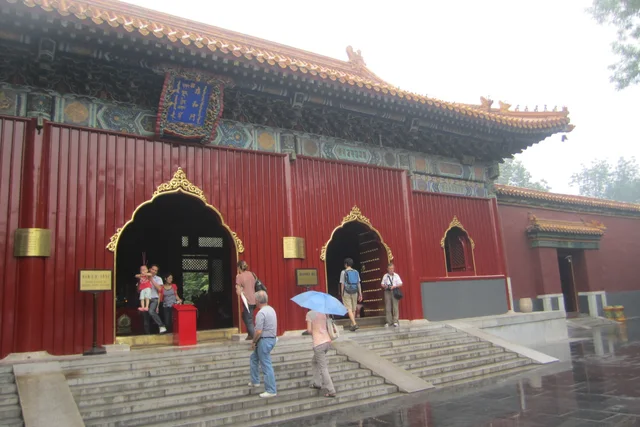
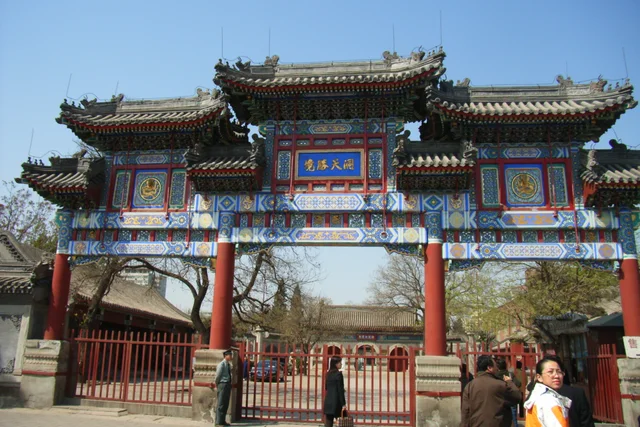
This page introduces the Baiyun Temple at No. 9 Baiyun Temple Street, Xicheng District, Beijing. It is an important ancestral temple of Quanzhen Taoism. It is not the same place as the temple with the same name in Shanghai and other places.
- Which principal figures are venerated at Baiyun Temple?
The halls have distinct figures: Qiuzu Hall commemorates Qiu Chuji, Sanqing Pavilion houses the Three Pure Ones, and Siyu Hall honours the Four Sovereigns. Yuanchen Hall is associated with Doumu and the deities of the sixty-year calendrical cycle.
- What wishes do visitors commonly express here?
Jade Emperor, Yuanchen and Yuanjun traditions provide settings for wishes about safety, seasonal wellbeing and family care. These are religious traditions and personal intentions, not certification that one kind of wish is more likely to succeed.
- City where you are located
- Beijing · Xicheng District
- Religious Tradition
- Taoism · Important Ancestral Court of Quanzhen Taoism
- Principal figures venerated
- Halls honour the Three Pure Ones, Four Sovereigns, Qiu Chuji and Yuanchen figures
- Cultural highlights
- Ancestral inheritance, Taoist temples and folk customs in the capital
In Beijing Baiyun Temple, put the things you care about
The Three Pure Ones, Jade Emperor, Yuan Chen and the Patriarch's lineage each have roles in Beijing's Baiyun Temple. Peace at all times, well-being of family, and smooth life can be read from the specific palace and current responsibilities respectively.
Peace at home and at home when you are old
Understand the themes related to Yuan Chen and Jade Emperor, expressing the family's daily life and the stability of the new stage.
Continue to learn →Distinguish between gods and ancestors
The Three Pure Ones, Qiu Chuji, Yao Wang and the theme of rescuing suffering each have their own identities and cultural backgrounds.
Continue to learn →Compare Wudang Zixiao Palace
Both belong to Taoist culture, Zhenwu and Quanzhen Ancestral Courts each have their own inheritance focus.
Continue to learn →From Taoist Temple in Tang Dynasty to Quanzhen Ancestral Court
The history of Baiyun Temple in Beijing can be traced back to Tianchangguan in the Tang Dynasty. After the changes in the Jin and Yuan dynasties, especially the inheritance of Qiu Chuji and his disciples, this place gradually became an important ancestral home of Quanzhen Taoism. Continuous construction during the Ming and Qing Dynasties formed the important layout of the palaces seen today. Understanding this period of history can distinguish Baiyun Temple from Taoist temples of the same name elsewhere, and also understand why it occupies a unique position in Beijing's religious culture.
Quanzhen traditions make Baiyun Temple more than a collection of deities. Qiuzu Hall and the old ordination hall connect commemoration of patriarchs with precepts and lineage. The two Chinese surname variants used for Qiu Chuji refer to the same person, not different patriarchs. Understanding these teachers and practices helps explain the halls' relationships.
Follow history and understand Beijing Baiyun Temple
- Tang Dynasty
The starting point of Tianchangguan
The history of Taoist temples can be traced back to the Tang Dynasty, establishing a long-term tradition of temples.
- Jindai
History of the palace
After experiencing changes in name and architecture, it became the historical foundation for the subsequent development of Quanzhen Taoism.
- Yuan Dynasty
Deepening of Quanzhen inheritance
The activities of Qiu Chuji and his followers closely connected this place with the tradition of the founder of Quanzhen Taoism.
- Ming and Qing Dynasties
Courtyard and the tradition of ordination
The palace continues to be built, and the memorial of the ancestors and the inheritance of precepts are carried out in the palace.
Why are the Three Pure Ones, the Jade Emperor and the Patriarch separated in different halls?
Baiyun Temple brings together distinct traditions. The Three Pure Ones are central Taoist divinities; the Jade Emperor relates to heavenly beliefs; Quanzhen patriarchs represent a specific lineage. Yuanchen and Medicine King halls connect calendars and care with everyday hopes. These are not interchangeable names or a checklist of functions.
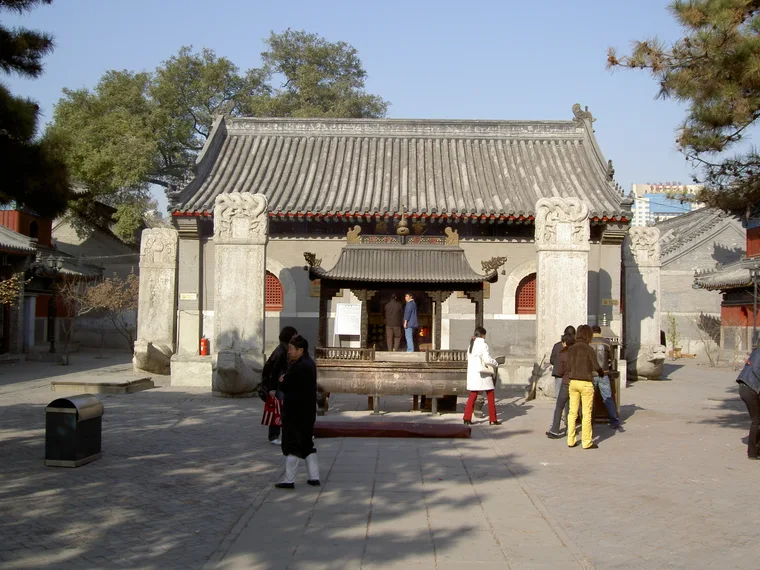
Lingguan Hall, Jade Emperor Hall, the old ordination hall, Qiuzu Hall and halls of the Three Pure Ones and Four Sovereigns present guardians, heavenly beliefs, patriarchs and principal divinities along the central axis. Side courtyards connect Taoism with everyday life. The table offers an introduction; together these spaces express Baiyun Temple's Quanzhen heritage and local traditions.
Yan Jiu, Stone Monkey and Old Beijing during the New Year Festival
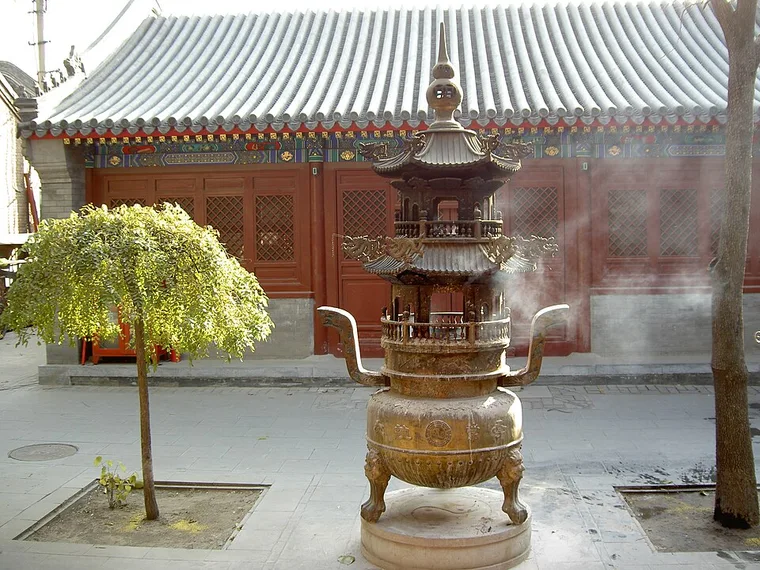
The public memory of Baiyun Temple, as well as temple fairs and New Year customs. Yan Jiu is connected with Qiu Chuji’s commemorative tradition, and customs such as touching stone monkeys and making money eyes have entered the New Year narrative of old Beijingers. They retain the way people use one movement to express their wishes and celebrate the festival with relatives and friends. They also give Baiyun Temple a distinct urban life atmosphere in addition to its religious history.
From a folk perspective, prayer often makes abstract wishes expressible: wishing a successful year, commemorating loved ones, caring for the health of family members, or reorganizing life in a new stage. These customs need to be understood within their respective historical and religious contexts. For people overseas, understanding them is also reconnecting with a familiar cultural language.
At Baiyun Temple in Beijing, explain clearly the worries about life and daily life
This is Baiyun Temple in Beijing, distinct from similarly named temples elsewhere. The Three Pure Ones, Four Sovereigns, Jade Emperor, Quanzhen patriarchs and Yuanchen traditions have distinct roles. Qiu Chuji's practice and care for people provide a human setting for reflection, responsibility and generosity.
Expressing feelings for peace in old age can indicate the new stage that the family is going through; for peace of mind for the elders, you can write about daily life, care and support from caregivers; for success in career and life, it can express determination, trustworthiness and hope for a steady step. When you are not familiar with the technical terms, you can also express your concern carefully in everyday language.
For a visit to give thanks, keep the full location—Baiyun Temple in Beijing—together with your original wish and any promise you made. Memorial tablets, Tai Sui observances and rituals led by Taoist priests require separate confirmation; describing figures venerated here does not include those services in a basic visit.
Understanding the halls and the figures within them
| Palace or space | Figures and cultural roles |
|---|---|
| the Three Pure Ones Sigoden | The Three Pure Ones and Four Sovereigns |
| Jade Emperor Palace | the Jade Emperor |
| Laolu Hall and Qiuzu Hall | Quanzhen Patriarch, Qiu Chuji |
| Yuan Chen Hall | Doumu Yuanjun and deities of the sixty-year calendrical cycle |
| The Palace of Medicine King and Suffering Relief | Medicine King Sun Simiao and Taiyi save Ku Tianzun |
the Three Pure Ones Sigoden
Principal figures: The Three Pure Ones and Four Sovereigns
The Three Pure Ones refer to Yuanshi Tianzun, Lingbao Tianzun and Daode Tianzun. They are an important deity system in Taoism. Daode Tianzun, also known as Taishang Laojun (Lord Lao), is associated with the teaching tradition of Laozi and Tao; the Three Pure Ones overall embody the understanding of Tao, the generation of the universe and the inheritance of teachings. The Four Rulers connect heaven, earth and the protection of the order of all living beings. Knowing these gods in the same building, you can see how Taoist beliefs understand the relationship between heaven and earth, man and life.
When paying homage to the Three Pure Ones, the common thoughts are to respect Taoism and cultivate virtue, to increase happiness and wisdom, to have peace of mind and body, and to have peace in the family. It is not like Wenchang or God of Wealth, which only revolves around a certain type of civil responsibilities, but is more holistically concerned with how a person settles his body and mind and gets along with the world and others. Hopes for less turmoil in life, a harmonious family, or reorienting oneself in a new stage can be used as solemn prayers.
Associated wishes: It can express the peace of the family, increased happiness and wisdom, physical and mental peace and a harmonious life. If you have a lot of things to worry about, you can write down the most important people and responsibilities first, and then explain how you hope to live a stable and orderly life this year.
Jade Emperor Palace
Principal figures: the Jade Emperor
The Jade Emperor is a Taoist deity familiar to the Chinese people, who often appears as the ruler of the heavens. Relevant beliefs understand the four seasons, the order of heaven and earth, and the well-being of all living beings together. Therefore, the Jade Emperor belief is widely related to praying for blessings at every age, wishing for peace and smooth life. The image of the god-honoring emperor expresses the control and protection in faith, not just the correspondence of ancient official positions.
People’s prayers to the Jade Emperor often revolve around a year of peace, family stability, smooth career, and safe travel. For people who live cross-border, these wishes are often connected with each other: a stable job, family care, and safe travel, all of which hope for an orderly continuation of life. When paying tribute to the Jade Emperor, you can combine different aspects of your concerns into a clear and complete heart.
Associated wishes: It is suitable to express blessings at every age, peace at home, smooth work and stable travels. You can write down which stage you are at, who you most want to protect, and the arrangements you care about most in the coming period.
Laolu Hall and Qiuzu Hall
Principal figures: Quanzhen Patriarch, Qiu Chuji
The old ordination hall honours Quanzhen patriarchs; Qiuzu Hall commemorates Qiu Chuji, whose surname has two Chinese written forms. Also called Changchunzi, he is an important Quanzhen patriarch connected with the Longmen lineage and Baiyun Temple's history. Self-cultivation, discipline, teaching lineages and care for people's lives are part of understanding this tradition.
Paying homage to the ancestors can express the desire to strengthen one's mind, cultivate one's mind and body, meet good teachers and have good luck in dealing with things. Difficulties in work pressure, family relationships, or long-term goals often require patience and self-discipline; the ancestral lineage provides a spiritual background for such thoughts. Rather than understanding the Patriarch as a god who specializes in a certain outcome, it is easier to understand the power you want to cultivate from his life and teachings.
Associated wishes: It can express the wish of meeting a good mentor, knowing the direction, being determined and having a harmonious family. People who want to be less impatient, handle relationships properly, or maintain their original intentions in long-term plans can write down the things they want to stick to and the things they want to improve.
Yuan Chen Hall
Principal figures: Doumu Yuanjun and deities of the sixty-year calendrical cycle
Yuanchen Hall honours Doumu Yuanjun and deities associated with the sixty-year calendrical cycle. Doumu's Chinese name has several written variants and relates to stellar traditions. The cycle combines heavenly stems and earthly branches; a person's natal Yuanchen relates to their birth year. This connects time, stages of life and seasonal wishes, familiar in New Year customs.
People pay homage to their natal Yuanchen and often pray for a year of good luck, good health, family stability, and safe travel. Some people also use it to express their hope of adapting smoothly and reducing twists and turns when moving, changing jobs, or other important stages. To understand Yuan Chen, you don’t need to label yourself as good or bad first; you can start to understand its prayer tradition by cherishing the current year and taking good care of yourself and your family.
Associated wishes: Common prayers are for a safe life, good luck in life, health for the family, and stability in the new stage. It can explain the most important concerns of the year, such as traveling far away, changing jobs or family reunions, and pray that all arrangements will unfold smoothly.
The Palace of Medicine King and Suffering Relief
Principal figures: Medicine King Sun Simiao and Taiyi save Ku Tianzun
Sun Simiao, King of Medicine, and Taiyi, who saved Ku Tianzun, are two different clues of belief. Sun Simiao was respected for his medical writings and benevolence in helping the world, and was later revered as the King of Medicine. Taiyi, the God of Rescue, is revered in Taoism for his image of seeking help from suffering and mercy, and is often associated with nine-headed lions in statues. One carries the culture of medicine and benevolence, and the other embodies care for all living beings in distress.
To express their wishes to the King of Medicine, people often pray for the health, physical and mental stability of their loved ones, and for smooth care; to salute the God of Suffering, they often express their hope to alleviate their sorrows and survive difficult situations safely. Both are related to life care, but the identities and stories are different. If your family members are experiencing hard work, recuperation, or psychological difficulties, you can sort out what you want to say from the perspectives of well-being and relief.
Associated wishes: It is suitable for wishing for the longevity of the elders, the health of the family, the relief of sorrow and the safe passage of difficult times. Writing down the people and situations you care about, as well as the companionship you want to convey, will make your feelings clearer.
Write down the concerns in culture as your own wishes
Have peace when you are old
Yuanchen Hall · Doumu Yuanjun and sixty-year cycle deities; Jade Emperor Hall · the Jade Emperor
Yuanchen belief connects personal life stages with the traditional zodiac calendar, so people often pray for good fortune and peace for themselves and their families at the beginning of the year. The Jade Emperor belief carries the wish to receive blessings from the perspective of the weather and the overall order of life. An arrangement that is closer to the individual for this year, and one that is more accommodating to the life concerns of the whole family, both of which can help you understand Baiyun Temple’s culture of praying for blessings during the year.
You can write down what matters most to you this year: family travel, job changes, relocation, or waiting for reunion, and then pray for stable travel, good health, and smooth arrangements. There is no need to first interpret ordinary life changes as good or bad; the focus of the wish is on the person you wish to protect and the period of time you wish to spend smoothly.
Example of wish expression
May your family be stable this year, be calm in times of trouble, and make important choices carefully and clearly.
Elderly and family health
Palaces related to the King of Medicine · Sun Simiao; Palace of Rescue from Kuku · Taiyi Saves Kutianzun
Medicine King Sun Simiao’s belief is related to medicine, benevolence and saving the world, and is suitable for expressing wishes for the well-being of elders and relatives; Taiyi Suffering God embodies the tradition of compassion and rescuing suffering, and is suitable for expressing the hope that relatives will be less worried and survive difficulties safely. Well-being and relief from worries have their own emphasis, and they often appear together in a wish written for the family.
If you are concerned about your elderly parents, you can pray for a long and stable life and less fatigue; if your loved ones are recuperating or experiencing depression, you can write down your wishes for care and peace of mind, as well as your concerns that you want to be with them but are not around for the time being. A specific family background can allow wishes from afar to retain your voice.
Example of wish expression
May my family have less toil, may my recovering relatives be properly taken care of, and may I have the patience to accompany them.
Career and life go smoothly
Jade Emperor · the Jade Emperor; Laolvtang, Qiuzu Palace · Quanzhen Patriarch
Belief in the Jade Emperor is connected with receiving blessings every year and the stability of overall life. People will pray for success in their livelihood, work and family responsibilities. The self-cultivation tradition of Quanzhen Patriarch provides another layer of sustenance: I hope that I will have determination in the face of pressure and changes, encounter good destinies, and seriously assume the choices I have made. The external arrangements for your career and your inner aspirations can be expressed in the same wish.
You can explain whether you are looking for a job, changing jobs, running a business, or starting a new cooperation, and pray for a stable job, smooth communication, and a smooth life. You can also express your hope to your ancestors that you will have a clear direction, be patient, and meet people worth learning from. Let your career aspirations also include your expectations for family life and personal growth.
Example of wish expression
I hope that I can work hard, cooperate honestly, take good care of my family's life, and be kind to the people I work with.
Family harmony and self-stability
the Three Pure Ones Siyudian · the Three Pure Ones related gods; Qiu Zudian · Qiu Chuji
the Three Pure Ones Faith can be understood in terms of respecting Taoism, cultivating virtues, and being in harmony with body and mind. Quanzhen Patriarch's inheritance emphasizes cultivation and persistence. For family relationships, these two clues can carry the thoughts of harmony, consideration and stability: I hope that my loved ones are safe, but I also hope that I will be less impatient and still be willing to care for others despite distance, busyness and disagreements.
Families living in different places can pray for mutual understanding and smooth reunion; people who are dealing with relationship difficulties can also express their willingness to listen more patiently and clarify misunderstandings. If you care more about your own mood, write down the emotions you want to settle down and the direction of life you want to stick to, so that your prayers can take care of your family as well as yourself.
Example of wish expression
I wish I would be less impatient and more considerate, so that the family can still understand each other despite the busyness and distance.
In the image, continue to get to know each other Beijing Baiyun Temple
Beijing Baiyun Temple: Middle Road Temple and Quanzhen Longmen Sect
Explore Quanzhen patriarchs and devotional traditions through the central halls of Beijing's Baiyun Temple.
文津京史寻踪 · Bilibili · in Bilibili Watch original video
Lingguan, Jade Emperor, Patriarch and the Three Pure Ones belong to different cultural clues. When viewing, you can refer to the palace table to understand how the palace organizes these spaces.
If playback is restricted by the network or platform, the original video entrance can be used.
Commissioned services and fees
$221 USD · Basic service fee
In the Taoist tradition, place a heart
The basic commission includes tickets, incense, Buddha worship and making wishes; pictures and video visit records correspond to the specific temple, the selected offerings and this commission, and are delivered privately.
You can also entrust your family together. It is recommended that there be no more than 3 people per order, so that you can express your feelings one by one.
A private visit record will be provided 1-2 working days after the service is completed.
Anxin provides independent entrusted services and does not represent Gongguan. Tai Sui tablets, Taoist rituals, etc. are not included in ordinary basic entrustments; optional offerings are priced separately.
Select your wish, desired date and offerings and submit the request, then add official customer service for verification. Submission does not mean successful reservation, payment or seat reservation.
Yes Submit request and confirm with our team . There is no need to log in for consultation; the appointment has not been successful after submission.
About Beijing Baiyun Temple , you may also want to know
Is this the Baiyun Temple in Beijing or the Baiyun Temple in Shanghai?
This page introduces Baiyun Temple in Xicheng District, Beijing. It is introduced and provides services separately from other temples with the same name, and should not be used interchangeably because of the same name.
Do Sanqing Pavilion and Siyu Hall honour the same figures?
No. The architectural introduction describes two levels: Sanqing Pavilion above and Siyu Hall below, each with its own devotional tradition.
What wishes are suitable for Baiyun Temple to express?
You can start from personal thoughts such as peace, stability throughout the years, family care and gratitude. Cultures such as Yuan Chen and Yuan Jun provide clues to understanding these traditions, but they do not promise results.
What is the fee of $221?
This is Anxin’s basic quotation for an independent commission at Baiyun Temple in Beijing, which revolves around Taoist salutes, wish expressions and photo/video visit records. Optional offerings are priced separately.
Does the basic service include Tai Sui tablets or Taoist rituals?
Not included. Ordinary commissions and formal rituals and tablets are different items; if there are special needs, customer service will confirm and explain to you separately.
I don’t understand Taoist titles, how should I write my wish?
Just write clearly in your own words who you wish for and what you want to express. Customer service will help you understand and organize it, and you are not required to master scriptures or techniques first.
May you wish for peace, job stability, and well-being for your parents in the new year? Can you express it in a wish?
You can explain the situation of your loved ones and yourself respectively, and write clearly the care and support you hope to receive and the responsibilities you are willing to assume. Themes such as Yuan Chen, Medicine King and Patriarch all have their origins, so there is no need to combine different thoughts into one empty wish.
Baiyun Temple and Zixiao Palace are both Taoist temples. Which one is more suitable?
Baiyun Temple is known for its Quanzhen heritage and figures venerated across several halls. Zixiao Palace highlights Zhenwu and gratitude towards parents. Compare the figures you wish to honour, family customs and your existing connection; when giving thanks, start with the original location.