Quick understanding
- Does Shangqing Palace only serve one god?
No. The complex includes halls of the Three Pure Ones and Jade Emperor, while Wenwu Hall honours Confucius and Guan Yu. These present distinct Taoist and cultural themes.
- Are Shangqing Palace and Laojun Pavilion the same palace?
No. Shangqing Palace has its own courtyard; after leaving the hospital, you can go up to other palaces and pavilions. Laojun Pavilion at the top of the mountain cannot be directly used as the main palace of Shangqing Palace.
- How to understand the story of Yuanyangjing and Maguchi?
They belong to the landscape and legend clues of the palace. Relevant cultural meanings can be recognized and should not be used to make promises about marriage, health, or other realistic outcomes.
- Location
- Dujiangyan, Sichuan·East slope of Pengzu Peak, Qingcheng Mountain
- Historical level
- Clues to the origin of the Jin Dynasty; reconstructed memories of the Tang Dynasty
- Main palace
- the Three Pure Ones Hall, Jade Emperor Hall and Wenwu Hall
- Cultural highlights
- Calligraphy, painting, stone carvings, courtyards and well legends
In Shangqing Palace, put the things you care about
This is the Shangqing Palace in Qingcheng Mountain, Sichuan. The Three Pure Ones, Jade Emperor and Wenwu Palace each have a theme, which can be understood respectively as self-cultivation, knowledge seeking, trustworthiness and daily responsibilities.
Sort out the confusing emotions
From the Three Pure Ones practice and quiet culture, organize the choices and responsibilities before you.
Continue to learn →Understand the Wenwu Palace
Confucius and Guan Yu respectively connected learning, self-cultivation, integrity and responsibility, and retained their respective identities.
Continue to learn →Compare with Wudang Zixiao Palace
These mountain Taoist temples have different principal deities and local lineages.
Continue to learn →The origin of the ancient palace and the buildings in front of you, understanding the time respectively
The history of Shangqing Palace can be traced back to the Jin Dynasty, and there are records of reconstruction during the Xuanzong period of the Tang Dynasty, preserving its long-term status in Qingcheng Mountain culture. Today's buildings were mainly rebuilt from the late Qing Dynasty to the early Republic of China. Early traditions and later constructions together constitute the history of the palace, allowing for continuous and concrete space for quiet practice.
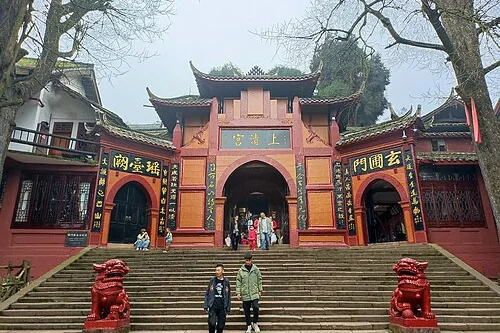
Behind the palace gate, stone steps, corridors and palaces are connected according to the terrain. The process of viewing buildings in the mountains often involves turns and height differences; focusing on the connections between courtyards can provide a clearer understanding of how they place spaces for worship and practice in the mountain environment.
Shangqing Palace is located in the larger landscape combination of Qingcheng Mountain. It is connected by paths with Donghua Hall, Laojun Pavilion and other places, and there are independent courtyards, history and salutation themes everywhere. Understanding the Three Pure Ones, the Jade Emperor and the Wenwu Palace inside the Shangqing Palace, and then identifying the palaces and pavilions in the mountain that continue upward can clearly correspond to the scope of the visit and the cultural content.
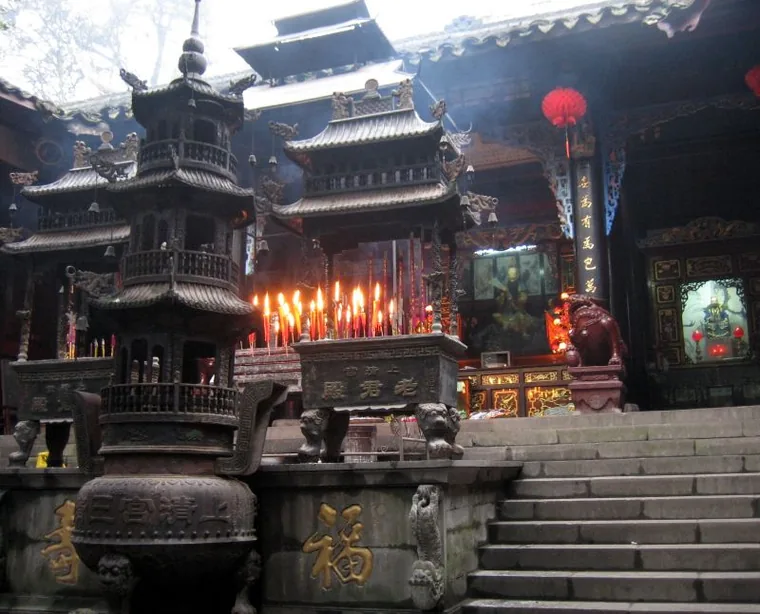
Follow history and understand Shangqing Palace
- Jin Dynasty
Clues to the origin of Shangqing Palace
The history of the palace traces its construction back to the Jin Dynasty, forming an early memory of Taoist culture in Qingcheng Mountain.
- Tang Dynasty
Reconstruction during the Xuanzong Period
Shangqing Palace History preserves records of reconstruction during the Xuanzong period of the Tang Dynasty.
- Late Qing Dynasty to early Republic of China
Reconstruction levels of existing buildings
Today's palace buildings were mainly rebuilt during this period, allowing the tradition of early palaces to continue through later constructions.
the Three Pure Ones, Jade Emperor and Wenwu, each has its own cultural position
After entering the palace, you first go to the Three Pure Ones Hall, and then go up through the cloister to the Jade Emperor Hall, which forms the main palace relationship. The Three Pure Ones are revered for Taoism, scriptures and enlightenment, while the Jade Emperor links order and responsibility with the control of heaven. Different deities have their own positions in the Taoist system, so that tranquility, self-cultivation and common peace have their own sustenance.
The long corridor on the left leads to the Wenwu Hall, where Confucius and Guan Yu form the theme. Confucius is respected for his education, study and self-cultivation. Guan Yu's history is connected with later generations of Guandi culture with loyalty, trustworthiness and responsibility. The juxtaposition of civil and military forces connects learning with character, and also provides a cultural background for keeping promises, cooperating, and assuming responsibility.
Art and stone inscriptions add another way to explore the halls. Images of the Queen Mother, Magu, Zhang Sanfeng and Lady Huarui connect with different people and stories; not every portrait represents an independent shrine of the same kind. Distinguish portraits, inscriptions and devotional spaces.
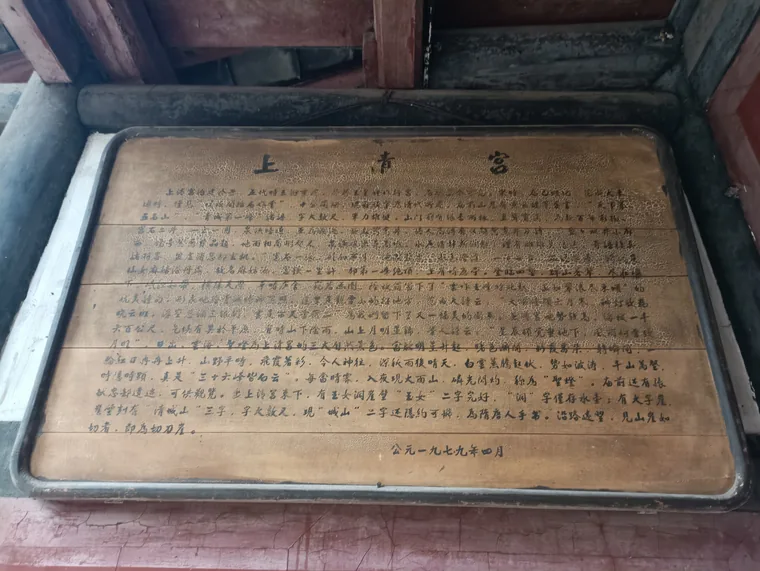
Legends of wells and paintings, different memories left in the mountains
The Yuanyang Well enters the Shangqing Palace in the shape of a square and a circle. It is narrated locally, and related legends are preserved in Maguchi. Stories give the landscape a cultural meaning that can be conveyed. The shape of the well and the mountain environment together form a visiting experience; people can understand the temple from its name, space and story, and also cherish the human feelings and imagination within it.
Calligraphy, painting, couplets and stone carvings preserve another type of cultural memory. They are not only related to the interactions between characters, but also connected to the long-term accumulated aesthetic experience of the palace. When looking at a Taoist temple, you don't have to just look for the function of a certain god; the relationship between words, architecture and mountains and forests is also worth stopping at.
Quietness can be a feeling in the mountains, or it can be a practice after returning to daily life. When writing your thoughts about studies, relationships or responsibilities, you might as well distinguish what is worth holding on to and what can be let go, and then write down the changes you are willing to implement. A blessing does not help people make their choices, but it can help them face their own choices seriously.
In Qingcheng Shangqing Palace, distinguish the clues of self-cultivation, study and trustworthiness
Shangqing Palace is a specific temple on Mount Qingcheng, not interchangeable with similarly named Taoist temples elsewhere. Sanqing Hall, Jade Emperor Hall and Wenwu Hall connect with cultivation, order, learning and integrity. Understanding their names and figures gives context to wishes for a calmer, steadier life.
Wenwu Hall honours Confucius and Guan Yu, relating to learning and self-cultivation, integrity and responsibility. Wishes for studies may concern curiosity, concentration and humility; work or cooperation may concern keeping promises and acting carefully. Sharing a hall does not make the figures identical or reduce them to one financial function.
When choosing among Qingcheng's Shangqing Palace, Wudang's Zixiao Palace and Beijing's Baiyun Temple, compare the figures venerated and your family's customs. If you made a wish at Qingcheng, record the specific temple and original promise before giving thanks. Sharing a mountain tradition or religion does not make places interchangeable.
Understanding the halls and the figures within them
| Palace or space | Figures and cultural roles |
|---|---|
| the Three Pure Ones Temple | the Three Pure Ones |
| Jade Emperor Palace | Jade Emperor |
| Civil and Military Hall | Confucius and Guan Yu |
the Three Pure Ones Temple
Principal figures: the Three Pure Ones
The Three Pure Ones are the Yuanshi Tianzun, Lingbao Tianzun and Daodetianzun of Taoism. Daodetianzun is also called Taishang Laojun (Lord Lao). The three deities are respected from Taoism's understanding of the origin of the universe, scriptures and enlightenment, and constitute the core deity system of the temple. Paying homage to the Three Pure Ones is often linked to the teachings of quiet self-cultivation, respect for Taoism and cherishment. It also provides a cultural background for the wish to have a clear mind and moderate words and deeds.
Qingcheng Mountain Shangqing Palace starts with the Three Pure Ones Hall to start the core salute, and then goes up to the Jade Emperor Hall through the cloister, showing the respective identities and palace relationships of Taoist gods. By getting to know the Three Pure Ones at the mountain temple, you can learn from the tradition of respecting Taoism and spiritual practice, how to place your mind on tranquility, moderation and honesty, and cherish the opportunity to reorient yourself in the chaotic life.
Associated wishes: It can be used to reduce impetuosity, see choices clearly, and cultivate one's self. It explains the situation that affects the most emotionally recently. If you take on multiple roles overseas, you can pray for stability in your heart and understanding in your relationships, so that tranquility can become a desire to take care of yourself and others.
Jade Emperor Palace
Principal figures: Jade Emperor
The Jade Emperor is an important deity in Taoism who governs the heavens and connects the order of heaven and earth. Folks also call him the Jade Emperor. Its cultural image combines dignity and responsibility, allowing people to express their feelings for a safe home, a stable life together, and good weather. Understanding this salute in terms of order also allows us to see the connection between personal words and deeds, commitment to others, and group peace.
Shangqing Palace The Jade Emperor Palace and the Three Pure Ones Palace are connected by a cloister, forming a worship space that continues upward; the Laojun Pavilion at the top of the peak has its own location and theme. Different temples in the mountain give Taoist deities their own sustenance, and also allow visitors to pray for stability in family, work and common life, and cherish their responsibilities in addition to respecting Taoism.
Associated wishes: You can explain the family or work responsibilities you are undertaking, and pray that the arrangements will be stable and those traveling with you will be safe. If family members live in different countries, they can also bless collaboration and communication. May important matters be taken seriously and each other receive reliable support.
Civil and Military Hall
Principal figures: Confucius and Guan Yu
Confucius is an important thinker and educator in the Confucian tradition, linking learning, self-cultivation, and teaching; Guan Yu is a historical figure of the Three Kingdoms, and later generations respectfully developed the Guandi culture that values faith, loyalty, and responsibility. The combination of civil and military worship juxtaposes learning and character, seeking knowledge while cherishing honesty and keeping promises, and provides concrete cultural sustenance for trust in academic studies, work cooperation and relationships.
Wenwu Hall at Qingcheng's Shangqing Palace honours Confucius and Guan Yu and connects with the courtyard through a corridor. Confucius represents learning and self-cultivation, Guan Yu integrity and responsibility. Nearby art and inscriptions add other forms of commemoration. This particular “civil and martial” pair is not automatically Wenchang and a martial wealth deity.
Associated wishes: It can be used to set aspirations for study, character growth, or fulfillment of commitments, indicating the direction of study and the most cherished trust. When studying abroad or cooperating with people of different cultures, you can also express your willingness to be taught with an open mind and keep your promises, so that the expectation of success is connected with the way you treat others. Preparing for exams can express intellectual curiosity, humility, and preparedness; desire for cooperation and career can emphasize trustworthiness, responsibility, and willingness to fulfill responsibilities.
Write down the concerns in culture as your own wishes
Slowly sort out the chaotic heart
the Three Pure Ones Temple · Self-cultivation and tranquility theme
the Three Pure Ones express respect for the Tao, scriptures and enlightenment in Taoism, while quiet practice is concerned with how people regulate their mind and arrange their behavior. The mountain environment of Shangqing Palace pays homage to the Three Pure Ones, which provides a concrete cultural background for sorting out chaotic emotions. I wish to be less impetuous and see the importance clearly, which can include an understanding of the direction of life, and also include gentleness towards my family and myself.
You can name the issues that have been worrying you recently, and pray that your mind will be stable and your choices will be clear. If you are moving or changing careers, you can also write down the values you hope to maintain. You hope you will maintain honesty, moderation, and care in your new life.
Example of wish expression
I wish I would be less led by chaos and see clearly what is truly important; I wish I would not be in a hurry to give an answer to all questions, but settle for the present moment first.
Stay steady in the midst of responsibility
Jade Emperor Palace·Theme of Order and Responsibility
The image of the Jade Emperor as a celestial ruler is associated with order, responsibility and common peace. People pray for smoothness in their homes, career arrangements and social life. Shangqing Palace Jade Emperor Palace allows this feeling to fall on a specific palace: I hope that things will proceed in an orderly manner, and that those who take responsibility will be supported, and that everyone traveling with them will be safe.
It can explain the family affairs or work arrangements that are being taken care of, and wish peace to relevant relatives, friends and companions. If you are coordinating the time difference and responsibilities between the two places overseas, you can also pray for clear communication and mutual understanding, so that stable expectations can be concrete to the people living together.
Example of wish expression
May your family go out safely and live a stable life. I also hope that I will explain clearly what I need to remind you, do what I need to prepare for, and not panic or shirk when things happen.
Study with direction and humility
Wenwu Hall·Confucius and the theme of learning and self-cultivation
Confucius’ educational tradition values learning, seeking advice and self-cultivation. Confucius in the Hall of Civil and Military Affairs expresses his desire to learn and cares about knowledge and character at the same time. He is willing to be guided by teachers, and he is also willing to remain humble and cherish teachings. For cross-cultural learners, this teaching culture can also carry the understanding of language, living habits and different experiences. Asking questions can be an entrance exam, or it can be a vocational study or a willingness to continue asking for advice when facing a strange life, so that the growth of skills and self-cultivation are connected.
State the stage of study, the issues you want to understand most, and the humility you wish to maintain. Then express your willingness to prepare carefully and cherish the teachings.
Example of wish expression
I hope that I will have a direction in my studies, be willing to ask for advice when I don’t understand something, be trustworthy in my work, cherish the help of teachers and family, and use the skills I have learned to take on life seriously.
Keep the promises you have made
Wenwu Palace·Guan Yu and the theme of Integrity
Guan Yu was revered in later Guandi culture for his loyalty and trustworthiness, and the Wenwu Hall juxtaposed this image with Confucius' tradition of self-cultivation. Keeping promises therefore not only cares about getting things done, but also values honesty, responsibility and mutual dependence in the relationship. Praying for cooperation, partnership, or family responsibilities can be developed from such cultural meanings.
You can name a promise that you want to fulfill most seriously, and wish the people involved to be stable and trust each other. If distance or work changes make it difficult to fulfill the contract, you can also write down the understanding you hope to gain. May you have the courage to explain the situation so that the promise can withstand candid communication.
Example of wish expression
I hope that I will cherish the trust given by others, carefully consider before agreeing, and complete it with all my heart after agreeing; I will also explain frankly when encountering difficulties.
In the image, continue to get to know each other Shangqing Palace
World Heritage Qingcheng Mountain: Shangqing Palace, the highest Taoist temple in Qingcheng Mountain, was built in the Jin Dynasty
Understand the Taoist architecture in Qingcheng Mountain from the on-site images of Shangqing Palace.
天迹4517 · Bilibili · in Bilibili Watch original video
The video revolves around the Shangqing Palace in Qingcheng Mountain; the Laojun Pavilion on the top of the mountain and the main palace are different spaces. The prayer content can be understood in conjunction with the Three Pure Ones, the Jade Emperor and the civil and military culture in the text.
If playback is restricted by the network or platform, the original video entrance can be used.
Commissioned services and fees
$227 USD · Basic service fee
In Qingcheng Shangqing Palace, write down your thoughts for tranquility and responsibility
The basic commission includes tickets, incense, Buddha worship and making wishes; pictures and video visit records correspond to the specific temple, the selected offerings and this commission, and are delivered privately.
You can also entrust your family together. It is recommended that there be no more than 3 people per order, so that you can express your feelings one by one.
A private visit record will be provided 1-2 working days after the service is completed.
Anxin provides entrusted services independently and does not represent Gongguan. The basic commission does not automatically include Donghua Hall, Laojun Pavilion or other Qingcheng Mountain palaces, nor does it include unconfirmed ritual arrangements.
Select your wish, desired date and offerings and submit the request, then add official customer service for verification. Submission does not mean successful reservation, payment or seat reservation.
Yes Submit request and confirm with our team . There is no need to log in for consultation; the appointment has not been successful after submission.
About Shangqing Palace , you may also want to know
Is Shangqing Palace a Buddhist temple?
The Shangqing Palace in Qingcheng Mountain on this page is a Taoist temple. The themes of the Three Pure Ones, Jade Emperor and Wenwu Palace should be understood according to the specific traditions here.
Are the Three Pure Ones the Three Buddhas?
No. The Three Pure Ones belong to the Taoist deity system, and the Three Buddhas are titles in Buddhism and cannot be used interchangeably because of the same number.
Who are the people enshrined in the Wenwu Hall?
Confucius and Guan Yu were respectively linked to study, self-cultivation and faith, and both civil and military worship preserved the cultural roles of different figures in the temple.
Can Yuanyang Well guarantee marriage?
No. The name, shape and related stories of the well belong to the landscape and legend. They do not provide a guarantee of the outcome of the relationship, nor should they be used to determine the feelings of others.
Are all the buildings in Shangqing Palace from the Jin Dynasty?
No. The early origins are different from the age of the existing buildings. Today's buildings mainly include reconstruction levels from the late Qing Dynasty to the early Republic of China.
Does the commission include Peak Laojun Pavilion?
Not included automatically. For the Shangqing Palace, the palaces and other palaces that continue to go up, the specific locations should be stated, and then the scope should be confirmed separately.
Does Shangqing Palace's Wenwu Hall honour Wenchang and Guan Yu?
Qingcheng's Shangqing Palace Wenwu Hall honours Confucius and Guan Yu, connected with learning, self-cultivation, integrity and responsibility. Do not substitute another temple's figures solely because its hall is also called Wenwu.
Qingcheng Mountain Shangqing Palace has the same name as the palace in other places. How to avoid making the wrong choice?
Check the location and full name on the page. This page concerns Shangqing Palace on Mount Qingcheng in Sichuan. Keep that location in requests and plans to give thanks rather than writing only “Shangqing Palace”.