Quick understanding
- Is Yonghe Temple a Buddhist temple or a Taoist temple?
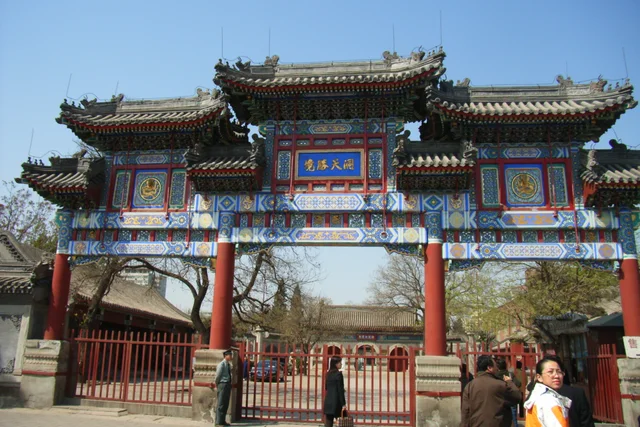
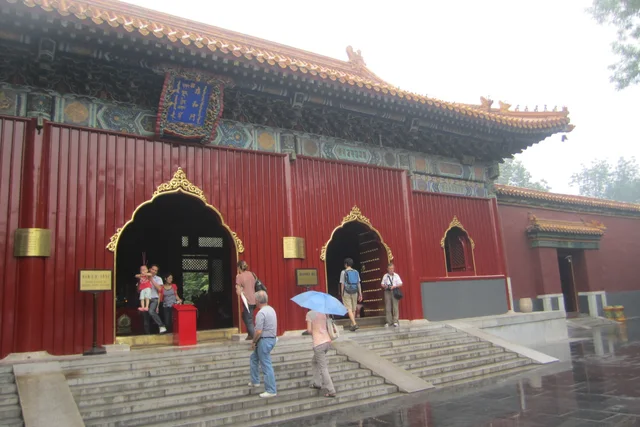
Yonghe Temple is a Gelugpa monastery of Tibetan Buddhism in Beijing. It was once the residence of Prince Yong, and was converted into a palace in 1725 and a monastery in 1744. Royal architecture and Tibetan Buddhist culture meet here.
- Which principal figures are venerated at Yonghe Temple?
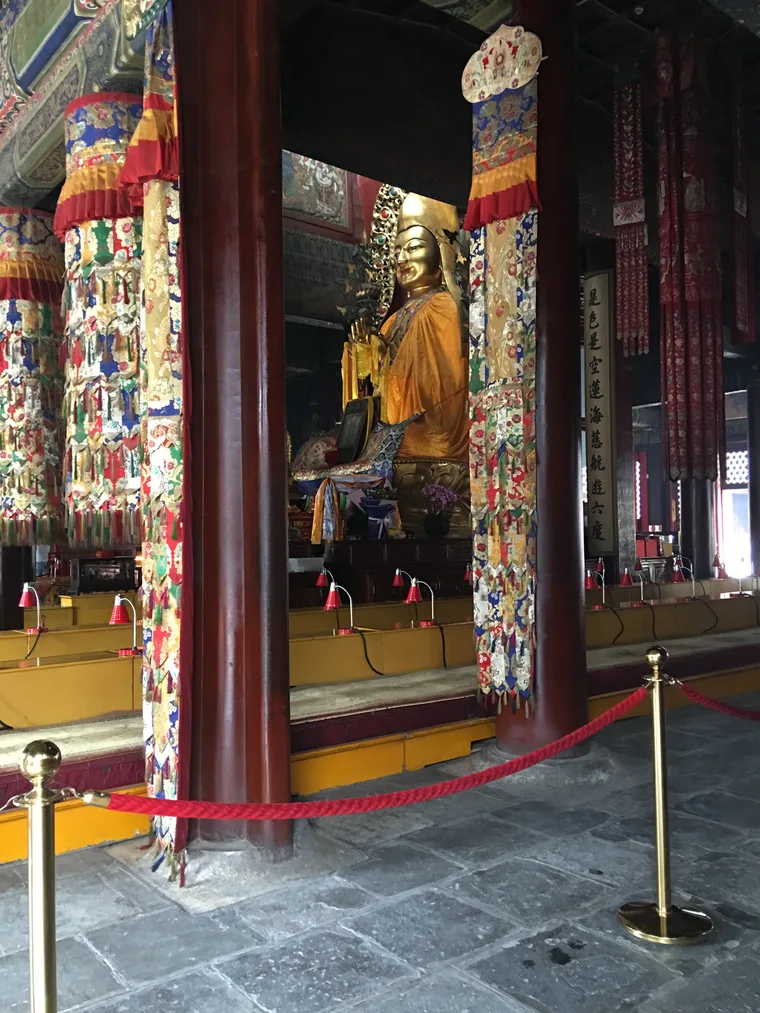
Each hall has distinct figures: Yonghe Hall houses the Three Buddhas, Falun Hall honours Tsongkhapa, and Wanfu Pavilion is known for its standing Maitreya. Identify the particular hall when choosing where to pay respects.
- Why do people choose Yonghe Temple to express their wishes?
Its imperial history and Tibetan Buddhist traditions provide a setting for hopes concerning family, work and a steadier life. Learn about the figures in each hall and choose an expression meaningful to you, without looking for a ranking of spiritual efficacy.
- City where you are located
- Beijing · Dongcheng District
- Religious Tradition
- Tibetan Buddhism · Gelug Sect
- Principal figures venerated
- the Three Buddhas, Master Tsongkhapa and Maitreya Buddha are found in different halls
- Cultural highlights
- The history of royal temples and three unique features of wood carvings
In Yonghe Temple, put the things you care about
The Three Buddhas, Yongyou Hall and Tsongkhapa at Yonghe Temple each have their own themes. To sort out your wishes for your family's well-being, academic growth, or a new stage in your career, you can first understand the corresponding hall and then talk about your specific concerns.
Family well-being and care
Write about the needs of loved ones and caregivers from Yongyou Hall’s Infinite Life and Medicine Master themes.
Continue to learn →Learning and the new stage of life
Distinguish between Patriarch Tsongkhapa, the Three Buddhas and Maitreya, each with their own clues of teaching and hope.
Continue to learn →Compare Xi'an Guangren Temple
Both connect with Tibetan Buddhism and Tibetan–Chinese exchange, but their locations and principal figures remain distinct.
Continue to learn →The same group of courtyards, walking through three identities
The story of Yonghe Temple begins with the construction of the royal palace in 1694. It later became the residence of Prince Yong, was converted into a palace in 1725, and was officially converted into a Tibetan Buddhist temple in 1744. The three stages of palace, palace and temple make its architectural scale, courtyard order and religious space different from those of ordinary urban temples. If you understand this change, you can understand why this place not only retains the solemnity of the palace, but also has a distinct Gelug sect inheritance.
Along the central halls, former palace spaces took on roles in Buddhist devotion and learning. Yonghe Hall was the princely residence's Yin'an Hall, and Yongyou Hall was a sleeping chamber. Later images and teaching activities gave these buildings new purposes. Hall names, spaces and sculptures reveal successive layers of history rather than a single period.
Follow history and understand Yonghe Temple
- 1694
Royal Mansion Construction
Later became Prince Yong's Mansion, forming the spatial foundation of royal architecture.
- 1725
Changed to palace
The identity of the building changed from a palace to a royal palace.
- 1744
Changed to a temple
It became a Tibetan Buddhist monastery with Gelug learning and devotional traditions.
- 1748-1750
Construction of Wanfu Pavilion
The attic and the large white sandalwood Maitreya statue became an important architectural and sculptural combination.
- 1981
Reopening
Monasteries and Tibetan Buddhist art are gradually becoming more widely known to the public.
The three wonders of wood carving, how to see the splendor of each
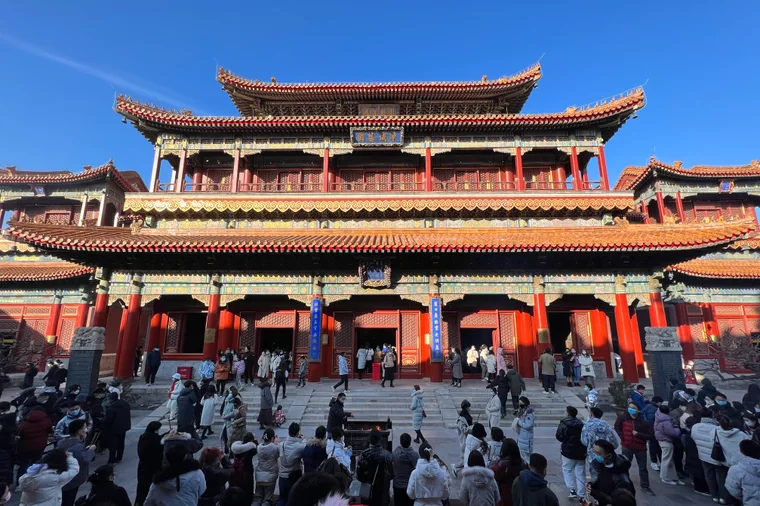
Wanfu Pavilion, the white sandalwood Maitreya Buddha, Falun Hall, the rosewood of the Five Hundred Arhats Mountains, and the golden nanmu Buddhist niche are collectively known as the three unique wood carvings of Yonghe Temple. The Maitreya statue draws attention to its scale and solid wood carving; Arhat Mountain is worth taking a closer look at how the group of statues unfold layer by layer among the rocks; the Buddhist niche allows people to see the combination of architectural decoration, materials and religious space. Their value lies in three different craft languages, not just one grand number.
The Maitreya statue at Wanfu Pavilion is 18 meters high above ground and 26 meters in total together with the underground part. The attic and the giant Buddha inside need to be understood together as shown on the page: the building surrounds the statue, and the gaze extends upward along the attic, creating a special sense of space. Falun Hall uses the statue of Master Tsongkhapa and the Arhat Mountain behind it to form another focus of viewing, shifting from a single statue to the art of inheritance and group portraits.
In addition to worshiping Buddha, it is also a place for learning
There is also a learning and inheritance aspect to the religious life at Yonghe Temple. Kalachakra Hall is connected with the study of astronomy and calendar, and Tantric Hall embodies corresponding teachings and ritual traditions; these spaces remind us that Tibetan Buddhist temples also undertake the functions of knowledge transmission, classic learning and practice. Understanding this layer will transform Yonghe Temple from a prayer landmark into a more understandable living temple.
Falun Hall centres on Tsongkhapa and introduces the Gelug lineage's emphasis on learning, discipline and practice. Imperial architecture, Tibetan images and elements of Chinese temple layouts meet here, offering a starting point for understanding religious diversity in China.
Along the different halls, find what you really want to express
Yonghe Temple corresponds to more than one wish. The main halls the Three Buddhas, Yongyou Hall, Falun Hall and Wanfu Pavilion respectively unfold the themes of time, peace and happiness, study and future hope. After reading the name of the hall and the relationship between the characters, you can more accurately express who you are here for and why.
For parents, you can write about daily life and rest and the care you hope to receive. For school, you can write about the current stage and the guidance you need. For career transitions, you can write about direction, responsibility and careful preparation. Different concerns can be expressed in sections, and there is no need to cram health, studies, and family ties into one general sentence.
To give thanks after a wish comes true, recall the original hall, what you expressed and any promise you made, then describe what has actually changed. Private photo and video records relate to this visit. Special rituals or visits to other temples require separate confirmation; cultural introductions do not add them to the basic service.
Understanding the halls and the figures within them
| Palace or space | Figures and cultural roles |
|---|---|
| Yonghe Temple | the Three Buddhas: Dipankara Buddha, Shakyamuni Buddha, Maitreya Buddha |
| Yongyou Hall | Amitayus Buddha, the Medicine Buddha, the Lion's Roar Buddha |
| Falun Hall | Master Tsongkhapa |
| Wanfu Pavilion | White Sandalwood Maitreya Buddha Statue |
| Kalachakra Hall and Tantric Hall | Learning and devotion centred on Tsongkhapa and related figures |
Yonghe Temple
Principal figures: the Three Buddhas: Dipankara Buddha, Shakyamuni Buddha, Maitreya Buddha
The Three Buddhas here are Dipankara Buddha of the past, Shakyamuni Buddha of the present, and Maitreya Buddha of the future. Shakyamuni founded Buddhism; his teachings emphasize understanding suffering and cultivating wisdom and compassion. Dipankara is associated with the belief in past Buddhas. Maitreya’s name conveys loving-kindness and carries hopes for the future and a compassionate heart. Together, the three figures invite reflection on the past, present and future in the same hall.
Wishes expressed before the Three Buddhas often concern family wellbeing, a steadier life, blessings, wisdom or gratitude for past help. During a job change, journey or life transition, you can recall earlier concerns alongside future plans. These figures provide a focus for your intentions: remembering kindness received while taking care with everyday life.
Associated wishes: If you are facing a career choice or a new stage, you can pray to Shakyamuni Buddha for wisdom and peace of mind, and to Maitreya Buddha to express your expectations for a smooth future; by praying to the Buddha for your family, you can express your wishes for peace, growth in happiness and wisdom, and long-term companionship.
Yongyou Hall
Principal figures: Amitayus Buddha, the Medicine Buddha, the Lion's Roar Buddha
Yongyou Hall honours Amitayus, the Medicine Buddha and the Lion's Roar Buddha. Amitayus is associated with longevity, merit and the value of life in Tibetan Buddhism. The Medicine Buddha, Bhaisajyaguru, is known through twelve great vows concerning suffering, wellbeing and daily needs. These traditions provide a setting for wishes for family wellbeing and elders' longevity.
Amitayus is associated with valuing life and longevity; the Medicine Buddha with care for bodily and mental suffering and hardship. Wishes for an elder's birthday, a relative's recovery or relief from family worries can connect with these themes. The Lion's Roar Buddha is also present; the three retain their individual names within Yongyou Hall.
Associated wishes: Common prayers are for parents’ happiness and longevity, family health, physical and mental stability, and safe passage through difficulties. You can write down which family member you wish for, what you care about most, and the companionship and gratitude you want to convey, so that the care from afar has a specific name and content.
Falun Hall
Principal figures: Master Tsongkhapa
Falun Hall has Master Tsongkhapa as its main deity. Tsongkhapa is the founder of the Gelug sect of Tibetan Buddhism, which emphasizes precepts, listening and contemplation, and step-by-step practice. He is not only a religious master whose life and works can be tested, but also a guru respected by his believers. To understand this master, we can start from the following aspects: extensive study, systematic arrangement of teachings, and implementation of understanding into daily practice.
The tradition of learning and practice represented by the master makes increasing wisdom, meeting good teachers, firm direction and perseverance become easy-to-understand prayer themes. People who are studying, preparing for vocational exams, or entering a new job can place their expectations for concentration, understanding, and continuous accumulation here; people who are confused can also express their desire to receive kind guidance and calm their minds.
Associated wishes: Suitable for expressing academic advancement, seeking teachers, career growth and determination. You can explain clearly the topics you are studying or facing, pray for a more focused mind and clearer thinking, and be willing to cherish the teachers and peers who help you.
Wanfu Pavilion
Principal figures: White Sandalwood Maitreya Buddha Statue
The famous white sandalwood standing statue of Maitreya Buddha at Wanfu Pavilion. Maitreya's name means loving kindness, which means the future Buddha in Buddhism, linking compassion, hope and belief in the future. The solemn standing statue here is different from the smiling, cloth-bag monk-like image of Maitreya that is common in some Han temples. Behind both artistic images, one can understand Maitreya from the two clues of kindness and future.
Devotees pay homage to Maitreya and often express their wishes for good luck, peace and a stable life in the future. For those who have just arrived overseas, moved, started a family, or are about to start a new stage, Maitreya faith provides a future-oriented expression of their hearts: the hope of encountering good deeds, and the hope of getting along with others with a generous heart. Compassion is not only about whether the other person understands you, but also about how you treat your relatives, friends, and fellow travelers.
Associated wishes: You can pray for a smooth new life, happiness for your family, harmonious relationships and peace of mind. Emotional concerns are also suitable to be expressed as understanding each other, cherishing fate and getting along well, so that the wishes for the future can fall on real people and life.
Kalachakra Hall and Tantric Hall
Principal figures: Learning and devotion centred on Tsongkhapa and related figures
These two spaces honour Tsongkhapa, and Mizong Hall also has Manjusri. Known for wisdom, Manjusri connects with knowledge, discernment and understanding, providing context for learning and important choices. Tsongkhapa's teaching emphasises reflection and practice alongside study.
Putting the culture of Manjushri Bodhisattva and Master Tsongkhapa together, we can understand why prayers are not only about a certain exam, but also about a person's long-term learning and growth. Going overseas for further study, preparing for research or professional qualifications, or needing to make judgments in complex information can all be written as wishes for wisdom, concentration, and good teachers and good relationships. Such prayers not only have clear religious sustenance, but also retain their own growth direction.
Associated wishes: If you are concerned about your studies, research, professional ability or life judgment, you can express your feelings from the wisdom of Manjusri and the learning tradition of the masters, pray for deeper understanding, clearer goals, and maintain patience and courage when encountering difficulties.
Write down the concerns in culture as your own wishes
Your family is healthy
Yongyou Hall · Amitayus Buddha, the Medicine Buddha
To pray for the health of your family, you can first get to know Amitayus Buddha and the Medicine Buddha in Yongyou Hall. Amitayus Buddha is related to longevity and merit, and is suitable for wishing parents and elders happiness, longevity and stability; the Medicine Buddha's belief is concerned with suffering, physical and mental well-being as its important content, and is closely related to the wish for health and stable rest for loved ones.
If you are overseas, you can write down your wishes for your parents, partner, or a relative. What concerns you most is recuperation, fatigue, or uneasiness. To the elders, you can express your wish for a long life and less hard work; for your family members who are going through difficulties, you can pray for physical and mental stability and someone to take care of them. Such a commission conveys your concern for specific relatives.
Example of wish expression
May my parents be safe physically and mentally, and may we take care of each other even if we are far apart.
Study and Growth
Falun Hall · Master Tsongkhapa; Tantric Hall · Manjushri Bodhisattva et al.
Manjushri Bodhisattva is known for his wisdom, and Master Tsongkhapa is revered for his tradition of study, meditation, and practice. Manjusri's cultural sustenance focuses on understanding and discrimination, and the master's learning tradition focuses on accumulation and practice; both can be connected with aspirations for overseas study, academic research, professional training, and career growth.
You can explain the study, examination or research you are preparing for, and pray for clear thinking, lasting concentration, and good teachers and kind help. If you are worried about long-term growth, you can also write your goal as being willing to continue to ask for advice, overcome fear of difficulties, and use what you have learned to benefit yourself and others, rather than just leaving a test name.
Example of wish expression
I hope I can stay focused, accumulate solidly in new studies and work, and have the patience to face setbacks.
Career and new stage
Yonghe Temple · the Three Buddhas; Wanfu Pavilion · Maitreya Buddha
The Three Buddhas connect the past, present and future, and are suitable for expressing a person's intention to go through a turning point, settle down in the present and face the future. The wisdom and compassion represented by Shakyamuni Buddha can be related to judgment, responsibility and handling of affairs; Maitreya, as the future Buddha, carries hope, good deeds and the expectation of future harmony.
When changing jobs, starting a business, moving, or starting a new cooperation, you can explain your current situation and the step you most want to take. You can pray for smooth work, candid cooperation, and clear direction, or you can express your wish to be less impatient and maintain judgment under pressure. Your wishes for the new stage don’t have to be grand. Writing down what you and your family care about most will help you get closer to this stage of life.
Example of wish expression
I hope I can see the direction clearly, cherish the support I have, and have the courage to take the next step steadily.
Emotions and inner peace
Wanfu Pavilion · Maitreya Buddha; Yonghe Temple · the Three Buddhas
The meaning of Maitreya provides a clue to understand emotional wishes from generosity, kindness and harmony; saluting the Three Buddhas can also express past concerns, current interactions and expectations for the future. The connection here comes from compassion and life observation, focusing on cherishing fate, settling emotions and taking care of each other.
If you hope to establish a new relationship, you can write down what kind of sincerity and companionship you expect; if you already have a partner, you can express your desire to get along, communicate or reunite in a different place. When faced with regrets in relationships, you can also pray for less resentment and more understanding, so that you can remain peaceful and retain hope for life while waiting and choosing.
Example of wish expression
May we be willing to listen and get along with each other honestly; and may I settle myself in waiting and choosing.
In the image, continue to get to know each other Yonghe Temple
Iconic Beijing—Lama Temple
Combining palaces and courtyards, learn about the royal architecture and Tibetan Buddhist art of Yonghe Temple.
Visit Beijing · YouTube · in YouTube Watch original video
Relate the images to the palace's history, wood-carving art and figures in the halls described above, noticing how architectural scale and sculpture work together.
If playback is restricted by the network or platform, the original video entrance can be used.
Yonghe Temple Tibetan Buddhist Art Museum
Combining palaces and courtyards, learn about the royal architecture and Tibetan Buddhist art of Yonghe Temple.
Ted看世界 · Bilibili · in Bilibili Watch original video
Relate the images to the palace's history, wood-carving art and figures in the halls described above, noticing how architectural scale and sculpture work together.
If playback is restricted by the network or platform, the original video entrance can be used.
Commissioned services and fees
$224 USD · Basic service fee
Even if your heart is far away, you can still express it seriously
The basic commission includes tickets, incense, Buddha worship and making wishes; pictures and video visit records correspond to the specific temple, the selected offerings and this commission, and are delivered privately.
You can also entrust your family together. It is recommended that there be no more than 3 people per order, so that you can express your feelings one by one.
A private visit record will be provided 1-2 working days after the service is completed.
Anxin provides independent entrusted services and does not represent the temple. Optional offerings are priced separately; special rituals, consecrations, etc. are not ordinary basic entrustments.
Select your wish, desired date and offerings and submit the request, then add official customer service for verification. Submission does not mean successful reservation, payment or seat reservation.
Yes Submit request and confirm with our team . There is no need to log in for consultation; the appointment has not been successful after submission.
About Yonghe Temple , you may also want to know
Are Yonghe Temple and Wanfu Pavilion two temples?
No. Wanfu Pavilion is a pavilion within Yonghe Temple, famous for the Maitreya Buddha statue; the destination of this page is Yonghe Temple.
Is it appropriate to understand Yonghe Temple even if I don’t understand Tibetan Buddhism?
You can start with the history of the temple, its halls and statues. The extent to which you understand the culture and express your wishes is up to you. There is no need to purchase dharma items first to prove piety.
Yonghe Temple Can you only seek career or marriage?
No. The figures introduced here have different traditions. Visitors may express intentions about family, work, growth or gratitude; no hall guarantees a particular outcome.
What basic services does $224 include?
This is Anxin’s basic quotation for independent entrustment at Yonghe Temple, which revolves around paying respects to the temple, expressing wishes, and receiving photo/video visit records; the specific content will be confirmed by customer service with you. Optional offerings are priced separately.
Do you need to write a long wish?
No need. Just state clearly who you wish for, what you care about most, and how you want to express your feelings; there is no need to fill in identification documents, detailed medical records, or other people's personal information.
Can you visit on my behalf to give thanks after a wish comes true?
Tell our support team about your original wish and the gratitude you want to express, then confirm the arrangements. Giving thanks does not automatically require buying additional rituals.
I am very concerned about my family’s health, studies and career. Do I need to write them separately?
You can write down each person and their stage in paragraphs: the care of relatives, learning problems, and work responsibilities are expressed separately. Such a wish makes it easier to retain the true needs, and can also be combined with different halls to understand the corresponding themes.
What are the differences when choosing Yonghe Temple or Guangren Temple?
Let’s first look at the specific locations, palaces and inheritance points in Beijing and Xi’an, and then consider the original temple experience and family habits. Having the same Tibetan Buddhist culture does not mean that the original wish location or the scope of a commission can be interchanged.