
Let’s look at these questions clearly first
- I just want to grasp the key points first. How to choose between Yonghe Temple and Baiyun Temple?
At Yonghe Temple, wishes about family wellbeing, wisdom, learning and life's transitions can connect with Amitayus and the Medicine Buddha in Yongyou Hall and Manjusri in Mizong Hall. Baiyun Temple's seasonal, Wenchang, wealth-deity and Medicine King traditions provide different Taoist contexts for those interested in them.
- When it comes to seeking wealth and marriage, which places have more distinctive characteristics?
For livelihood and business wishes, explore wealth-deity traditions at Baiyun Temple and Shanghai City God Temple and Wuye's local customs. Yue Lao at Shanghai City God Temple relates directly to relationships and marriage; Hongluo has distinct relationship customs.
- How to understand a temple’s “goodness” here?
Consider the figures actually venerated, their religious associations and longstanding customs of prayer. Yue Lao relates to relationships, Wenchang to learning and wealth deities to livelihoods. These themes can help you choose a meaningful place; they are not a ranking of spiritual success rates.
The small screen allows you to swipe left or right to see the full comparison.
| What you care about most | Yonghe Temple | Beijing Baiyun Temple |
|---|---|---|
| Health and longevity of elders | Yongyou Hall’s Amitayus Buddha and the Medicine Buddha, connecting life, longevity and health | Medicine King Sun Simiao and the belief in relieving suffering, linking health preservation, care and support in difficulties |
| Wealth and Management | Livelihood and career wishes within a wider Buddhist setting, especially for those familiar with Buddhist devotion | Wealth Deity Hall connects directly with intentions about livelihoods and business |
| Academics and Examinations | Manjusri’s wisdom belief and the Gelug sect’s learning tradition are suitable for seeking wisdom, concentration and growth | Wenchang connects with literature, learning and exams |
| Career and new stage | Combining wisdom, learning and the faith meaning of the future, sorting out directions and opportunities | You can express your ability, management and stability according to the theme of Wenchang, God of Wealth or the age of the year. |
| Marriage and Marriage | Can express wishes for good marriage and getting along, combined with personal Buddhist beliefs | Family harmony can be expressed here; explore Shanghai City God Temple for a particular Yue Lao shrine |
| New Year and natal year | Wishes for family wellbeing and the New Year | Yuanchen Hall's Doumu, sixty-year cycle deities and seasonal wishes are distinctive features |
Yonghe Temple: Wellbeing, Wisdom and a New Stage in Life
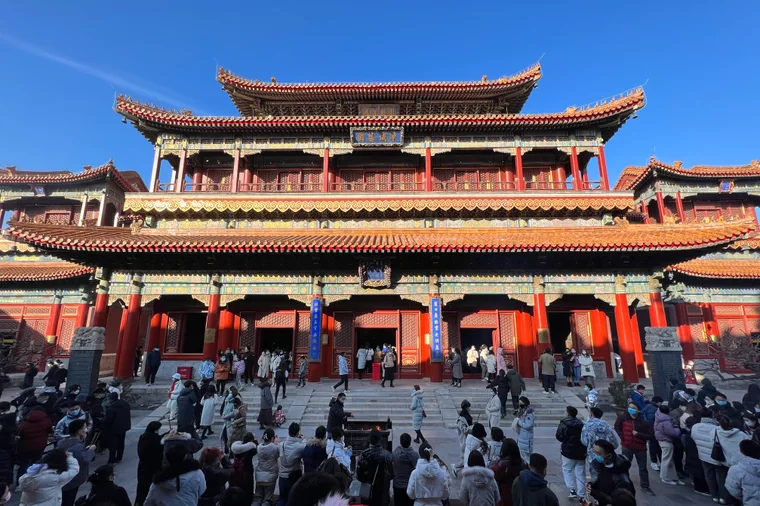
Yonghe Temple is a Gelug Tibetan Buddhist monastery combining imperial architecture with Buddhist learning and practice. For a first visit, connect concerns about family wellbeing, wisdom or life transitions with the particular figures, rather than treating the temple as a place that promises every result.
Come for health and longevity of elders
Yongyou Hall honours Amitayus, the Medicine Buddha and the Lion's Roar Buddha. Amitayus relates to longevity and the value of life; the Medicine Buddha to suffering and wellbeing. These traditions give context to concerns about older parents, recovering relatives or one's own steadiness.
The wish can be "May the elders be healthy and live a stable life" or "May the relatives recover smoothly and be properly taken care of", or you can come back to express your gratitude after things have progressed.
Come for learning, wisdom and judgment
Yonghe Temple's Mizong Hall honours Manjusri, associated with wisdom. Tsongkhapa in Falun Hall introduces the Gelug tradition's emphasis on learning and practice. These themes can connect with reading, exams, professional learning and important choices.
Compared with just writing "passed the exam", you can write your wishes as hoping to understand what you have learned, prepare attentively, be calm on the spot, and also hope that you can see the direction clearly. Manjusri is a Bodhisattva and Tsongkhapa is a religious master. Their identities and cultural significances have different emphases.
Come for career and new stage of life
The Maitreya statue in Wanfu Pavilion connects the future of Buddhism, while the Three Buddhas in Yonghe Temple show the relationship between the past, present and future. Starting from these meanings, you can sort out your expectations when moving, changing jobs, starting a business, or changing relationships: Cherish what you have, understand the present, and be willing to take action for the future.
This is a way of organizing contemporary wishes according to the implications of the faith. If you have family memories with Yonghe Temple, or are familiar with Buddhist worship, it is also suitable to carry a comprehensive wish for work, family, and peace.
Beijing Baiyun Temple: age, studies, wealth and life care
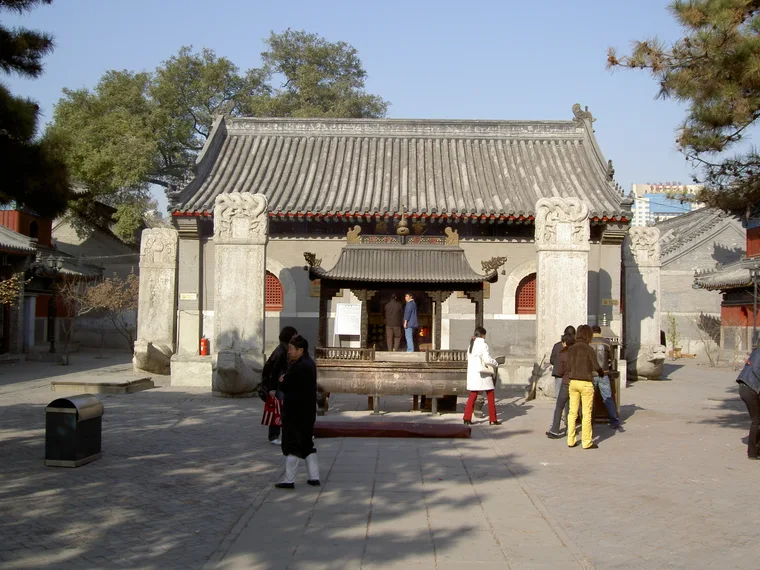
Beijing Baiyun Temple is an important ancestral temple of Quanzhen Taoism. One of its distinctive features is that different halls are clearly connected with themes of daily concern to the people: Yuan Chen is associated with age, Wenchang is associated with studies, the God of Wealth is associated with management, and the King of Medicine is associated with life and care. Find your main concern first, and then get to know the corresponding deity, and your choices will be more specific.
Wealth deities: intentions about income and business
Baiyun Temple has the Temple of Wealth. Belief in the God of Wealth is connected with people’s desire for wealth, livelihood, and prosperity in business. Therefore, if your main issues are income stability, store management, and project cooperation, it has a more specific theme than the general "seeking success."
Describe hopes for fair reward for work, reliable clients and cooperation, and improved household finances, alongside a commitment to honesty. Wealth-deity traditions here connect directly with everyday business concerns.
Wenchang: learning, exams and literary traditions
The Wenchang Hall of Baiyun Temple is the entrance to understanding academic prayers. Wenchang beliefs are associated with reading, literary fortunes and scientific titles in traditional Chinese culture. Today, you can also use this to express your expectations when preparing for higher education, qualification examinations or a new stage of study.
Yonghe Temple is easier to start from the wisdom and learning culture of Manjusri, while Baiyun Temple has a more direct clue to the academic belief of Wenchang. Which tradition you are familiar with can be a reason to choose between the two.
Yuanchen: seasonal wellbeing and life transitions
Yuanchen Hall connects with Doumu Yuanjun and the sixty-year calendrical cycle. Birth-year and seasonal traditions distinguish Baiyun Temple, providing a setting for wishes about safety and a steadier life at the New Year or a turning point.
You can write that your family will be stable for a year, your job transition will be smooth, and you will be calm and clear in times of trouble. If you are concerned about specific etiquette, you should understand its arrangements separately; just based on the year of birth, you do not need to interpret difficulties in life as destined disasters.
Medicine King and Suffering Belief: Care, Rehabilitation and Family Wellbeing
The Medicine King Sun Simiao connects with traditional medicine and helping others; Taiyi Jiuku Tianzun relates to relief in hardship. Wishes for parents' wellbeing, a relative's recovery or support through a difficult period can be expressed through these distinct traditions.
Compared with the Medicine Buddha and Amitayus Buddha in Yonghe Temple, Baiyun Temple here belongs to the Taoist god-revering and medicine-king culture. The life concerns of concern can be similar, but the titles and religious backgrounds should be recognized separately.
If you care about wealth or marriage the most, take a look at these clear choices
If you have not chosen a city, compare temples through their distinct traditions: livelihood wishes and thanksgiving customs at Wuye Temple, Medicine Buddha and wisdom traditions at Lingyin Temple, wealth deities and Yue Lao at Shanghai City God Temple, and relationship customs at Hongluo Temple.
Wuye (the Fifth Lord) Temple in Mount Wutai: Wealth, livelihood and gratitude for wishes fulfilled
Wuye Temple, also called Wanfo Pavilion, is in Taihuai Town on Mount Wutai. Wuye's Dragon King traditions are connected to local livelihoods and wishes for financial stability, business and safety. The old theatre's tradition of honouring deities also helps explain making wishes and later giving thanks here.
If you are concerned with starting a business, earning a living or giving thanks after a wish comes true, explore Wuye's traditions. Mount Wutai has many different temples. Specify Wuye Temple or Wanfo Pavilion in your request rather than naming only the mountain.
Hangzhou Lingyin Temple: Family health and wisdom growth
Lingyin Temple The Medicine Buddha, Sunlight Bodhisattva, and Moonlight Bodhisattva provide clear religious connections for health, recuperation, and caring for your family. Manjushri and Samantabhadra in Huayan Hall help understand wisdom and aspirations respectively, which are suitable for learning, growth and long-term goals.
If you wish to pray for the health of your loved ones and place long-term efforts on your studies or career, Lingyin Temple can be your choice in the Chinese Buddhist tradition. The compassion expressed in Jigong culture also gives a concrete background to the intention of being grateful and helping others.
Shanghai City God Temple: distinct figures for livelihood and relationship traditions
Zhao Gongming and other wealth deities at Shanghai City God Temple relate to fair trade, livelihoods and finances. Yue Lao relates to love, relationships and marriage. These distinct figures help visitors identify the tradition they wish to approach.
When asking for money, you can write about stable business, trustworthy cooperation, and orderly family business; when asking for a good relationship, you can write about mutual respect and sincere encounters; for married people, you can also express cherishing your partner and sharing responsibility. The belief in the City God itself is connected to the life and peace of a place, so there is no need to simplify the entire palace into a single theme.
Beijing Hongluo Temple: The meaning of word-of-mouth marriage and long-term companionship
Hongluo Temple is located in Huairou, Beijing. Marriage is one of its distinctive folk customs. The male and female ginkgo trees in ancient temples are often called "couple trees," giving people an easily understandable cultural image of their expectations for encounters, companionship, and long-term relationships.
Explore Hongluo Temple for wishes about meeting a suitable partner, valuing a relationship or harmony in marriage. It has relationship customs within an ancient temple setting. Shanghai City God Temple specifically honours Yue Lao; the reasons for choosing them differ.
From one main desire, narrow down to options that suit you
Begin with your main concern and familiar traditions. Compare wellbeing themes at Yonghe, Baiyun and Lingyin for elders; Manjusri and Wenchang for learning and exams; wealth-deity and Wuye traditions for livelihoods.
For relationships and marriage, Shanghai City God Temple offers a particular Yue Lao shrine; Hongluo connects with Beijing temple and relationship customs. A family belief, original wish or shared visit can also guide your choice.
Once selected, there is no need to arrange everything in order to be "more comprehensive". It is often easier to know why you choose it after you understand a place, write down your wishes, and then confirm the specific services.
Choose a temple and then check the arrangements for this entrustment
Cultural introductions help you choose, but a visit still requires confirmation of the date, service scope, offering specifications and private visit records. Mentioning a figure does not include every hall's special ritual in the basic service. Temple-led ceremonies and memorial tablets need separate confirmation.
Anxin displays unified basic service prices according to specific temples, and then enters the quotation for items that have been confirmed to be available. You can now learn about the temple and consultation services first. Whether you can make an appointment is subject to the actual opening status of the page.
And these specific questions
Which places are more suitable to look for first when looking for money?
Baiyun Temple's Wealth Deity Hall and Shanghai City God Temple connect directly with business themes; Wuye traditions also concern wealth and livelihoods. Consider your beliefs, memories of the location and specific intention when choosing.
When it comes to marriage and marriage, what is the difference between Shanghai City God Temple and Hongluo Temple?
Shanghai City God Temple honours Yue Lao in traditions of love and marriage. Hongluo has relationship customs and imagery such as its paired ginkgo trees. The former offers a particular devotional figure; the latter connects more with temple and folk traditions.
When studying, what are the highlights of Yonghe Temple and Baiyun Temple?
Yonghe Temple offers Manjusri's wisdom and Gelug learning traditions. Baiyun Temple honours Wenchang, associated with literature, study and exams. Familiarity with a tradition can help guide your choice.
How can I compare traditions when expressing wishes for my parents' wellbeing?
Yonghe Temple's Yongyou Hall has Amitayus and the Medicine Buddha; Lingyin Temple has the Medicine Buddha triad; Baiyun Temple has Medicine King and relief-from-suffering traditions. These are distinct figures and cultural settings. Consider the traditions familiar to your family when choosing.
Do Yonghe Temple and Baiyun Temple belong to the same religion?
Yonghe Temple belongs to the Gelug sect of Tibetan Buddhism; Baiyun Temple in Beijing belongs to the Quanzhen tradition of Taoism. The Medicine Buddha and Medicine King, Manjushri Bodhisattva and Emperor Wenchang have different identities and should be recognized and addressed respectively.
Should I choose a new temple for giving thanks based on my next wish?
Start with the original location and promise when giving thanks. If you said you would return to a particular place, consider how to keep that promise first. Organise new wishes separately; they do not replace your earlier gratitude.
Choose a place that connects with your heart
Photo attribution and permission
Yonghe Temple Wanfu Pavilion appearance
Photography: Charlie fong · Original file · CC BY-SA 4.0
Scaled and converted to WebP, no architectural or sculpture content changed; derived images continue to use the same license . The pictures are used to understand the temple culture and are not used as samples for safe performance of the contract.
Beijing Baiyun Temple courtyard and hall
Photography: Haldini / Sam Haldane · Original file · CC BY-SA 2.0
Scaled and converted to WebP, no architectural or sculpture content changed; derived images continue to use the same license . The pictures are used to understand the temple culture and are not used as samples for safe performance of the contract.