Quick understanding
- Which principal figures are venerated at Hongluo Temple?
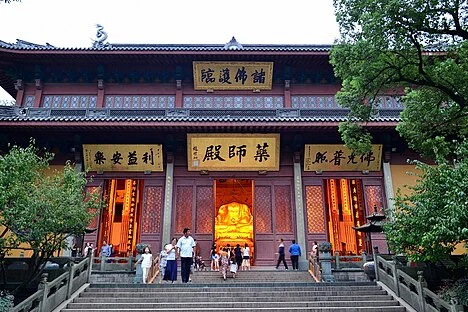
Hongluo Temple's central axis includes the main hall and Sansheng Hall, which honours Amitabha, Guanyin and Mahasthamaprapta. Side spaces include Thousand-Armed Guanyin Hall and commemorations of Patriarchs Jixing and Yinguang. Distinguish the ancient temple from the Guanyin Temple cultural area on the mountain.
- What is the relationship between Hongluo Temple and the Pure Land tradition?
Hongluo Temple connects with Pure Land patriarchs including Jixing and Yinguang. The Western Triad, chanting practice and teaching lineages make Pure Land traditions central to understanding the temple.
- What are the ‘Three Wonders’ of Hongluo Temple?
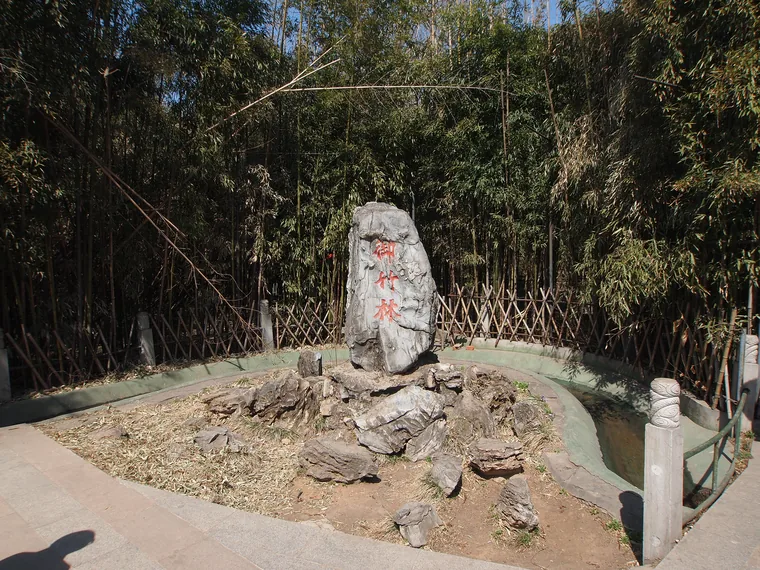
The bamboo forest, male and female ginkgo trees and wisteria pines are representative plant landscapes in the temple garden. They reflect the time that the ancient trees and temples have been together, and also bring a distinct sense of season to the tour.
- Location
- Huairou, Beijing·Southern foot of Hongluo Mountain
- Traditional temple building era
- The fourth year of Xiankang in the Eastern Jin Dynasty (338 years)
- Temple history name
- Daming Temple, Huguo Zifu Zen Temple
- Cultural clues
- Pure Land Heritage, Guanyin Faith and Buddhist Gardens
In Hongluo Temple, put the things you care about
When talking about Hongluo Temple, people will think of Guanyin culture, encounters and marriages; understanding the three holy temples and Pure Land traditions in the temple can also express relationships and family concerns more clearly.
Looking forward to a sincere encounter
Write clearly how you want to get along and what kind of relationship you value.
Continue to learn →May the family be safe and peaceful
Recognize objects of worship from the Pure Land tradition of Guanyin Mercy and the Three Holy Temples.
Continue to learn →Thanks for the companionship of a relationship
Look back on your original wish and express your cherishment now.
Continue to learn →A mountain temple, leaving behind memories of Pure Land cultivation and the ancestors
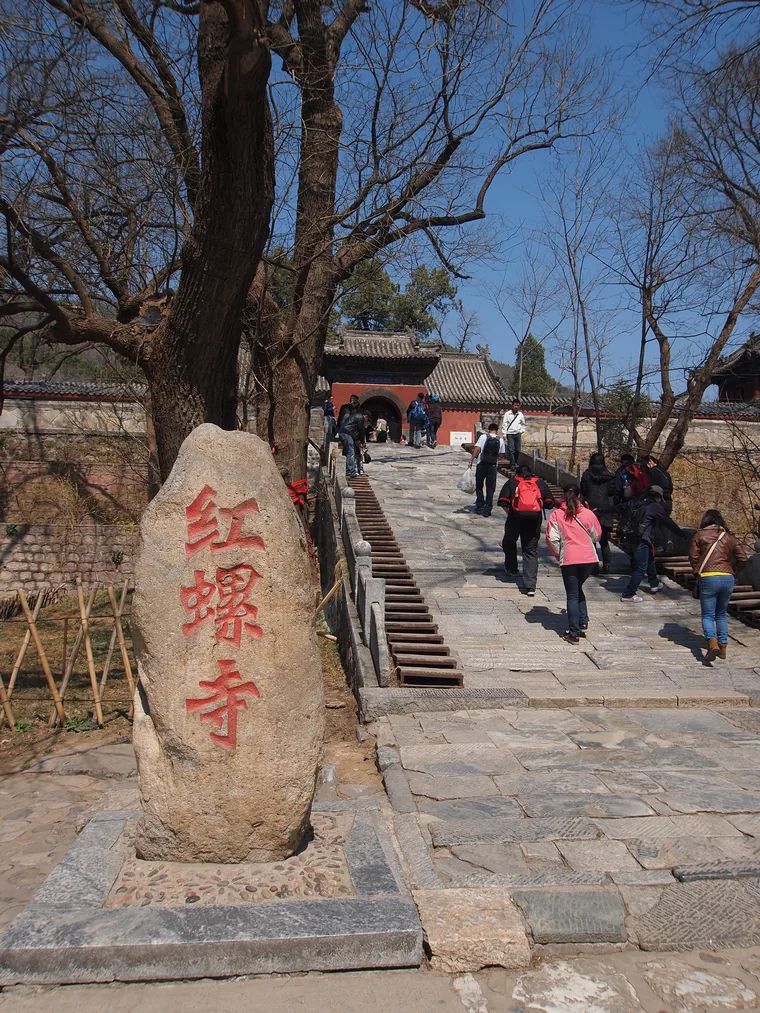
The history of Hongluo Temple can be traced back to the fourth year of Xiankang in the Eastern Jin Dynasty. In the history of the temple, there are also names such as Daming Temple and Huguo Zifu Temple. The more popular name "red snail" is related to the local story of the fairy turning into a snail. Historical names and folklore jointly participate in the formation of the temple's image, and each has its place in understanding.
The memories of Ji Xing and Yinguang Patriarch make Hongluo Temple more than just a scenic spot for viewing ancient buildings. The Patriarch represents the inheritance of learning, propagation and monastic life; the Amitabha Buddha, Guanyin and Mahasthamaprapta in the Three Holy Temples transform the guidance, compassion and wisdom of Pure Land belief into concrete and visible statues.
Talking about the Pure Land can also be understood from daily life: how people settle their minds in the midst of turmoil, and how they connect wishes with continuous goodwill. The records of charitable deeds such as giving porridge and helping the poor in the history of the temple remind people that the expression of faith can also lead to the life practice of caring for others.
Follow history and understand Hongluo Temple
- 338 years
The traditional starting point for temple building
Hongluo Temple The history of the temple can be traced back to the fourth year of Xiankang in the Eastern Jin Dynasty. Its early name was Daming Temple.
- Ming Zhengtong period
The name of Protecting the Nation and Zifu Zen Temple
The construction and naming of the temple in the Ming Dynasty have become important clues in the history of Hongluo Temple.
- Jiaqing period of Qing Dynasty
Pure Land Dojo and Tradition of Relieving the Needy
Patriarch Jixing promoted Pure Land cultivation here, and the history of the temple also preserves memories of giving porridge to the poor.
- Since 1990
Protection and Restoration Expand
The scenic spot carries out protective construction, gradually repairs the temples, restores related cultural spaces and improves the temple environment.
- 2016
The ancient temple building continues to be repaired
The cultural relics department approved the renovation plans for the Jialan Hall, Qianju Guanyin Hall and other buildings to continue the protection of ancient buildings.
How do the bamboo forest, ginkgo and wisteria form the temperament of the temple?
The bamboo forest, male and female ginkgo trees and wisteria pines are the most recognizable temple landscape of Hongluo Temple. The evergreen bamboo forest, the seasonal changes of ginkgo, and the intertwined branches and leaves of wisteria and pine trees make people feel another kind of slow time outside the palace. Plants are not the background of the building, they participate in shaping the space and light of the mountain temple.
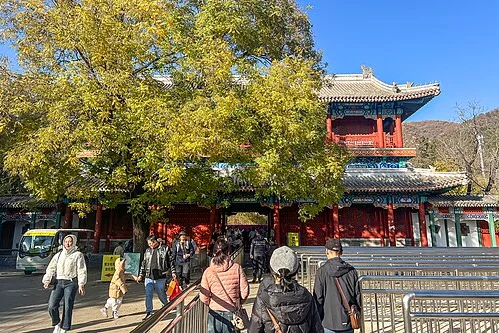
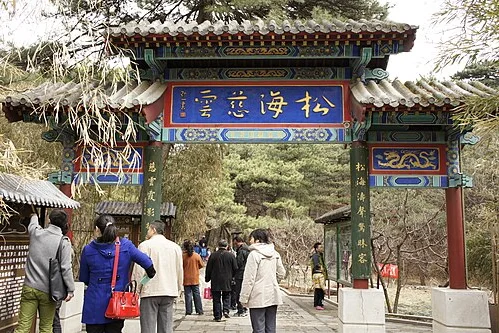
The central axis of the ancient temple unfolds with the mountain gate, Tianwang Hall, Main Hall and Three Holy Temples. The Guanyin and Patriarch spaces on both sides enrich the level of belief. The juxtaposition of the solemnity of the palace and the growth of plants is a way to read the characteristics of the ‘Buddhist Garden’ here.
The existing Hongluo Temple scenic area also includes the Guanyin Temple Cultural Area, the Big Buddha Cultural Area and the mountain forest viewing area. When saying "Hongluo Temple has Guanyin", you need to pay attention to whether it refers to the Thousand-Hand Guanyin Hall of the ancient temple or another Guanyin cultural space on the mountain; there are also different scopes for visiting the entire scenic spot and understanding the main courtyard of the ancient temple.
Write your expectations for fate into a life that you are willing to run together
People walk into the mountain temple with the desire for a relationship, perhaps waiting to meet, or perhaps hoping for an existing relationship to be repaired. Guanyin's theme of compassion provides a perspective of listening and understanding for these thoughts; the stability emphasized in Pure Land practice can also be related to getting along with less impatience and more honesty.
In Sansheng Hall, Guanyin and Mahasthamaprapta attend Amitabha, bringing compassion and wisdom together. A relationship needs more than passion: understanding each other, respecting choices and sharing daily responsibilities also matter. A wish can help you reflect on these hopes and carry them into everyday life.
Patriarchs Jixing and Yinguang continued Buddhist teaching through study and practice; later generations honour them with gratitude towards teachers. The temple's principal Buddha and Guanyin provide distinct Pure Land and compassionate settings. Wishes about love, family or children can express sincere connection, understanding and appreciation for care received.
From worries about marriage to family safety, learn about the reasons for choosing Hongluo Temple
Many people know Hongluo Temple with concerns about marriage. To make this familiar folk association more specific, it could be looking forward to sincere encounters and hoping for a stable relationship, or it could be a willingness to learn to communicate and establish a rhythm of common life. If your wishes are written clearly, the salute will be more relevant to your situation.
Hongluo Temple’s culture is not limited to marriage. The relationship with ancestors such as Ji Xing and Yin Guang, as well as the spaces related to the Three Holy Temples and Guanyin, constitute another layer of background for Pure Land cultivation and compassionate belief. When expressing your feelings for a parent, partner, or child, you can also start from the perspective of stability, companionship, and understanding between family members.
If you choose between Tanzhe Temple and Hongluo Temple, you can look at "Memories of Ancient Temples of Royal Temple and Guanyin Temple" and "Pure Land Patriarch and Beijing Mountain Forest Temple of Guanyin Culture" together. If you have made a wish somewhere, you should first pay attention to the original temple and the original agreement; when making the first choice, let your own worship habits and wishes become the starting point.
Understanding the halls and the figures within them
| Palace or space | Figures and cultural roles |
|---|---|
| Main Hall | Shakyamuni Buddha |
| Three Holy Temples | Amitabha Buddha, Avalokitesvara and Mahasthamaprapta Bodhisattva |
| Thousand-Armed Guanyin Hall | Thousand Hands Guanyin |
| Jixing and Yinguang Patriarch Hall | Commemorative shrines to Patriarchs Jixing and Yinguang |
Main Hall
Principal figures: Shakyamuni Buddha
Shakyamuni is the founder of Buddhism and the center of worship at the Mahavira. The story of Buddha's enlightenment starts from the understanding of the sufferings in life, and focuses on how to alleviate greed and worries and cultivate compassion and wisdom. People pray to Shakyamuni Buddha for increased blessings, wisdom, physical and mental peace, and safety for their families. They respect not only a solemn statue, but also a path that can be learned, thought about, and practiced.
Hongluo Temple The main hall is located on the central axis of the ancient temple. The three holy halls at the back continue the Pure Land worship, and the side hall also preserves the memory of the ancestors. From the main Buddha to the Pure Land and the Space of the Patriarch, we can understand how the Buddha's teachings are implemented here for the practice and dissemination of monks in later generations. The temple has been restored and continued, which also connects worshiping Buddha with cherishing inheritance and thanking predecessors for their contributions.
Associated wishes: You can ask for a clear judgment on the turning point in your life, pray for good health for your family, and you can also thank your teachers and elders who have guided you. If you are adapting to life abroad, you can write down your wishes to reduce impatience, receive kind help, and slowly stabilize your inner direction and daily life.
Three Holy Temples
Principal figures: Amitabha Buddha, Avalokitesvara and Mahasthamaprapta Bodhisattva
The Western Trinity, consisting of Amitabha Buddha, Guanyin (Avalokiteshvara) and Mahasthamaprapta Bodhisattva, is an important set of statue relationships for understanding Pure Land beliefs.
Amitabha is central to Pure Land aspirations; Guanyin is honoured for compassion and Mahasthamaprapta for the strength of wisdom. Their shared hall presents a connected religious theme rather than a separate promised outcome for each figure.
Associated wishes: You can write down your hope for family stability and harmonious relationships as a complete wish; when thanking you for your company, you can also explain your original concern and what you are willing to cherish now.
Thousand-Armed Guanyin Hall
Principal figures: Thousand Hands Guanyin
Thousand-Hand Guanyin is the compassionate figure of Guanyin (Avalokiteshvara). The many hands and eyes express the ability to see the different difficulties of all sentient beings and the willingness to reach out to help; it turns abstract compassion into a visible form. People often use this to pray for the well-being of their loved ones, care for their lives, and support in difficulties. They also hope that they can better understand the feelings of others, and hope that care will reach where they are really needed.
The Thousand-Hand Guanyin in the side hall of the ancient temple in Hongluo Temple has its own location with the Guanyin Cultural Space in another area on the mountain. This ancient temple hall can be read in parallel with the image of Guanyin in the Three Holy Temples: the same bodhisattva not only participates in the combination of the Three Saints of the Pure Land, but also highlights the vastness of salvation in the image of a thousand hands. Prayers for relationships and family thus have a cultural basis for compassion, understanding and mutual care.
Associated wishes: When praying for parents, children or partners, you can indicate who you want to be cared for and what kind of sorrow you want to be comforted. Regarding marriage, you can also express your willingness to meet a sincere and good relationship, be more considerate in the existing relationship, and place your expectations in a way that both parties can get along with each other with peace of mind.
Jixing and Yinguang Patriarch Hall
Principal figures: Commemorative shrines to Patriarchs Jixing and Yinguang
Ji Xing and Yin Guang are respected ancestors in the Pure Land lineage, Buddhist monks with personal lives and teachings. The commemoration of the ancestors focuses on how to practice and spread knowledge, and how to bring chanting of Buddha, good deeds and self-examination into life. Paying tribute to the ancestors is also cherishing the process of teachings being passed down from generation to generation through specific people.
Hongluo Temple's spaces commemorating Jixing and Yinguang relate to the Pure Land figures in Sansheng Hall on the central axis. The Western Triad represents compassion, wisdom and wellbeing, while the patriarchs show how teaching and practice continue through human lives. Wishes for good teachers, perseverance, gratitude and helping others can connect with this lineage.
Associated wishes: You can thank someone who has patiently taught you, and pray for good guidance in your future study and work. You can also express your willingness to continue to share the experience you have gained, and your willingness to be more patient when facing family members and those who come after you, so that respect for inheritance can become a goodwill that can be continued.
Write down the concerns in culture as your own wishes
Sincerity in encounters and relationships
Thousand-Hand Guanyin Temple·Compassion and Listening
The wishes in a relationship can be divided into several stages: meeting, getting to know each other, living together and re-understanding. The Guanyin culture of Hongluo Temple brings to mind compassion and responsiveness, while the faith tradition of the Three Temples provides the context for abiding aspirations. When writing about marriage, you can clearly state what kind of relationship you expect, rather than just leaving one person's name.
First explain the stage of the relationship you are in and how you want to get along, and then write about the changes you hope to happen and the actions you are willing to take seriously. You can use the example sentences below as a starting point and replace them with expressions that fit your life.
Example of wish expression
I hope I can meet people who treat each other sincerely, and I hope my existing relationships will be more listening, trusting and responsible; I also hope I can learn to respond seriously and cherish them.
Family peace and family harmony
Three Holy Temples·Three Holy Temples of the West; Thousand-Hand Guanyin Temple
The Western Triad places Amitabha at the centre, accompanied by Guanyin's compassion and Mahasthamaprapta's wisdom. The temple's Thousand-Armed Guanyin gives visual form to care reaching many people. Family wishes can concern wellbeing, longevity or being understood during difficulty. For families living apart, these figures offer a setting for concerns about health, feelings and relationships.
It can respectively explain the blessings that parents, partners or children need most at the moment: elders have to work less, those who are recuperating are taken care of, and family members who live in different places can communicate more calmly. If you want to repair a dispute, you can also write down your willingness to hear each other's feelings, so that the wish includes both peace and harmony for the whole family and a gentle relationship.
Example of wish expression
I hope that my family members will be safe and have someone to take care of them when I feel unwell. I hope that I can speak slowly and clearly when I have different ideas.
Stability in the transition of life
Mahavira Palace·Theme of Enlightenment; Three Holy Temples·Pure Land Meaning
Shakyamuni Buddha's enlightenment teachings care about understanding troubles and cultivating wisdom; Amitabha Buddha's pure land belief gives images of light, peace and refuge. The axis of Hongluo Temple from the Main Hall to the Three Holy Temples enables people to see reality clearly and settle their hearts together. When moving, leaving home to study, or starting a new job, praying can express both a smooth future and a sense of security.
You can explain clearly what this change is, which family member you can’t let go of the most, and pray that you will meet good fate, stay awake, and gradually stabilize in a strange environment. If you are worried about long-term wandering, you can also write down what kind of life you want to build and how you want to maintain family ties, so that your desire for stability can have its own direction.
Example of wish expression
I hope that I can stabilize my mind during the changes in residence and work, not hurt the people around me due to anxiety, and also be prepared for every step.
Gratitude to teachers and lasting goodwill
Memorial Space for Patriarchs Ji Xing and Yin Guang·Learning and Inheritance
The commemoration of Patriarchs Ji Xing and Yin Guang gives the Pure Land tradition of Hongluo Temple a specific person to inherit. Patriarchs are respected not only because of their cultivation and spread of knowledge, but also because their teachings give future generations the direction to continue learning and doing good deeds. The feeling of gratitude to teachers can be developed along this clue: I remember that I was taught, and I am willing to use the income to take care of my family, help my peers and future learners.
You can tell about the specific guidance given by a teacher, elder or traveler, and express your willingness to continue to seek advice and cherish the experience. When you are overseas, you can also thank the people who helped you adapt to the language and life, pray for each other's stability and long-lasting good relationship, and write down how you hope to pass on this patience.
Example of wish expression
Thanks to those who taught me patiently. I hope I will remember that kindness and be willing to stop and listen to people who need help in the future.
In the image, continue to get to know each other Hongluo Temple
Accompany you to visit Hongluo Temple in Beijing, China ~ the largest Buddhist jungle in northern China
Experience the forest and ancient temple space of Hongluo Temple through on-site tour images.
江涛爱影视 · Bilibili · in Bilibili Watch original video
The video records the landscape and cultural introduction of Hongluo Temple in Huairou, Beijing, which can be cross-referenced with the Pure Land tradition and the three unique features of temples and gardens in the text.
If playback is restricted by the network or platform, the original video entrance can be used.
Commissioned services and fees
$228 USD · Basic service fee
Seriously express the concern of Jingbeishan Temple
The basic commission includes tickets, incense, Buddha worship and making wishes; pictures and video visit records correspond to the specific temple, the selected offerings and this commission, and are delivered privately.
You can also entrust your family together. It is recommended that there be no more than 3 people per order, so that you can express your feelings one by one.
A private visit record will be provided 1-2 working days after the service is completed.
Anxin provides independent entrusted services and does not represent the temple. Basic entrustment and scenic spot tours, temple special rituals or special ceremonies have their own scope, and shall be carried out according to the agreed instructions.
Select your wish, desired date and offerings and submit the request, then add official customer service for verification. Submission does not mean successful reservation, payment or seat reservation.
Yes Submit request and confirm with our team . There is no need to log in for consultation; the appointment has not been successful after submission.
About Hongluo Temple , you may also want to know
Why is Hongluo Temple related to the founder of Pure Land Sect?
The temple preserves commemorations of Jixing and Yinguang; Sansheng Hall's Western Triad also connects with Pure Land practice.
Which three figures are honoured in Sansheng Hall?
Amitabha, Guanyin and Mahasthamaprapta form the Western Triad, connecting Pure Land traditions, compassion and wisdom.
Is the temple's Thousand-Armed Guanyin Hall the same place as the Guanyin temple on the mountain?
Not the same space. The Thousand-Hand Guanyin Temple is a side hall of the ancient temple, and the Guanyin Temple Cultural Area is in another part of the scenic area. The specific scope should be clearly defined when communicating about tours or entrusting.
Are Hongluo Temple's three famous garden features devotional figures?
The Three Wonders refer to the bamboo forest, male and female ginkgo trees and wisteria pines, which mainly reflect the temple landscape and ancient tree culture. Appreciating the forms and seasonal changes of plants is an important way to understand them.
When asking for marriage, can you only write about hoping that someone will be with you?
You can write your wishes for sincere encounter, communication and mutual respect, or you can pray for the understanding and repair of existing relationships. Personal thoughts should not be construed as controlling another person's feelings or choices.
Can I express my best wishes to my family members who are far away at Hongluo Temple?
You can first describe the person you want to wish for, what you want to express and the expected date, and then the customer service will check the temple space, service scope and visit record; special ceremonies require additional confirmation.
Is Hongluo Temple only suitable for marriage?
Hongluo Temple is often associated with relationship wishes, but it also has Pure Land practice, patriarchs and Guanyin traditions. Family wellbeing, understanding and gratitude for companionship can also connect with its figures and traditions.
How to be more specific when writing wishes for a partner or marriage?
Describe the relationships you cherish, current problems and expectations. For example, if you wish to communicate honestly with each other and take responsibility for living together seriously; if you are praying for a relationship that has not yet been established, you can write about the way you hope to get along with each other, and keep each other's choice.