Quick understanding
- Which principal figures are venerated at Tanzhe Temple?
The main hall centres on the Buddha with his disciples Ananda and Kashyapa. Heavenly Kings Hall has Maitreya, Weituo and the Four Heavenly Kings; the western Guanyin Hall honours Guanyin. These spaces present awakening, protection and compassion.
- Why is it called Tanzhe Temple?
The dragon pond behind the temple and the zhe trees in the mountains form this folk name. The temple was also named Jiafu Temple, and was named Xiuyun Temple by Emperor Kangxi of the Qing Dynasty; the name Tanzhe Temple still continues to this day.
- What kind of thoughts are suitable here?
You can express your wishes for the safety of your loved ones, courage and tolerance in the face of difficulties, or a turning point in life. While Guanyin faith focuses on compassionate responses, shrine worship can be linked to personal reflection and action.
- Location
- Beijing Mentougou·Tanzhe Mountain Foothills
- Traditional temple building era
- The first year of Yongjia in the Western Jin Dynasty (307 years)
- Alias Clues
- Jiafu Temple, Xiuyun Temple
- Space features
- Middle, East and West Roads and Shanlin Courtyard
In Tanzhe Temple, put the things you care about
The mountain courtyard of Tanzhe Temple, the Guanyin faith and the long-lasting memories of Jingxi are suitable for expressing family stability, life transitions and gratitude together.
Seek stability for your family
Starting from the compassion and care of Guanyin Temple, we implement our concerns into the lives of our family members.
Continue to learn →Going through a turning point in life
Understand the enlightenment and introspection in the Buddhist temple, and then write down your wishes for your decision.
Continue to learn →Return to the original wish to express gratitude
Write down the original objects and agreements of paying tribute, and let this gratitude continue the original intention.
Continue to learn →From Jiafu Temple to Xiuyun Temple, there are two kinds of time in the name
The construction history of Tanzhe Temple is usually traced back to the first year of Yongjia in the Western Jin Dynasty. As Beijingers say, "First there was Tanzhe Temple, and then there was the city of Beijing," expressing the ancient temple's long-standing status in local memory; the temple in front of us today was formed by the continuous construction and repairs of later generations. The long origins and the architecture of past dynasties jointly present the continued history of the ancient temple.
Jiafu Temple and Xiuyun Temple are the names in the temple history, but Longtan and Zheshu have kept the folk names alive. A name that comes from the mountains and rivers coexists with the name given by the emperor of the Qing Dynasty, giving this place the solemnity of a royal temple while retaining the intimacy of an ancient temple in the mountains and forests of western Beijing.
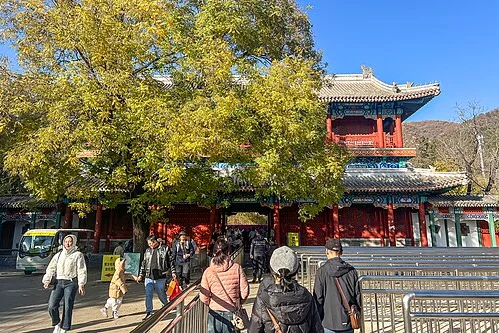
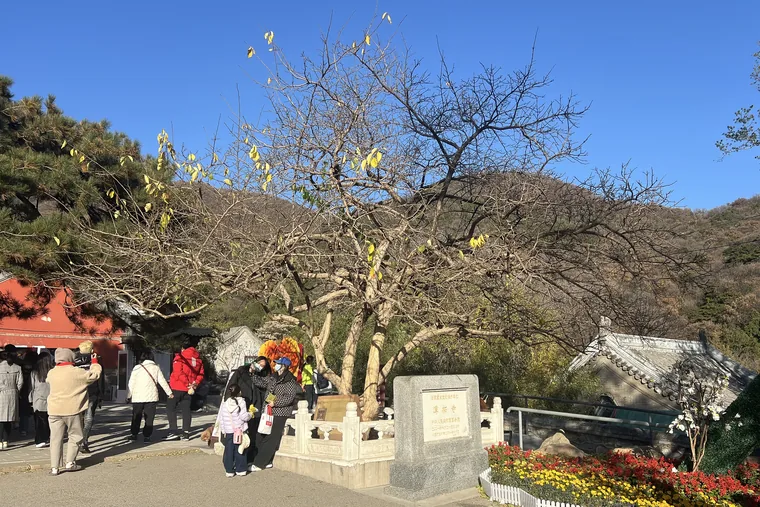
The history here is still hidden next to the building. Tall ginkgo trees, seasonal blooming magnolias, layers of courtyards and distant mountains together form the experience of visiting a temple; the ornamental value of ancient trees and the religious significance of temples have their own place, and there is no need to interpret every natural scene as a wish-making ritual.
Follow history and understand Tanzhe Temple
- 307 years
The historical starting point of temple construction
The history of the temple can be traced back to the first year of Yongjia in the Western Jin Dynasty, when it was first named Jiafu Temple.
- During the Kangxi period of the Qing Dynasty
Name Xiuyun Temple
The name given by the royal family entered the history of the temple, but the people still use the name Tanzhe Temple, which comes from the dragon pond and the mulberry tree.
- Qianlong period of Qing Dynasty
The imperial title remains in the palace
Royal inscriptions such as ‘Fuhai Zhulun’ in the Main Hall and ‘Lotus World Cihang’ in the Guanyin Hall have left cultural traces of royal salute.
- 2020
The continuation of protection of ancient buildings
The fire protection engineering design review reflects the need for continuous maintenance of ancient buildings and the mountain forest environment, and also preserves the work of protecting ancient temples today.
Along the three courtyards, understand the royal temple and daily practice
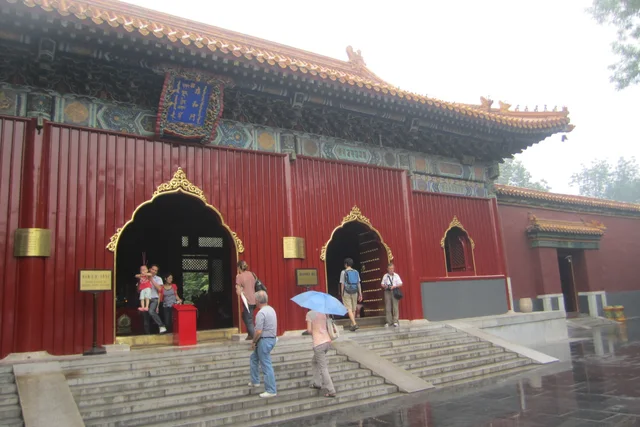
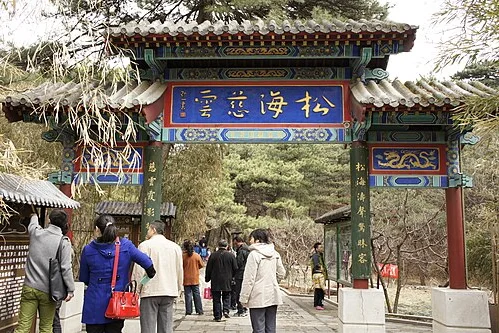
The middle road leads from the mountain gate and Tianwang Hall to the Main Hall, and then extends to Zhaitang and Pilu Pavilion, forming the main axis of the entire temple. The double-eaves roof, glazed tiles and imperial-inscribed plaques of the Main Hall make the Buddha worship space an entrance to observe the aesthetics of royal architecture. Looking at the shape of the roof and the scale of the courtyard in front of the temple can help you better understand its characteristics than just remembering the word "magnificence".
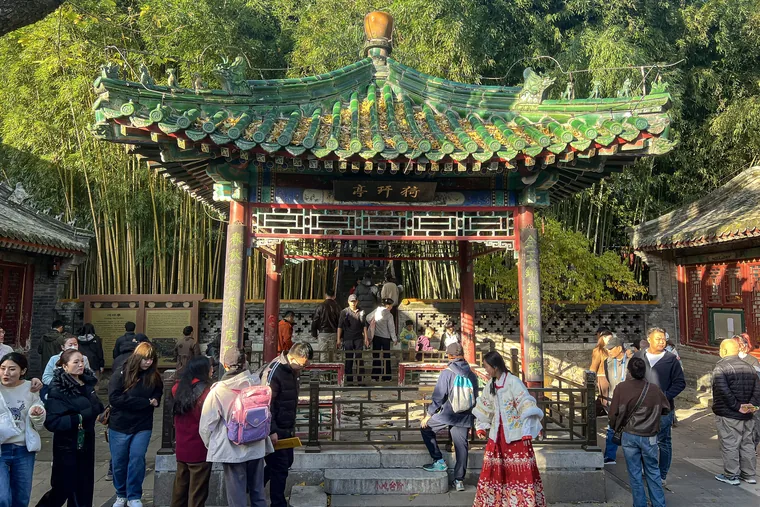
The East Road is composed of the abbot's courtyard, Yanqing Pavilion and palace courtyard, etc., and the spatial level is relatively relaxed. The meandering water cup in Yigan Pavilion brings the cultural image of the elegant gathering of literati into the temple; it is a clue to the garden and tourist culture, not another Buddhist temple dedicated to seeking wealth or luck.
The altar and Guanyin hall on the west road are spread out according to the terrain. The ordination altar is connected with the ordination tradition of the monastic community, and the Guanyin hall carries the belief of compassion. The parallelism of the three roads shows that the temple has more than one function: there is worship, there is a monastic life, and there is also a courtyard formed historically for royal exchanges.
Guanyin, disciples and legends, what kind of intentions do they each point to?
The combination of Buddha and disciples in the Main Hall reminds people of teaching and inheritance: the enlightenment mentioned in Buddhism is not to leave the difficulties of life to a statue, but to remind people to see their own situation and learn to respond more clearly. The position of Ananda and Kassapa in the Buddhist tradition also makes the statues in the temple a clue to understanding the inheritance and practice of teachers.
The Guanyin Temple has Guanyin (Avalokiteshvara) as its worship center. Guanyin belief emphasizes hearing to relieve suffering and compassionate care, and it is suitable to express the concern for family members, relatives and friends who are sick, or those who are in a different place: who will be cared for, what will you be able to bear, and hope that there will be less harm in the relationship.
Princess Miaoyan worships Buddha and worships brick footprints, which is a local story spread in Guanyin Temple. It preserves the memory of piety, perseverance and respect through characters' experiences, and also makes the ancient temple culture have a close human touch. Reading it as a temple legend, you can understand how people cherish their wishes and good deeds, making Guanyin's compassion in the historical space easier to feel.
Why consider Tanzhe Temple for family wishes?
If your family has taken you to Tanzhe Temple, or you have made a wish here, the connection between you and the temple is the reason for your choice. The mountain gate, Guanyin Hall, ancient trees and family memories often together constitute the place of a temple in the heart; when entrusting it, you can indicate which intention you want to continue without having to compress all your concerns into a wish label.
Compared with Hongluo Temple, which is also located in the mountains and forests of Beijing, the introduction of Tanzhe Temple can be understood from the layout of the royal temple, the three-way courtyard and the Guanyin Hall on the West Road; for Hongluo Temple, you also need to understand the Pure Land tradition, the relationship between the ancestors and the Guanyin culture. Both places can carry your family's wish for safety. When choosing, you can combine the original object of worship, your family's habits and the content you want to express.
You might write, “I previously made a wish for my family at Tanzhe Temple and would now like to give thanks here.” Note any offering or good deed you promised. Anxin's basic service and optional offerings are listed on this page; discuss any arrangements outside that list with our support team so your original intention is understood.
Understanding the halls and the figures within them
| Palace or space | Figures and cultural roles |
|---|---|
| Tianwang Palace | Maitreya, Skanda and the Four Heavenly Kings |
| Main Hall | Buddha; statues of Ananda and Kasyapa disciples |
| Guanyin Temple | Guanyin (Avalokiteshvara) |
Tianwang Palace
Principal figures: Maitreya, Skanda and the Four Heavenly Kings
The Heavenly Kings Hall brings welcoming Maitreya together with guardian figures. Maitreya is the future Buddha; the familiar joyful Chinese image evokes generosity and harmony. Weituo is a guardian of Buddhist teaching and temples. The Four Heavenly Kings protect the four directions. Compassion and protection connect these figures.
The Maitreya of Tanzhe Temple greets people in front of the temple, with Wei Tuo on the back and the Four Heavenly Kings on both sides. Walking into the first hall of the central axis, you can first see the closeness of Maitreya, and then the solemnity of the Dharma: the former reminds people of relaxing their mind, and the latter reminds people of protecting a pure learning space. Therefore, people often place their wishes for family harmony, auspiciousness in the new stage, and safe entry and exit here.
Associated wishes: For travelers, you can wish for a safe journey and someone to help you in times of trouble; for your family, you can express less arguments and more understanding. If you are entering a new environment, you can also ask Maitreya for good luck and calmness, and express to the protector that you hope to uphold your responsibilities and take care of your fellow travelers.
Main Hall
Principal figures: Buddha; statues of Ananda and Kasyapa disciples
The main hall uses the statues of Buddha, Ananda and Kassapa's disciples to form the relationship between master and disciple. The Buddha in Buddhism is an enlightened person who teaches people to recognize troubles and sufferings and cultivate wisdom and compassion. Ananda was well known for his extensive knowledge and teachings in the lineage, while Kassapa connected the memory of his Zen masters; his disciples accompanied him, so that there was not only a solemn main statue in the temple, but also the story of how the teachings were inherited.
The Buddha and disciples inside the hall correspond to the inheritance of faith. The double eaves, glazed tiles and imperial inscriptions outside the hall present the architectural style of a royal temple in the Qing Dynasty. Putting the two clues together, you can see how an ancient temple accommodates worship of Buddha, learning and construction through the ages. When paying homage to the Buddha, people often pray for increased blessings and wisdom and peace of mind. They also express gratitude for the teachings of teachers and the help of relatives and friends. Personal growth is therefore connected to the theme of inheritance.
Associated wishes: When studying, changing jobs, or facing important family decisions, you can pray to see things clearly and have the patience to listen to different opinions. You can also express your gratitude to those who have guided you, and hope that what you have learned can help your family. I hope that the new stage has both a direction and a way of doing things that makes you feel at ease.
Guanyin Temple
Principal figures: Guanyin (Avalokiteshvara)
Guanyin (Avalokiteshvara) is revered in Buddhism for his ability to hear voices and save suffering, and for his compassionate care. Tanzhe Temple Guanyin Temple thus becomes a concrete clue to understanding family affection, care and gratitude.
Read the Guanyin faith and the local story of Princess Myoyan separately: the former is an object of worship and a tradition of compassion, while the latter preserves the cultural memory of the ancient temple. Understanding the two can help you know who you are expressing your concern for, and you can also understand why the temple has attracted people from generation to generation.
Associated wishes: For parents, relatives, friends or family living elsewhere, you can express hopes for stability, care and mutual support. When giving thanks, recall the original concern and express your gratitude.
Write down the concerns in culture as your own wishes
Family safety and distant concern
Guanyin Temple Guanyin (Avalokiteshvara)
When we come here for the safety of our families, we often worry about the lives of our parents far away and whether our loved ones can be taken care of when they face difficulties. The compassionate belief of Tanzhe Temple Guanyin gives such thoughts a specific object of worship: not only write a sentence of peace, but also how you hope your family will live every day.
First explain the relatives you care about and your immediate needs, and then write down the changes you hope to happen and the actions you are willing to take seriously. You can use the example sentences below as a starting point and replace them with expressions that fit your life.
Example of wish expression
May my family members far away live a stable life and have someone to help me when they encounter difficulties; may I remember their needs and put companionship and care into my daily life.
Sobriety and determination in transition
Mahavira Hall·Theme of study between the Buddha and his disciples
The combination of Buddha, Ananda and Kassapa's disciples in the Mahavira Hall preserves the relationship between teaching, hearing and inheritance. Praying to the Buddha for wisdom and concentration can be understood as a hope to understand the situation and reduce worries, and to express respect for the learning spirit of the disciples. When changing jobs, relocating, or taking on new family responsibilities, this kind of cultural sustenance is concerned with how one can maintain clarity in the midst of change, rather than just hoping for one outcome.
You can explain what you are choosing and which family responsibilities you care about most. Pray for clear thinking, reliable guidance, and less panic when making decisions. If you want to start a new job overseas, you can also include adapting to the environment, discussing with your family, and cherishing the original support to form a complete wish for this stage.
Example of wish expression
May I see my responsibilities and abilities clearly before making new choices, not make hasty decisions due to anxiety, but also have the courage to take the step I am ready for.
Tolerance and boundaries in relationships
Temple of the Heavenly King·Maitreya and the Protector Statue
Maitreya is the future Buddha, and the compassion in his name reminds people of generosity, good deeds, and future harmony; Wei Tuo and the Four Heavenly Kings bring the themes of protecting purity and upholding practice into the same palace. This combination of Tanzhe Temple allows relationship wishes to not only express the desire to be close to each other, but also include expectations for peace, respect and stable coexistence.
Long-distance couples can pray for fewer misunderstandings, smooth communication, and a timely reunion; family members can also pray for more understanding and for their respective difficulties to be heard. You can write down what kind of relationship you cherish the most and the patience you want to cultivate, so that your desire to seek peace with Maitreya has a real relationship background.
Example of wish expression
I hope that when we argue, we will listen to the end first, be considerate of each other, and carefully explain the space we each need.
Gratitude and starting over
Main Hall, Guanyin Hall·Study and Compassion
Paying homage to the Buddha has the meaning of teaching gratitude and increasing blessings and wisdom. Guanyin belief makes people think of the care they received when looking back at difficulties. The statues of Buddha and disciples in Tanzhe Temple and the image of Cihang in Guanyin Temple provide clues to the acknowledgment from inheritance and compassion respectively. After a difficult period in life has passed, you can thank teachers, family members or strangers for their kindness, and pray for peace of mind and good fortune for a fresh start.
You can tell about the most unforgettable support in that experience, and explain who you want to thank and what you want to cherish now. If the person is overseas and cannot come back in person, he or she can write out the unspoken words in full; he or she can also pray that he or she will be able to take care of others in the future, so that this acknowledgment can continue into a new stage of life.
Example of wish expression
Thank you to my family for not leaving when I was at my lowest point. May I keep this support in my heart and become a person who can take care of others in the future.
In the image, continue to get to know each other Tanzhe Temple
Tanzhe Temple attractions, tickets and transportation guide
Follow the video to learn about the courtyard and tourist attractions of Tanzhe Temple.
有备旅行 · Bilibili · in Bilibili Watch original video
The author introduces the Tanzhe Temple in western Beijing based on the walking route at that time, which can be combined with the text to observe the mountain environment and temple pattern.
If playback is restricted by the network or platform, the original video entrance can be used.
Commissioned services and fees
$227 USD · Basic service fee
Seriously convey the heart of the ancient temple in western Beijing
The basic commission includes tickets, incense, Buddha worship and making wishes; pictures and video visit records correspond to the specific temple, the selected offerings and this commission, and are delivered privately.
You can also entrust your family together. It is recommended that there be no more than 3 people per order, so that you can express your feelings one by one.
A private visit record will be provided 1-2 working days after the service is completed.
Anxin is an independent commissioning team and does not represent the temple; basic commissions do not automatically include special rituals, consecrations or special ceremonies, and optional offerings are listed separately.
Select your wish, desired date and offerings and submit the request, then add official customer service for verification. Submission does not mean successful reservation, payment or seat reservation.
Yes Submit request and confirm with our team . There is no need to log in for consultation; the appointment has not been successful after submission.
About Tanzhe Temple , you may also want to know
How do you understand "First there was Tanzhe Temple, then there was Beijing City"?
It is a local proverb that emphasizes the long history of the temple. The history of building the temple can be traced back to 307, but the temples we see now have been built by later generations and cannot all be called originals of the Western Jin Dynasty.
Are Xiuyun Temple and Tanzhe Temple two temples?
No. Xiuyun Temple was named after Emperor Kangxi of the Qing Dynasty, and Tanzhe Temple is a folk name inherited from Longtan and Zhe trees, pointing to the same temple in the west of Beijing.
How do the figures in Guanyin Hall differ from those in the main hall?
The Guanyin Hall is centered on Guanyin (Avalokiteshvara), highlighting compassion and care; the Mahavira Hall has statues of Buddha and disciples forming the core of worship, which can be understood from the themes of enlightenment and practice.
Is the story of Princess Miaoyan’s worship of bricks a historical fact?
The footprints of the princess worshiping the Buddha and worshiping bricks are local stories spread in the temple, preserving the cultural memory of piety, perseverance and respect for Guanyin.
Is the pavilion with the meandering water cup also a hall of wishes?
Yigan Pavilion mainly embodies the garden and literati gathering culture in the temple. Just enjoy the waterways, stone carvings and courtyards, and there is no need to convert this space into a ritual for seeking wealth or luck.
Can I express my wishes to my family members who are far away at Tanzhe Temple?
You can first explain the person you care about, the feelings you want to express and the expected date. Customer service will check the temple arrangements, service scope and visit record. Special rituals or offerings need to be confirmed separately.
How can I choose between Tanzhe and Hongluo for wishes about family wellbeing?
Begin with any longstanding family connection, then explore the figures at each temple. Tanzhe Temple offers Guanyin traditions and ancient Buddhist halls; Hongluo Temple also commemorates Pure Land patriarchs and honours Guanyin. The Beijing temple guide can help you decide which connection to continue.
I made a wish at Tanzhe Temple and now live overseas. How can I arrange to give thanks?
Record the original temple, the original wish, the object of worship at that time, and whether a specific agreement was made, and then write down the current thanks. Services and current quotations can be viewed on this page; special agreements will be confirmed by dedicated customer service.