Quick understanding
- Is Guanyin also the principal figure in Huiji's main hall?
Huiji Temple's main hall centres on Shakyamuni and also includes the Western Triad and several bodhisattvas. Guanyin Hall has its own devotional setting and many stone images. Do not transfer descriptions of Puji's or Fayu's main halls to Huiji.
- Where is Huiji Chan Temple?
is located on Foding Mountain in Putuo Mountain, so it is also called Fodingshan Temple. It is a concrete mountaintop temple with different locations and spatial characteristics from Pujiqian Temple and Fayuhou Temple.
- What are the characteristics of the stone carvings in Guanyin Temple?
More than one hundred Guanyin stone carvings are based on painting images from the Tang, Song, Yuan, Ming and Qing dynasties, presenting Guanyin themes in different postures. They are suitable for viewing from both the perspective of compassionate belief and artistic communication.
- Location
- Putuo Mountain, Zhejiang·Foding Mountain
- Customary name
- Fodingshan Temple
- Principal hall figures
- Mahavira Shakyamuni Buddha
- Cultural characteristics
- Guanyin stone carvings and mountain temple layout
In Huiji Chan Temple, put the things you care about
Huiji is located on Foding Mountain. The main hall of Sakyamuni and the Guanyin stone carvings each have their own themes; they can express their thoughts for the growth and care of their family, discernment and peace in the new stage of life.
Family and child growth
Organize your wishes around the current stage of growth, care and mutual support.
Continue to learn →Recognize different Buddhas and Bodhisattvas
Shakyamuni, the Pure Land triad, Manjusri and Samantabhadra present distinct themes of learning and compassion.
Continue to learn →Get to know another Guanyin temple in the same mountain
Compare Fayu Temple's spaces and figures while keeping the temples distinct.
Continue to learn →From the nunnery on the top of the mountain to Huiji, which stands side by side with the front and back temples
The early clues of Huiji Chan Temple are the stone pavilion on Foding Mountain dedicated to the Buddha and its nunnery during the Wanli period of the Ming Dynasty. Later, monks built on the mountain, and during the Qianlong period of the Qing Dynasty, the nunnery was expanded into a temple, and the hall and the living space of the monks gradually became complete. This period of history allows people to see that an ancient temple on the top of a mountain has also developed into a large scale after a long period of accumulation.
In the late Qing Dynasty, the Sutra Collection and subsequent expansion were requested to add learning and cultural preservation content to the temple; modern restoration has brought the damaged space back into worship and daily use. The construction of the nunnery, the expansion of the temple, the collection of sutras and the restoration each have their own histories, which together make the Fodingshan temple what it is today.
The front temple, back temple and Fodingshan Temple constitute the important layout of the Three Putuo Temples, but the three are not the entrances of the same temple at different locations. Huiji has its own history, main hall and statue characteristics. Only by understanding these differences can we make the ritual and cultural viewing more concrete.
Follow history and understand Huiji Chan Temple
- Wanli period of Ming Dynasty
Mountain top nunnery
Monk Yuan Hui built a nunnery on Foding Mountain by splitting rocks and named it Huiji.
- 1793
Expanding the nunnery into a temple
During the Qianlong period of the Qing Dynasty, important palaces were built and the scale of the temple gradually developed.
- 1907
Sutras stored in the temple
Please obtain the records of the Tripitaka, reflecting the tradition of Huiji’s cultivation and Tibetan scriptures.
- Since 1984
Modern restoration
The temple continues to be restored so that the hall and related spaces can continue to be used.
- 1989
Guanyin Temple built
The construction of the independent Guanyin Hall forms an artistic feature together with the stone carvings of Guanyin statues in the past dynasties.
The courtyard in harmony with the mountain is not only spread out along a long central axis
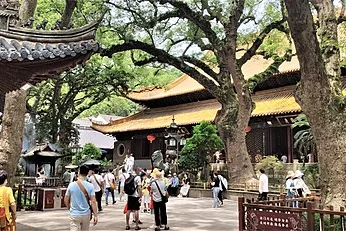
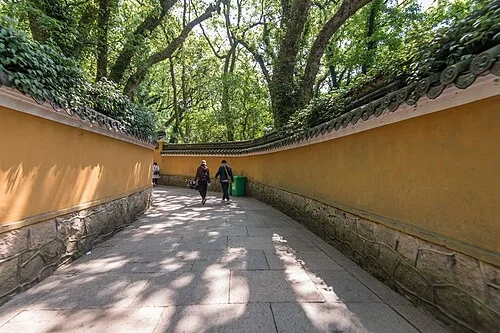
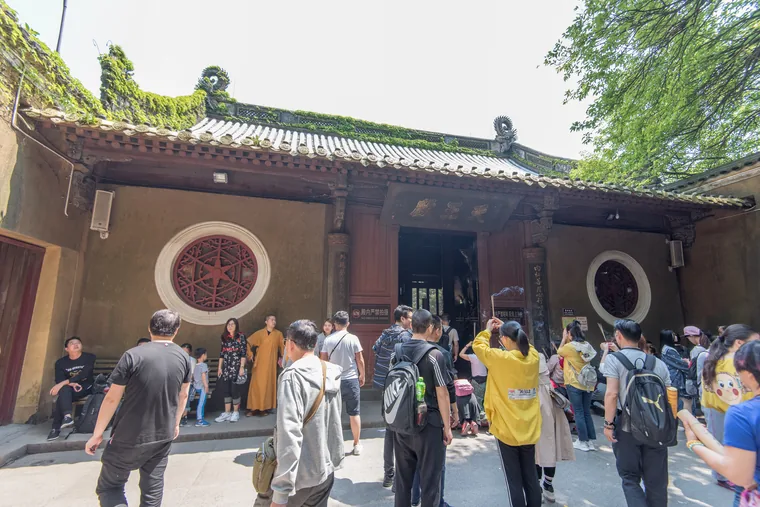
The layout of Huiji Chan Temple is arranged due to the mountainous conditions. Behind the Tianwang Hall, the Main Hall and adjacent pavilions and wings form a compact spatial combination. The courtyard and trees surround each other. When walking, you often change your sight between the eaves, corridors and forest shadows, which has the characteristics of a mountaintop temple.
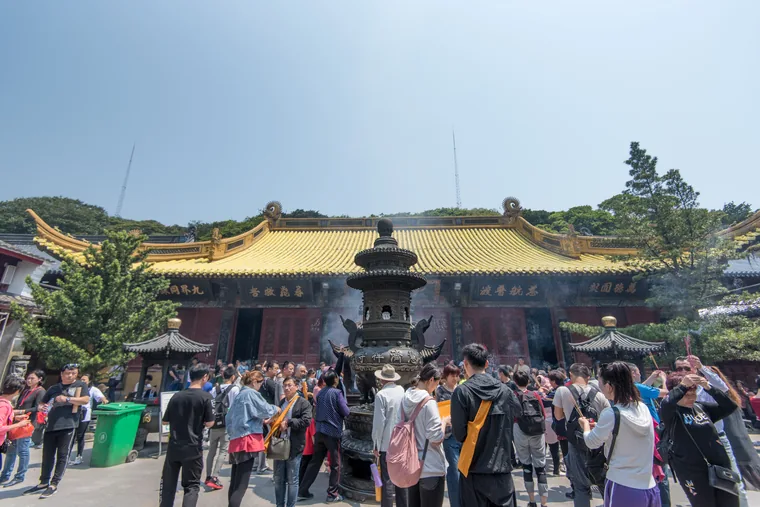
The roof of the main hall is made of glazed tiles of various colors to create a rich visual hierarchy. It contrasts with the surrounding green mountains and forests, and is worth viewing in terms of materials, colors, and architectural scale; the bright image in the faith and the actual craftsmanship of the roof can be understood separately and referenced with each other.
The openness of Foding Mountain does not eliminate attention to detail. Ancient trees, rare tree species such as Putuo hornbeam and surrounding mountains and forests also connect the temple culture with natural preservation. Seeing these long-term growing lives can make you appreciate the environment more during your visit.
The main hall of Sakyamuni and the Guanyin statue give each level of wisdom and compassion
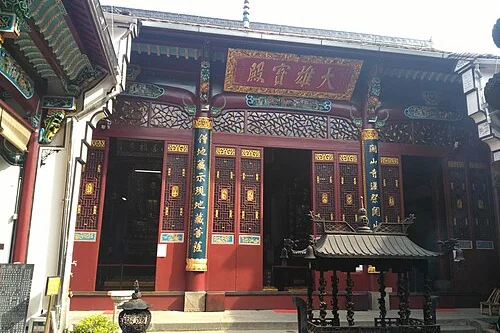
Different from the introduction of Puji and Fayu with the Guanyin main hall as the distinct center, the main hall of Huiji's main hall is Shakyamuni. The hall also presents themes such as the Three Saints of the West, Manjusri, Samantabhadra, and Ksitigarbha, forming a Buddhist world in which enlightenment, compassion, wisdom, and practice are interconnected. When understanding, one should first identify the location and identity, and then understand their cultural significance.
Guanyin Temple also has its own artistic features. More than a hundred stone carvings bring together Guanyin's treasured figures from past paintings into the same space, allowing different gestures, lines and compositions to be juxtaposed against each other. Looking at these images, one can feel how the same religious themes are continued through artistic expressions in different eras.
This diversity can also lead to daily life: the same concern needs different expressions when facing different people; if you want to be more discerning, you also need to implement understanding into action. A moment of pause at the top of the mountain can help people write down their vast desires into a small thing they are willing to do seriously.
Huiji on Foding Mountain, why should we distinguish the main hall and Guanyin hall?
Huiji Temple is also called Fodingshan Temple. Together with Puji and Fayu, it is a famous temple in Putuo Mountain. However, to understand this place, we cannot just deduce that each main temple is the same from "all in Guanyin Taoist Temple". The Mahavira Hall is centered on Shakyamuni, and the Guanyin Hall has rich stone carvings of Guanyin statues. It will be clearer to understand the two parts separately.
If your family is welcoming a new life, accompanying your children to grow up, or caring about distant relatives, you can express your wishes from the cultural meaning of Guanyin’s compassion and family care. For learning and life choices, you can combine the themes of awareness, wisdom and action in the main hall to clearly describe how you want to grow and how you take responsibility.
When choosing among Mount Putuo's three temples, compare the figures venerated and remember your existing connection. If you made a wish at Huiji Temple, begin plans to give thanks with that wish and any promise. Fodingshan identifies the area, but the request and conversation should still name “Huiji Chan Temple” to avoid confusion.
Understanding the halls and the figures within them
| Palace or space | Figures and cultural roles |
|---|---|
| Tianwang Palace | Maitreya, Skanda and the Four Heavenly Kings |
| Main Hall | Shakyamuni Buddha; the Three Saints of the West and Manjusri, Samantabhadra, Ksitigarbha, etc. |
| Guanyin Temple | Guanyin (Avalokiteshvara) and stone carvings of Guanyin statues throughout the ages |
Tianwang Palace
Principal figures: Maitreya, Skanda and the Four Heavenly Kings
Maitreya, free translation of Cishi, is the future Buddha in Buddhism. The familiar image of joy is associated with generosity, good deeds and future harmony. Wei Tuo is the heavenly general who protects the Dharma and the temple; the Four Heavenly Kings, Zhi Guo, Zeng Zeng, Guang Mu, and Duo Wen respectively contact the guardians of the four directions. Maitreya's compassion and the solemnity of the protector together form the theme of welcome and protection, giving cultural suspense to the new stage of auspiciousness, family harmony and safe entry and exit.
After climbing Foding Mountain, the Tianwang Hall of Huiji Temple welcomes you with a combination of joy and solemnity. The temple on the top of the mountain forms a parallel space due to the terrain, and the Dharma protector in the front and the main Buddha and Guanyin in the back have their own themes. This understanding also gives the desire for a safe journey, help from colleagues, and harmony with the family a cultural basis that can be understood separately.
Associated wishes: You can wish peace to your family members who are climbing high, traveling long distances or traveling alone, and also wishing you good luck in the new stage and easy getting along with each other. If you receive other people's waiting and care along the way, you can write this thank you in writing, wishing each other peace and good luck in the future.
Main Hall
Principal figures: Shakyamuni Buddha; the Three Saints of the West and Manjusri, Samantabhadra, Ksitigarbha, etc.
Shakyamuni is central to Huiji Temple's main hall, alongside the Western Triad and images of Manjusri, Samantabhadra and Ksitigarbha. Shakyamuni represents awakening and teaching; Amitabha, Guanyin and Mahasthamaprapta form the Pure Land triad. Manjusri is associated with wisdom, Samantabhadra with aspiration in practice, and Ksitigarbha with vows to relieve suffering and honour parents. These figures bring learning, compassion and care together.
This main hall on Foding Mountain shows the level of cultivation of Huiji Temple with the main image of Sakyamuni and rich Bodhisattva themes. The Guanyin tradition of Mount Putuo is more concentrated in the Guanyin Hall, while the Mahavira Hall can help visitors understand the relationship between different Buddhas and Bodhisattvas. Seeking wisdom, perseverance, stability for the family, and gratitude for relatives can all be expressed in salutes with clear objects. Separating the "main statue" from "other themes in the hall" can avoid confusing several groups of statues that appear in the same hall as one group.
Associated wishes: You can pray to the Lord Buddha for blessings, wisdom and peace of mind, to Manjusri for discernment, and to Samantabhadra to express your wish to take action on what you have learned. If you are concerned about your parents or distant relatives and friends, you can also write about health, companionship and gratitude, so that personal growth and family care can jointly form your wishes. When expressing your feelings for your children's growth, education, and family well-being, you can first look at the corresponding cultural themes, and then write down a specific period of life that you most want to be cared for.
Guanyin Temple
Principal figures: Guanyin (Avalokiteshvara) and stone carvings of Guanyin statues throughout the ages
The name of Guanyin (Avalokiteshvara) is associated with hearing the suffering of all living beings and responding with compassion. Different images of Guanyin allow this relief and care to enter various life situations, so people often pray for the well-being of relatives and friends, safe travels, and help in difficulties. Compassion also includes understanding the needs of others, so family relationships, thoughts and gratitude can all become concrete and intimate thoughts in Guanyin worship.
The Guanyin Hall of Huiji Temple has the main statue and more than a hundred Guanyin statues on the four walls. The different postures and lines are taken from the paintings of the past dynasties, giving Mercy a rich artistic appearance. Looking at each image, one can also understand why the same Bodhisattva has multiple expressions in different eras and different narratives: Faith is always concerned with the difficulties of sentient beings and the willingness to respond to needs.
Associated wishes: You can pray for your children to grow up safely, for your relatives and friends to have a stable rest, for your family to be understood, and to thank those who have taken care of you. If you have concerns in your heart that are difficult to express to others, you can explain the object and situation clearly, and hope that the compassionate blessing will be closer to that person's real life.
Write down the concerns in culture as your own wishes
Stability and discernment after climbing high
Mahavira Shakyamuni Buddha
Shakyamuni, the master of the Mahavira Hall, uses enlightenment teachings to understand troubles and increase wisdom; the view after climbing up Foding Mountain provides a mountain experience that is temporarily away from the daily bustle. Together, the two give Huiji Temple's wish for clarity a dual background of faith and environment: a wish to see the direction clearly, and a wish to maintain stability and compassion amidst changes.
You can talk about the work, study or family arrangements that you are weighing, and pray for clear thinking, safe choices, and good luck and guidance. If living away from home often worries you at both ends, you can also write down the people and responsibilities you want to cherish most, so that your wishes when climbing can return to this real life.
Example of wish expression
I hope that I can clearly see the responsibilities and needs in the choices before me, be less pushed by comparisons, and do the really important things seriously.
Care from relatives and friends and child growth
Guanyin Hall·Theme of Mercy and Treasure Statues
Guanyin expressed his compassion by hearing his voice and rescuing those in distress. The various treasure statues in the Guanyin Hall of Huiji Temple show that this care continues in different artistic images. When wishing for relatives and friends, you can not only place your hope in health, but also hope that your children will be understood, your elders will be less worried, and your caregivers will be supported. The same family has different needs, and the meaning of positivity and compassion is connected to different situations. Welcoming children and accompanying them to grow up make the needs of caregivers equally worthy of being seen; a family's wishes can also include mothers, fathers and distant elders.
Write down the stage of the family you are going through, and express what kind of support you want the children, mother and caregivers to receive. Just keep the real and necessary titles.
Example of wish expression
May the women and children at home be stable, and the children grow up with patience; may the people who take care of the family also be taken care of, and we may share the burden together and take each other's needs seriously.
Put what you learn into action
Main Hall·Theme of Manjushri Wisdom and Samantabhadra Practice
Manjusri represents wisdom in understanding a direction; Samantabhadra connects devotion, learning and care for others with practice. Their presence in Huiji Temple's main hall gives cultural context to learning clearly and acting steadily. Wishes can concern deeper understanding, perseverance and sustained good intentions in studies, training or long-term plans.
You can write down what you have learned and what you most want to use it for, and pray for discernment, concentration and continued patience. If what you learn is related to your family and peers, you can also express your willingness to be able to help others and cooperate smoothly, so that your desire to grow has both personal goals and responsibilities you are willing to assume.
Example of wish expression
I hope that I can apply what I have learned in real life and not just stay in the plan; I will do a little bit every day and patiently accept the gradual progress.
Have a safe journey and thank you for traveling with me
Temple of the Heavenly King·The theme of protection; Guanyin Temple·Compassion and care
The Maitreya and Dharma protectors of the Heavenly King’s Hall give hope, peace and protection to the journey to the mountains; the Guanyin Hall responds to people’s concerns with compassion. The journey and ascent of Foding Mountain also made the waiting, support and care of fellow travelers appear concrete. Peace and gratitude can therefore be in the same wish, blessing this journey and cherishing the help along the way.
You can wish stability to relatives and friends who are traveling or returning, and thank your companions, family members or strangers who made the journey smooth. If this is a time when you are passing on your love overseas, you can also write down the care and gratitude you want to bring back. I hope that the trip will go smoothly, your family will feel at ease, and that this journey will leave a long-lasting good relationship.
Example of wish expression
I wish everyone a safe journey, and thank you for waiting and helping each other along the way. May I remember this care and bring it back to my daily life.
In the image, continue to get to know each other Huiji Chan Temple
Huiji Temple | The highest temple in Mount Putuo
Understand the forest and layout of Huiji Chan Temple in Foding Mountain from images.
三身望山 · Bilibili · in Bilibili Watch original video
Sanshenwangshan introduces the mountaintop temple with the theme of Huiji Temple, which can be cross-referenced with the main text of Sakyamuni Temple, Guanyin culture and different levels of mountain architecture.
If playback is restricted by the network or platform, the original video entrance can be used.
Commissioned services and fees
$245 USD · Basic service fee
At Fodingshan Temple, carefully place a wish
The basic commission includes tickets, incense, Buddha worship and making wishes; pictures and video visit records correspond to the specific temple, the selected offerings and this commission, and are delivered privately.
You can also entrust your family together. It is recommended that there be no more than 3 people per order, so that you can express your feelings one by one.
A private visit record will be provided 1-2 working days after the service is completed.
Anxin provides entrusted services independently and does not represent the temple. The basic entrustment does not automatically include other temples or special rituals in Putuo. Special needs and optional offerings must be confirmed separately.
Select your wish, desired date and offerings and submit the request, then add official customer service for verification. Submission does not mean successful reservation, payment or seat reservation.
Yes Submit request and confirm with our team . There is no need to log in for consultation; the appointment has not been successful after submission.
About Huiji Chan Temple , you may also want to know
Why is Huiji Chan Temple also called Fodingshan Temple?
Because it is located in Foding Mountain, Putuo Mountain. This name helps distinguish the specific mountaintop temple from different places such as the former temple Puji and the back temple Fayu.
Does Huiji's main hall principally honour Shakyamuni or Guanyin?
Shakyamuni is central to the main hall, alongside other Buddhas and bodhisattvas. Guanyin Hall has its own figure and distinctive stone images.
Why do Guanyin stone carvings have so many different images?
They bring together the Guanyin statues in paintings of the past dynasties, showing the artistic heritage of the same belief theme through different postures and lines, rather than different gods each managing a real-life interest.
Is the layout of Huiji the same as the front temple and the back temple?
Not exactly the same. The mountain conditions make some halls and pavilions compactly combined, which together with the trees form the spatial characteristics of Fodingshan Temple.
Do colorful glazed tiles represent the need to participate in some kind of ceremony?
The color of the roof is first of all an expression of building materials and craftsmanship. It can also be connected with the bright image in faith, and does not form a wish-making ceremony that must be participated in.
Is entrusting Huiji the joint worship of the three Putuo temples?
Not automatically included. The three temples have specific locations and service arrangements respectively. If you want to cover multiple temples, you should explain it in advance and have the customer service confirm each item.
Huiji Temple is in Putuo Mountain. Is the main hall also Guanyin?
The Huiji Mahavira Hall has Shakyamuni as the main deity, and Guanyin worship is carried out in the Guanyin Hall and other spaces. Just because they belong to the same Guanyin monastery does not mean that the configuration of the main halls of each temple is exactly the same.
How can I express my wishes specifically for welcoming a child or for the child’s growth?
Explain the stage the family is going through. Write down the peace, understanding and support that the mother, children and caregivers hope to receive. You can also write about the companionship you are willing to undertake. There is no need to fill in additional details such as birthday and address.