Quick understanding
- Who is the central figure at Puji Chan Temple?
The Dayuantong Hall is centered on Pilu Guanyin, with thirty-two Guanyin figures on both sides. The Vairocana Guanyin here belongs to the title of Guanyin Bodhisattva statue and should be understood separately from the identity of Vairocana Buddha.
- Why is it called ‘front temple’?
The front temple is the customary name of Puji Chan Temple, which together with the back temple of Fayu Chan Temple and the Fodingshan Huiji Chan Temple form the Putuo Mountain temple system; each of the three temples has its own location and hall characteristics.
- What kind of feelings can be expressed here?
You can express wishes for family far away, care during hardship, greater patience in understanding others or gratitude for what has changed. Guanyin's association with compassion provides a setting for many kinds of concern.
- Location
- Mount Putuo, Zhejiang·Mecen Shandong, under Lingjiu Peak
- Customary name
- Former temple
- Salute Core
- Dayuantong Hall Pilu Guanyin and the Thirty-two Yingshen
- Temple Clues
- Haiyin Pond, ancient trees and the architectural pattern of the early Qing Dynasty
In Puji Chan Temple, put your worries aside
The main Guanyin of Puji and the thirty-two corresponding bodies allow the different needs of the family to be seriously seen; when choosing this place, you can also start from your own connection with Putuo Shanqian Temple.
Family care and stability
Starting from Guanyin’s compassion, tell us what kind of care your parents or relatives and friends in the distance need right now.
Continue to learn →Understanding the principal figure and Guanyin's manifestations
The central Vairocana Guanyin and the surrounding thirty-two corresponding bodies jointly show how compassion responds to different situations.
Continue to learn →Compare the front temple and the back temple
Continue to understand the Nine Dragon Hall of Fayu Temple and the narrative of philanthropy and seeking Dharma, and then decide on the specific temple you wish to pay homage to.
Continue to learn →From Baotuo Guanyin Temple to Puji, the history of the main temple unfolds layer by layer
The historical predecessor of Puji Chan Temple is related to the memory of belief in Putuo Mountain’s early refusal to go to Guanyin Temple. In the Song Dynasty, there are records of the granting of the Guanyin Temple and its expansion. Later, after many reconstructions, demolitions, and repairs during the Ming and Qing Dynasties, the main pattern that continues to this day was formed. The early origins of faith, later monastery construction, and today's architecture need to be read separately.
The construction of the Qing Dynasty had a profound impact on the existing temples. During the Kangxi period, it was rebuilt and renamed Puji. During the Yongzheng period, it continued to be expanded, so that the halls, pavilions and living spaces of the monks gradually took shape. The name of the temple "Puji" echoes the meaning of extensive relief and is also connected to the central position of Guanyin faith in the whole mountain.
Getting to know Puji Chan Temple today, you can not only see the public space of major Buddhist activities, but also get close to the specific history from a courtyard, a plaque and a cloister. Its life comes from continuous use and preservation, and it is not a group of buildings that have not changed since the early construction of the temple.
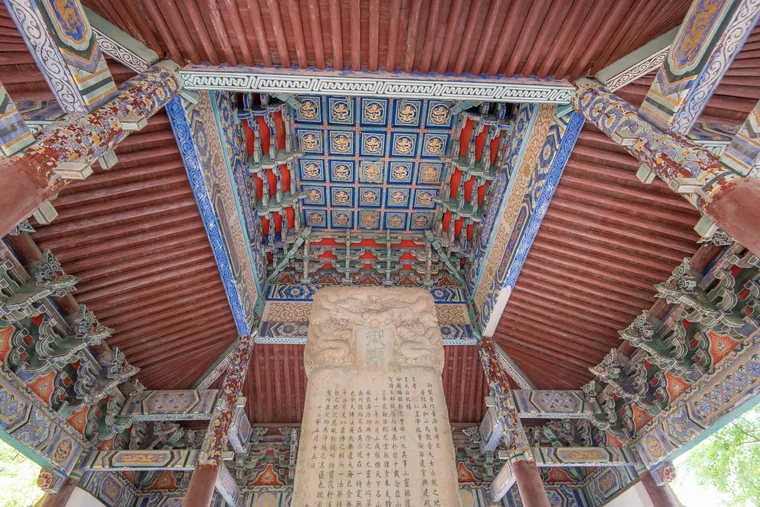
Follow history and understand Puji Chan Temple
- 1080
The Abomination Buddha Guanyin Temple
In the Song Dynasty, the expansion and granting of silver and quotas became important clues in the development of temples.
- 1214
Construction of Yuantong Palace
The records of the construction of the main hall in the Song Dynasty provide a starting point for the later history of Yuantong Hall.
- 1699
The name of Puji is confirmed
During the Kangxi period of the Qing Dynasty, it continued to be renovated and was awarded the title of Puji Chan Temple.
- Since 1731
Qing Dynasty expansion
Expansion during the Yongzheng period further expanded the palaces, pavilions and living spaces.
- Since 1979
Modern restoration and continuation
A comprehensive restoration was followed by the gradual reinstatement of important devotional spaces and buildings.
After Haiyin Pond, the courtyard leads to the Yuantong Palace.
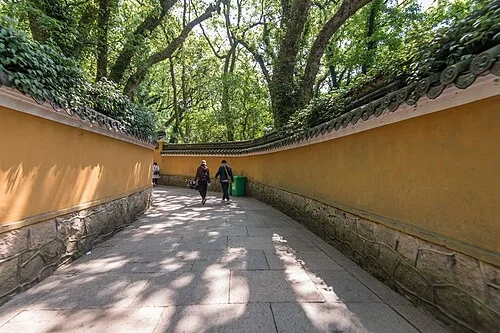
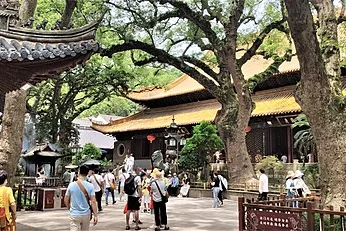
The Haiyin Pond in front of the temple and the surrounding ancient trees leave a soothing space before entering the main hall. The water surface, bridges, tree shadows, and roofs near and far together form the temple landscape; on the pilgrimage route on the island, these scales also give people the opportunity to slow down and observe how a temple blends into the environment.
Along the central axis, you can read the levels of the Royal Stele Hall, the Heavenly King Hall, the Great Yuantong Hall and the Sutra Library. The imperial stele and sutra-gifting memory present the history of royal construction. The themes of the Heavenly King and the Dharma Protector form the front salute space, while the Yuantong Hall draws the line of sight towards the main statue of Guanyin.
The scripture library also connects with teaching and monastic life. Its lower Dharma Hall honours the Medicine Buddha, Shakyamuni and Amitabha, showing wider Buddhist learning within a Guanyin pilgrimage site. Keep this group distinct from Guanyin in Dayuantong Hall.
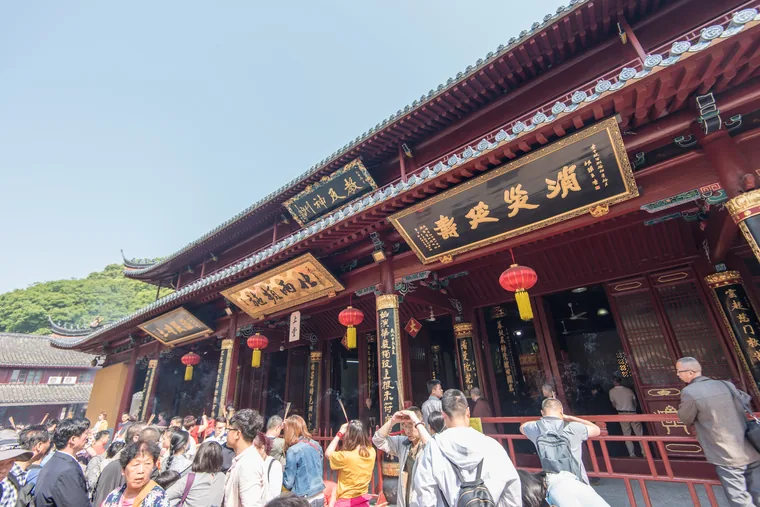
Thirty-two responses give compassion a different look
Dayuantong Hall's principal Pilu Guanyin and thirty-two manifestations are distinctive at Puji Temple. Manifestations express responses to different beings and circumstances, not thirty-two unrelated deities each guaranteeing a separate worldly benefit.
Guanyin’s compassion has rich visual expression here. People come from different places, with different intentions such as caring for loved ones, facing loss, and looking for support; the theme of self-response reminds people that caring also requires first understanding what the other person really needs, and then choosing a suitable way to respond.
Prayer can retain the expectation for peace, and it can also become a reflection: whether you are willing to listen more, have less preconceptions, and whether you can provide timely support to those who are suffering. By connecting your wishes to something you can do every day, compassion becomes more than just an abstract word.
We are both in Mount Putuo. Let’s first understand the key points of each of the three temples.
Puji Temple, also known as the Front Temple, is an important starting point for understanding the Guanyin worship of Mount Putuo. The main statue of the Great Yuantong Hall and the group of Yingshen statues place "universal concern" and "response that varies from person to person" in the same space. You can express your wishes for the well-being of your parents, the growth of your children, or for your relatives and friends to overcome difficulties, and then explain their respective situations clearly.
Puji, Fayu and Huiji are distinct temples on Mount Putuo. Puji is known for Dayuantong Hall and Guanyin's manifestations; Fayu for its dragon ceiling, island Guanyin and Sudhana's learning journey; Huiji on Fodingshan for Shakyamuni and Guanyin stone images. Explore the particular figures alongside family customs before choosing.
If your original wish was at Puji Temple, keep the precise name “Puji Chan Temple” when arranging to give thanks, rather than writing only Mount Putuo. Recall the figure you honoured, what has changed and any promise you made so this visit continues your original intention. Consult the current service list and prices on this page.
Understanding the halls and the figures within them
| Palace or space | Figures and cultural roles |
|---|---|
| Dayuantong Hall (Yuantong Palace) | Vairocana Guanyin and Guanyin's thirty-two corresponding bodies |
| Tianwang Palace | the Four Heavenly Kings, Wei Tuo and other protector images |
| Dharma hall downstairs | the Medicine Buddha, Shakyamuni Buddha, Amitabha Buddha |
Dayuantong Hall (Yuantong Palace)
Principal figures: Vairocana Guanyin and Guanyin's thirty-two corresponding bodies
The main honorific name of Dayuantong Hall in Puji Temple is Pilu Guanyin, and together with the surrounding thirty-two corresponding bodies, they constitute the whole Guanyin salute. Avalokitesvara is closely associated with the compassion of hearing the voice and rescuing suffering, while the corresponding body represents the Bodhisattva teaching and responding in a suitable capacity due to the situations of different sentient beings. The Lord responds to everyone, making the vastness of mercy and the diversity of responses a visible faith.
As an important hall of the Guanyin Taoist Temple in Mount Putuo, the Great Yuantong Hall organizes the space with the main image and group images, which also makes the cultural association between "Yuantong" and Guanyin's training more concrete. Visitors can first feel the solemnity of the central main image, and then see how different characters are represented in each body. Prayers for family well-being, support in distress, or understanding in relationships can all come from the same compassionate tradition with different emphasis. The thirty-two avatars here are different responses to the same Guanyin theme of compassion, and each does not need to be interpreted as a fixed wish function.
Associated wishes: You can wish for your parents, partners or children to be physically and mentally stable and have someone to take care of you when needed. You can also wish for support and good luck for yourself. If you want to understand your relatives and friends better, you can write down the difficulties you want to understand, and let Guanyin's diverse responses become the sustenance of caring for specific people. When writing wishes for multiple family members, you can specify the support each needs, so that the same compassionate wish can remain specific to each person's life.
Tianwang Palace
Principal figures: the Four Heavenly Kings, Wei Tuo and other protector images
The Four Heavenly Kings are the guardians of the country in the east, growth in the south, wide eyes in the west and multi-hearing in the north. They are Buddhist gods who protect the Dharma and protect the four directions. His solemn image as a military commander emphasizes the protection of learning and stable order; when people salute the King of Heaven, they often express their desire for safe entry and exit, stability for relatives and friends, and support in times of trouble. They also understand protection as cherishing their fellow travelers and living together. Wei Tuo is also worshiped as a heavenly general who protects temples and studies.
The Tianwang Hall of Puji Temple is in front of the Yuantong Hall. The bell and drum towers on both sides are connected. The main hall of Guanyin Mercy is first introduced with the solemn protector. The protection of the front part and the response of the back part are mutually referenced, so that a pilgrimage can not only wish for the safety of loved ones when they come and go, but also express feelings for a stable life at home and someone to help them in times of trouble.
Associated wishes: You can wish your family members who are traveling far, returning home, or living across countries a safe and smooth journey, and thank those who travel with you for their care. When facing a move or job change, you can express your wish to have peace of mind, secure important arrangements, and have people around you receive appropriate support.
Dharma hall downstairs
Principal figures: the Medicine Buddha, Shakyamuni Buddha, Amitabha Buddha
Shakyamuni, the Medicine Buddha and Amitabha Buddha respectively unfold the teachings of the Buddha and the clues of belief in the Oriental Glazed Pure Land and the Western Pure Land of Bliss. Shakyamuni connects enlightenment and wisdom, Bhaisajyaguru (the Medicine Buddha)'s twelve great wishes care about suffering and life needs, and Amitabha Buddha's infinite light and infinite life express light, peace and refuge. The three statues are juxtaposed, making peace, blessing, wisdom and care for life interconnected.
Puji Temple's scripture library preserves memories of scriptures bestowed, stored and taught. The Three Buddhas in the Dharma Hall below connect learning with devotion. Guanyin's compassion, Buddhist teaching, the Medicine Buddha's vows and Amitabha's Pure Land traditions offer distinct settings for family wellbeing, progress in study and gratitude.
Associated wishes: You can express your concern for the well-being of your loved ones to the Medicine Buddha, pray to Shakyamuni Buddha for wisdom and blessings to grow, and also pray to Amitabha Buddha for happiness and refuge. Scholars can thank the classics and teachers for teaching them, and hope that what they know can help others in their lives.
Write down the concerns in culture as your own wishes
Family care and distant concern
Dayuantong Hall·Guanyin Mercy
Guanyin's tradition of hearing voices and rescuing those in distress allows expressions of concern for relatives' illness, fatigue, and loneliness; the combination of the main deity of Puji Temple and the thirty-two yingshen makes the compassion in response to different situations more vivid. When separated by oceans, people are often most worried that no one will know about their family's difficulties, which echoes Guanyin's meaning of seeing distress and giving appropriate responses. Praying for parents to recuperate, for partners to adapt to a new life, or for children to be alone outside has different concerns. Understanding the relationship also reminds people to hear the other person's true needs first.
Write down who you are here for, what concerns you most and the care you hope to receive, and how you would like to keep in touch.
Example of wish expression
May my parents live a stable life and have someone take care of them when they encounter difficulties; may my children encounter kindness from afar, and may I listen carefully and turn my concern into timely greetings and companionship.
Ability to understand different situations
Dayuantong Hall·Guanyin Thirty-two Yingshen
Thirty-two responses present Guanyin’s belief meaning that different responses are given to different sentient beings. Compassion is not just an expression or a way of speaking, but caring about how the other person can truly be helped. The group of statues in Puji Temple allows this to be understood from specific characters, and thus can carry the desire to understand family members and respect different life experiences.
You can write down a relationship that you hope to improve, and pray that you will be less prejudiced and know how to see the other person's difficulties. In cross-cultural families or between relatives in two places, we can also express our willingness to communicate clearly and provide more appropriate care. Asking for mercy is not only about being understood, but also about who we want to understand.
Example of wish expression
I hope that I will not rush to use my own experience to draw conclusions for others, but rather listen more and give the other person the help they really need.
Peace and stability in transition
Heavenly Kings Hall · protection; Dharma Hall · the Three Buddhas
The Heavenly Kings and Weituo represent protection, while the Dharma Hall's Three Buddhas present awakening, the Medicine Buddha's care and Pure Land wellbeing. At Puji Temple, these themes connect wishes about journeys and arrangements with inner steadiness and family care during a move, travel or a new job.
You can explain who is involved in the change, which step you most hope will be carried out smoothly, and pray that your family will be healthy, your job will be settled, and each other will be supported. If you are temporarily separated due to cross-border life, you can also write down your expectations for reunion and your respective concerns, so that your wishes at this stage can take care of both external arrangements and inner peace.
Example of wish expression
I hope we will be safe during this period of change and can take care of each other when encountering difficulties; I also hope to make sufficient preparations and settle down step by step.
Giving thanks and carrying kindness forward
Dayuantong Hall·Puji and Compassion Theme
The name Puji evokes Guanyin's universal compassion, while the figures in Dayuantong Hall show compassion responding to different beings. Giving thanks after hardship eases can acknowledge help received and this tradition of care. It can include wishes for loved ones and a commitment to treat others in difficulty with kindness.
You can explain what you cared about most before and what changes have occurred now, and thank those who have provided companionship, care or guidance. If you are overseas and cannot be in the mountains in person, you can also write down what you want to say as a solemn thank you, praying for the safety of your family and long-lasting good relationships, so that the gratitude can retain the specific experience.
Example of wish expression
Thank you to those who are willing to accompany me through the lows. I hope I will keep the care I received in my heart and try my best to help others in the future.
In the image, continue to get to know each other Puji Chan Temple
Hundred Temples and Thousand Faces—Episode 19 Putuo Mountain Puji Temple
Get to know Puji Chan Temple in Putuo Mountain through a cultural introduction.
星纪传说 · Bilibili · in Bilibili Watch original video
The theme of this issue is Puji Chan Temple, which provides visual supplements for reading about the main hall of Guanyin, the history and architecture of the temple.
If playback is restricted by the network or platform, the original video entrance can be used.
Commissioned services and fees
$245 USD · Basic service fee
In Putuo Temple, express a sincere compassion and wish
The basic commission includes tickets, incense, Buddha worship and making wishes; pictures and video visit records correspond to the specific temple, the selected offerings and this commission, and are delivered privately.
You can also entrust your family together. It is recommended that there be no more than 3 people per order, so that you can express your feelings one by one.
A private visit record will be provided 1-2 working days after the service is completed.
Anxin provides independent entrusted services and does not represent the temple. The basic commission does not automatically equal the joint worship of the three temples in the mountain or the special ceremony. Special ceremonies and optional offerings will be confirmed separately.
Select your wish, desired date and offerings and submit the request, then add official customer service for verification. Submission does not mean successful reservation, payment or seat reservation.
Yes Submit request and confirm with our team . There is no need to log in for consultation; the appointment has not been successful after submission.
About Puji Chan Temple , you may also want to know
Is Puji Chan Temple the Putuo Shanqian Temple?
Yes, Qian Temple is the customary name of Puji Chan Temple. It has different locations and hall features from Fayuhou Temple and Huiji Chan Temple in Fodingshan.
Is Vairocana Guanyin the same as Vairocana Buddha?
Vairocana Guanyin is the name of the Guanyin statue in this temple; Vairocana Buddha is associated with the Buddhist Dharmakaya and the universal light. Similar names preserve their identity and culture.
Do the thirty-two Yingshen each have a wish?
Ying Shen emphasizes that Guanyin is presented accordingly according to the situations of different sentient beings, expresses compassion in various images, and responds to the different distress and needs of sentient beings.
Is Guanyin the only figure venerated at Puji Chan Temple?
Guanyin is central, alongside Heavenly Kings, guardians and the Three Buddhas in the Dharma Hall below the scripture library. These halls together form a setting for Buddhist learning and practice.
Which hall in the temple does Haiyin Pond belong to?
Haiyin Pond forms part of the landscape before the temple. Understand it through the garden, paths and surroundings; it is not a separate shrine to another Buddha or deity.
Does a Puji appointment automatically include Fa Yu and Hui Ji?
Not included automatically. The three temples are different specific temples. If you want to arrange for multiple temples, you should explain the scope, date and visit record requirements in advance, and then have customer service confirm each item.
How can I choose among Puji, Fayu and Huiji on Mount Putuo for family wishes?
The three temples are all connected to Guanyin culture, but the main temple, statues and history each have their own emphasis. Puji can be understood from Pilu Guanyin and Yingshen, Fayu has Jiulong Hall and Shancai Canxue, and Huiji has the main hall of Sakyamuni on Foding Mountain and the carved image of Guanyin. The original temple connection and the family’s worship habits are worth considering first.
I only remember visiting Mount Putuo. How can I identify the temple before arranging to give thanks?
You can look back at the photos you have saved, the name of the temple and the memory of the hall at that time, try to confirm the specific location, and then sort out the original wishes and agreements. Before confirming, explain the situation first and do not automatically regard the three temples as the same place.