Quick understanding
- What are Nanputuo Temple's most distinctive devotional figures?
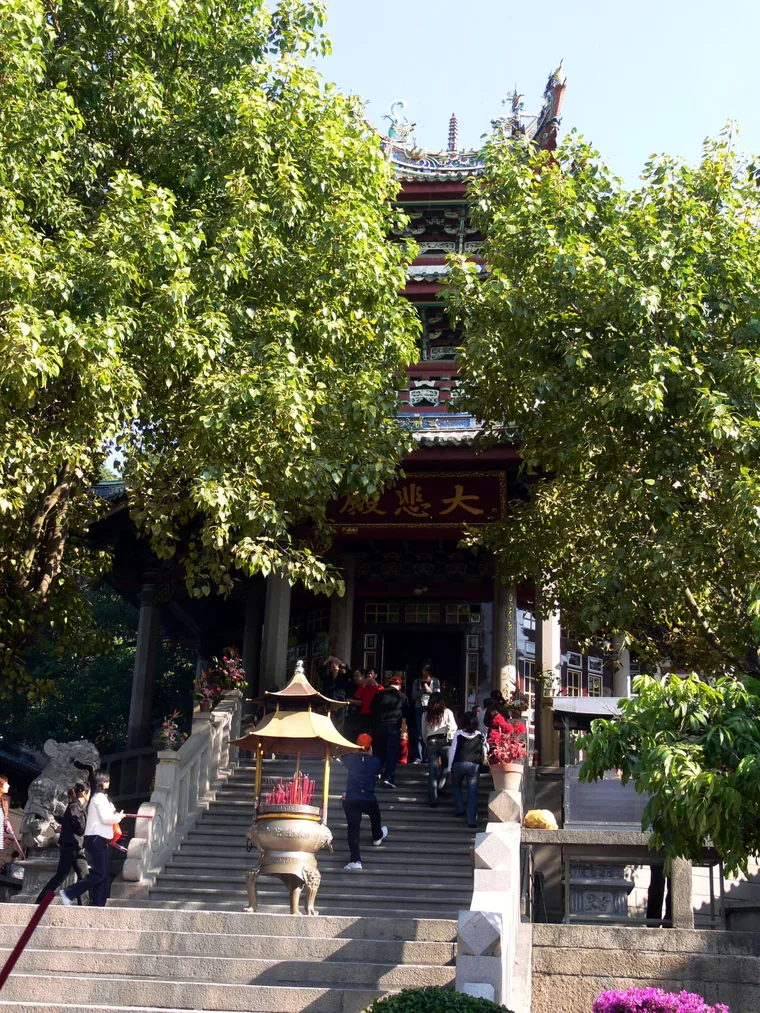
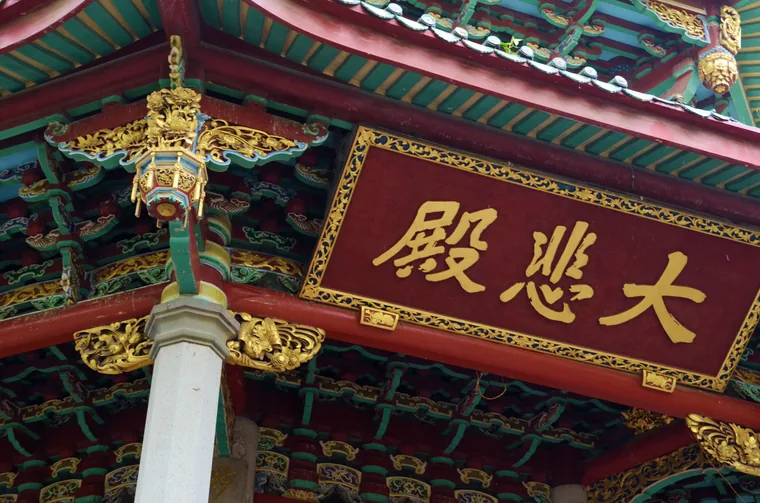
The Great Compassion Hall has Guanyin as its theme; the front of the Mahavira Hall is dedicated to Shakyamuni, Amitabha Buddha and the Medicine Buddha, and on the back there are the Western Three Saints composed of Amitabha Buddha, Guanyin and Mahasthamaprapta.
- Is Nanputuo Temple in Putuo Mountain?
No. It is in front of Wulaofeng in Xiamen, Fujian, and is a different location from Mount Putuo in Zhoushan, Zhejiang. The name of the temple is related to Guanyin beliefs and its relative geographical location.
- Why does the Great Compassion Hall spread out in all directions?
There are four Guanyin statues in the octagonal pavilion. The two-armed Guanyin is on the front and the multi-armed Guanyin on the other three sides. The theme of mercy is presented in the space with four open doors.
- Location
- Xiamen, Fujian·In front of Wulaofeng
- Early name
- Sizhouyuan, Endless Rock, Puzhao Temple
- Notable figures venerated
- Three Buddhas, Three Saints of the West and Guanyin
- Architectural Features
- Southern Fujian shear porcelain and the Octagonal Dabei Hall
In Nanputuo Temple, put the things you care about
Nanputuo is located in Xiamen. Its name is connected with Guanyin culture, but it has its own southern Fujian courtyard and tradition of studying and charity; it can express gratitude for family members far away, learning and growth, and missing people.
Safety and care of your family
From the image of Guanyin in the Hall of Compassion, understand how compassion faces different needs.
Continue to learn →Distinguish between the Three Buddhas and the Three Saints
The front and back of the main hall have different combinations. The pharmacist, Amitabha and Guanyin each have their own identities.
Continue to learn →Get to know Mount Putuo separately
Puji Chan Temple is located in Putuo Mountain, Zhejiang, and is a different temple from Nanputuo, Xiamen.
Continue to learn →From Sizhouyuan to Nanputuo, the names of ancient temples also include geography.
Nanputuo Temple's early history reaches back to the late Tang and Five Dynasties periods, with successive names including Sizhouyuan, Wujinyan and Puzhao Temple. After destruction and rebuilding, Kangxi-period restoration added a Guanyin pavilion and the Nanputuo name became established. Distinguish the temple's history from the dates of its surviving buildings.
The name of the temple in Nanputuo is connected with Putuo Mountain in Zhejiang Province in Guanyin belief and expresses the geographical relationship located in its south. The main temple in Xiamen also has its own monastic community, architecture and city memory. The three central Buddhas, the Guanyin Hall and Buddhist education together form a distinctive look, making the same tradition of compassion have specific expressions in different places.
Wulao Peak, the seaport and the adjacent urban universities form a distinctive environment in Nanputuo. The mountains and forests provide a quiet background, and the temples are connected to Xiamen’s cultural life. Looking from near to far, you can see how the ancient temple and the city interact with each other at the same time.
Follow history and understand Nanputuo Temple
- Late Tang Dynasty and Five Dynasties
Early temple clues
Early names such as Sizhouyuan connect the long history of Nanputuo.
- During the Kangxi period of the Qing Dynasty
Restoration and the development of Guanyin devotion
Shi Lang supported the restoration of the temple, and the names of Dabei Pavilion and Nanputuo became important historical clues.
- 1921
Reconstruction of Main Hall
The temple introduction states that it was rebuilt by monks and subsequently underwent maintenance and construction.
- 1926
Reconstruction of Tianwang Palace
Monk Huiquan raised funds to rebuild the Tianwang Hall, continuing the front worship space and Minnan craftsmanship.
- 1994
Charity association established
Nanputuo Temple Charity Association was established, which further expanded the temple's practice of caring for the society.
Porcelain cutting, stone courtyard and octagonal pavilion, each with different viewing scales
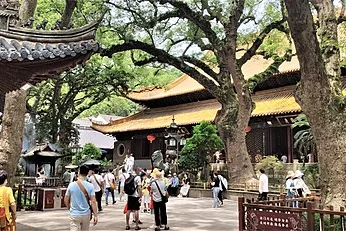
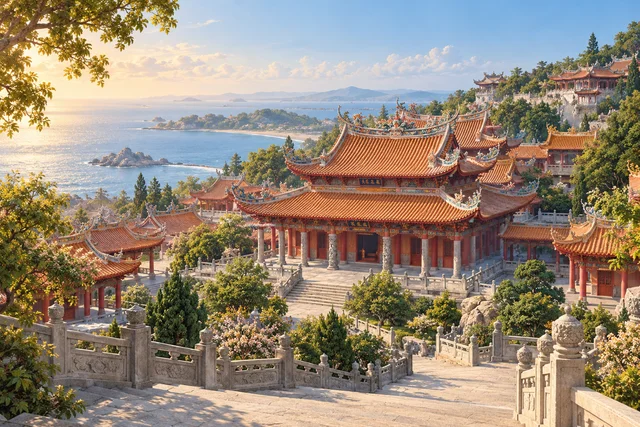
The Tianwang Hall and the Main Hall advance along the central axis, and the buildings gradually rise along with the terrain. The stone courtyard unfolds in front of the palace, and the wood and stone structure complements the curves of the eaves. The porcelain cutting of southern Fujian combines small porcelain pieces into distinct images, making the roof ridge not only the outline of the building, but also a carrier of local craftsmanship.
The Dabei Hall is located on a high stone platform. The octagonal pavilion and the high-open Buddhist hall in the front form a change. There are doors on four sides, and the other sides are surrounded by carved wooden partition walls; the inner and outer columns and brackets are stacked, leading people's sight to the pavilion and caisson. The image of Guanyin is therefore not viewed from just one side.
The Dharma protector at the front of the temple, the three Buddhas in the main hall and the Guanyin at the back form a sequence of worship with different themes. It is more helpful to identify the space than to rush to remember the so-called purpose of each statue: first look at the name of the temple, then look at the location and identity, and finally understand how they are related to each other in this temple.
The Three Buddhas, the Three Saints of the West and the practice of compassion are not the same group of names
On the front side of the main hall are Shakyamuni, Amitabha Buddha and the Medicine Buddha, which are respectively associated with enlightenment, pure land and happiness; at the back of the hall, the Western Three Saints are composed of Amitabha Buddha, Guanyin and Mahasthamaprapta. Different combinations give the Lord Buddhism, Bodhisattva compassion and wisdom their own place, and also allow relatives and friends to have rich layers of blessings and grateful memories.
The two-armed and multi-armed Guanyin in the Hall of Compassion express compassion in different postures. Many hands and many eyes is a symbolic expression in religious art, which relates to a wide range of concerns and responses to needs. It is not about splitting the same Guanyin into multiple gods, each with a real-life interest.
Nanputuo also has an actual history of education and charity. The study connected by the Buddhist College, and the charity association's study assistance, care and emergency relief work allow compassion to enter into concrete life. Ordinary people's wishes can also start from here: they are willing to see the needs of others and are willing to respond conscientiously to the best of their ability.
Identify Nanputuo Temple in Xiamen before comparing figures at coastal temples
Nanputuo Temple in Xiamen and Mount Putuo in Zhejiang both connect with Guanyin, but their geography, buildings and traditions differ. First identify “Nanputuo Temple, Xiamen”, then explore Dabei Hall, the main hall and other figures. Keep the precise original temple name when recalling a prior wish.
The Guanyin theme of the Great Compassion Hall provides a clear source of care and support for relatives and friends in difficult times; the different combinations of the Buddhist Hall allow one to understand enlightenment, the Medicine Master’s vows and the Pure Land belief respectively. Studying and practicing charity also connect the pursuit of knowledge, gratitude and willingness to help others. It cannot be inferred that all palaces are the same based on the three words "Nanputuo".
When conveying wishes for Minnan family members from overseas, you may remember a temple, a vegetarian meal or time spent together. Include that real connection. To give thanks, describe the original concern, what has changed and any promise. Special ceremonies and memorial tablets are not automatically included in the basic visit.
Understanding the halls and the figures within them
| Palace or space | Figures and cultural roles |
|---|---|
| Tianwang Palace | Maitreya, Skanda and the Four Heavenly Kings |
| Front of Main Hall | Shakyamuni Buddha, Amitabha Buddha and the Medicine Buddha |
| The back of the Main Hall | The Western Triad · Amitabha, Guanyin and Mahasthamaprapta |
| Great Compassion Hall | Two-armed Guanyin and three multi-armed Guanyin |
| Jizo Hall on the east side of Tianwang Hall | Kshitigarbha Bodhisattva |
Tianwang Palace
Principal figures: Maitreya, Skanda and the Four Heavenly Kings
Maitreya, free translation of Cishi, is the future Buddha in Buddhism. The familiar image of joy is associated with generosity, good deeds and future harmony. Wei Tuo is the heavenly general who protects the Dharma and the temple; the Four Heavenly Kings, Zhi Guo, Zeng Zeng, Guang Mu, and Duo Wen respectively contact the guardians of the four directions. Maitreya's compassion and the solemnity of the protector together form the theme of welcome and protection, giving cultural suspense to the new stage of auspiciousness, family harmony and safe entry and exit.
The Nanputuo Heavenly King Hall has Maitreya in the middle, Wei Tuo at the back, and the Four Heavenly Kings on both sides. The hall and the porcelain-cut roof jointly display the style of southern Fujian. The statues of joy and protection first lead people into the courtyard, and then the three Buddhas, Guanyin and Ksitigarbha are spread out to pay homage. When people come to the ancient temple in the harbor city, they can use this layer of protection and welcoming culture to wish for a safe journey back and forth, a smooth new stage, and happiness for their families.
Associated wishes: It can be used to wish stability to relatives and friends who are traveling far away, returning home, or arriving in Xiamen for the first time. It can also express the hope that family members can get along harmoniously. If you receive help from strangers while living overseas, you can also express your kindness to Maitreya and express your gratitude to the protector, hoping that you will be taken care of along the way.
Front of Main Hall
Principal figures: Shakyamuni Buddha, Amitabha Buddha and the Medicine Buddha
Shakyamuni, the Medicine Buddha and Amitabha Buddha respectively unfold the teachings of the Buddha and the clues of belief in the Oriental Glazed Pure Land and the Western Pure Land of Bliss. Shakyamuni connects enlightenment and wisdom, Bhaisajyaguru (the Medicine Buddha)'s twelve great wishes care about suffering and life needs, and Amitabha Buddha's infinite light and infinite life express light, peace and refuge. The three statues are juxtaposed, making peace, blessing, wisdom and care for life interconnected.
The front of the Nanputuo Mahavira Hall has three Buddhas as the core. Ananda, Kassapa and other disciples and Brahma, Sakra and other supporting subjects are distributed among them. There is also an arhat hall outside the hall. The main Buddha, disciples, protectors and practitioners all have roles, so that the prayer for blessings, wisdom and health is not just a label, but can also be understood from the different relationships of teaching, inheritance and protection.
Associated wishes: You can express your thoughts for the well-being of your loved ones and a stable life, and also pray to the Lord Buddha to reduce worries and increase wisdom. Those who are studying or changing jobs can write down their hopes for clarity and guidance. I hope that I can grow up to take care of my family and cooperate with others in good faith.
The back of the Main Hall
Principal figures: The Western Triad · Amitabha, Guanyin and Mahasthamaprapta
Amitabha Buddha, Avalokitesvara and Mahasthamaprapta Bodhisattva are collectively known as the Three Saints of the West. Amitabha Buddha is the main deity of Pure Land belief, and his name is associated with infinite light and infinite life; Guanyin responds to suffering with compassion, and is respected for his wisdom and power. The main Buddha and the two attendants jointly express the yearning for light, peace and happiness, and practice, so they always carry the thoughts of peace, support and gratitude for the deceased, relatives and friends.
On the back of the same main hall in Nanputuo, Amitabha Buddha, Guanyin and Mahasthamaprapta unfold the theme of the Three Saints of the Pure Land. From the three Buddhas on the front to the relationship between the main Buddha and the attendants on the back, we can read how the temple organizes Pure Land beliefs with different statues. When blessing your relatives and friends who are still alive, or expressing your condolences to your family members who have passed away, you can be reassured by this longing for light, compassion, and wisdom.
Associated wishes: You can pray for happiness and inner peace for your family, and also express your thoughts or gratitude solemnly. If you live overseas and can't get together or say goodbye, you can write down what you want to say most. May there be warmth and goodwill in each other's memories.
Great Compassion Hall
Principal figures: Two-armed Guanyin and three multi-armed Guanyin
Guanyin (Avalokiteshvara) is respected for his ability to hear voices and save suffering, and to respond compassionately to all living beings. Nanputuo uses two arms and multi-armed Guanyin to show different artistic expressions of the same faith. The multi-armed image makes the willingness to help widely visible. People often use this to express their wishes for the well-being of their families, support in difficulties, and less sorrow in their hearts. They also hope that they can better understand the needs of others.
The four Guanyin statues in the Great Compassion Hall are located in four directions, with two arms on the front and forty-eight arms on the rest, echoing the space of the octagonal pavilion. The multiple arms turn the widely responded wishes into a visible form, and the four-sided layout allows worship to unfold around the hall. This is a distinctive detail to understand the Guanyin faith of this temple, and also provides a specific cultural basis for family well-being, help in times of difficulty, and loving care. The four-sided Guanyin and the different numbers of arms belong to the same artistic expression of the theme of compassion, and the different images cannot be directly arranged into a functional list that each has a certain result.
Associated wishes: You can wish peace to your children, parents, or relatives and friends who are in difficulty, and hope that they will receive appropriate support and understanding. You can also pray for yourself to have a stable mind and have the strength to respond to the needs of your family, so that compassion is not only an expectation, but also a desire to be close to others. Writing down your worries and hopes for care for specific family members, and then explaining your company, is more complete than leaving a wish category alone.
Jizo Hall on the east side of Tianwang Hall
Principal figures: Kshitigarbha Bodhisattva
Kshitigarbha Bodhisattva is respected in Mahayana Buddhism for its great wishes and relief from suffering. Related scriptures also emphasize filial piety, gratitude for relatives and care for all living beings in need. Therefore, Ksitigarbha belief often carries the wish for the well-being of living parents, the memory of deceased relatives and friends, and the hope of surviving difficult times safely. The long-term commitment expressed by the great wish also makes this salute link up with the kindness of patient care and never giving up.
Nanputuo Ksitigarbha Hall is located on the east side of the Tianwang Hall, and together with the Jialan Hall on the west side and the Bell and Drum Tower above, form the front courtyard. Here, the Ksitigarbha worship of Xiamen main temple coexists with the themes of Guanyin Compassion in the Great Compassion Hall and the Three Buddhas in the Mahavira Hall, showing multi-layered care for life, family kindness and learning. The thoughts of providing stability for the family and remembering relatives and friends can be expressed in the clear space of the temple.
Associated wishes: You can pray for the well-being of your parents, the safety of your relatives and friends, and their support in times of difficulty. You can also write down your unfinished gratitude and thoughts. If you want to be grateful for a period of care, you can explain how it has supported you until today, so that the culture of great wishes and filial piety can be closer to the specific family relationship.
Write down the concerns in culture as your own wishes
Family safety and appropriate care
Great Compassion Hall·Sifang Guanyin Theme
Nanputuo Great Compassion Hall uses the different forms of four-sided Guanyin, two-armed and multi-armed to express the broad response of compassion to the needs of all living beings. The rescuing power expressed by the many arms makes it possible to express the uneasiness of the family during the illness, the growth of the children, and the worries about traveling far away. Wishes for relatives and friends, so you can care about your physical health and emotional understanding at the same time, rather than just general success. Care from afar can also be very specific: a care arrangement, a period of recuperation, a child who is alone outside, can all become the content of this wish.
Use necessary titles to describe the stage your family is at, the support you most want, and the companionship you want the other party to know; additional privacy does not need to be filled in for solemnity.
Example of wish expression
May my parents recover smoothly, my children be safe outside, and those who take care of my family may be considerate; may I not neglect greetings due to distance, and may my concerns be turned into timely support.
Learn to discern clearly and be willing to act conscientiously
Main Hall·Sakyamuni Theme and Temple Study Culture
Shakyamuni's enlightenment teachings care about understanding troubles and cultivating wisdom; Nanputuo's Buddhist training tradition also allows the teachings to be continued through the inquiry and practice of teachers and students. Prayers for learning and important choices can include understanding, humility, and continued growth: a desire to see more clearly, and a desire to learn skills that will benefit oneself and others.
You can describe the exam, research, or professional training you are preparing for, and pray for concentration, discernment, and good relationships with good teachers. If what you have learned will be used in a new job, you can also express your willingness to take responsibility, cooperate honestly, and connect your academic aspirations with the life you want to live in the future.
Example of wish expression
I hope that I will carefully understand what I don’t understand, and see my responsibilities clearly when faced with choices; I will not only write a good plan, but also be willing to do something practical every day.
Distant thoughts and inner peace
The Three Saints of the West·Compassion and Pure Land Theme
The Western Triad centres on Amitabha, with Guanyin and Mahasthamaprapta expressing compassion and wisdom. Pure Land traditions offer a focus for refuge and inner support. This group behind Nanputuo's main hall provides a setting for wishes for distant loved ones, remembrance after loss and thanks not yet expressed.
You can write down the person you miss, the care you remember most, pray for the safety of your relatives and friends, and hope that you can preserve the shared experience with a gentle mood. If the separation between the two places is only temporary, you can also express your expectation of reunion, so that you can cherish the memory while retaining the hope of continuing to be together.
Example of wish expression
May the people you care about be in peace and stability. Thank you for your care and companionship, and I hope I can live a serious life with this intention.
Turn gratitude into a little useful help
Guanyin’s theme of compassion and Ksitigarbha’s great wishes; temple charity practice
Guanyin responded to distress with compassion, Ksitigarbha was respected for his great wishes and filial piety; Nanputuo's charity practice also brought care into the actual exchanges between the temple and society. The desire to be grateful and help others is therefore based on two aspects: gratitude for the support one has received, and respect for the tradition of long-term commitment to those in need.
You can tell clearly which companionship or helping hand you want to be most grateful for, wish the helper good health, and hope that you can care for others when you have spare time. If you are overseas, you can write down the kindness you have received from strangers, so that this thank you can also cherish the friendship and mutual help between different regions.
Example of wish expression
Thank you for having someone reach out to me when I needed it. May I remember this kindness and do something truly useful wherever I can.
In the image, continue to get to know each other Nanputuo Temple
Real photos of Nanputuo Temple in Xiamen, free admission and incense, free meals, a real Buddhist holy place!
Get to know Nanputuo Temple from real-life images of Xiamen’s Wulao Peak.
最游感觉 · Bilibili · in Bilibili Watch original video
The author records the architecture and visiting environment of Nanputuo Temple. The video was released in 2020. The free items, meals and visit arrangements in the title and description at that time do not represent the current fixed services or commitments.
If playback is restricted by the network or platform, the original video entrance can be used.
Commissioned services and fees
$220 USD · Basic service fee
In front of Wulao Peak, leave your thoughts and feelings of concern and gratitude
The basic commission includes tickets, incense, Buddha worship and making wishes; pictures and video visit records correspond to the specific temple, the selected offerings and this commission, and are delivered privately.
You can also entrust your family together. It is recommended that there be no more than 3 people per order, so that you can express your feelings one by one.
A private visit record will be provided 1-2 working days after the service is completed.
Anxin provides entrusted services independently and does not represent the temple. Basic commissions do not automatically include Zhejiang Putuo Mountain, Buddhist college activities, special rituals or charity events.
Select your wish, desired date and offerings and submit the request, then add official customer service for verification. Submission does not mean successful reservation, payment or seat reservation.
Yes Submit request and confirm with our team . There is no need to log in for consultation; the appointment has not been successful after submission.
About Nanputuo Temple , you may also want to know
Are Nan Putuo and Zhejiang Putuo Mountain the same place?
No. Nanputuo is located in front of Wulaofeng in Xiamen, Fujian, and its name is related to Guanyin beliefs and its relative geographical location.
Are the Three Buddhas in the Main Hall the same as the Three Saints in the West?
Different. The former is Sakyamuni, Amitabha Buddha and the Medicine Buddha; the latter is Amitabha Buddha, Guanyin and Mahasthamaprapta.
Do the four Guanyin statues in the Great Compassion Hall each have a wish?
Different postures express Guanyin’s compassion with various artistic images, helping people understand care, assistance and stability from different situations.
Does Ksitigarbha Hall belong to Jiuhuashan Temple?
This is the Ksitigarbha Hall on the east side of the Tianwang Hall of Nanputuo Temple. The specific temples and itineraries of Mount Jiuhua are confirmed separately.
Is the Temple Charity Association the entrusted service provider?
No. The Temple Charity Association has its own history and charity work; Anxin provides commissioned services independently and does not represent the temple or the Charity Association.
Does the commission include religious services or visits to Buddhist schools?
The base order does not automatically include these special arrangements. If there is a clear need, it should be explained first and customer service will confirm the practical scope.
Is Nanputuo Temple the temple on Mount Putuo?
No. Nanputuo Temple is in Xiamen, Fujian, while Mount Putuo is in Zhoushan, Zhejiang. Both have connections with Guanyin traditions, but a request or visit to give thanks must identify the specific temple and location.
To express well-being or longing for your family, how can you choose someone to know?
You can first read Guanyin’s theme of compassion, Medicine Buddha and the Pure Land culture of the Three Saints in the Great Compassion Hall, and then explain the situation of your loved ones and your own concerns. Daily worship and special puja arrangements are checked separately and are not automatically regarded as the same item.