Quick understanding
- Which Buddhas are venerated in Kaiyuan Temple's main hall?
The five Buddhas in the main hall are Vairocana, Aksei, Baosheng, Amitabha and Buddha. The theme of Buddhist wisdom is unfolded in the center and four directions.
- Which figure is venerated at Ganlu Ordination Platform?
The main altar of the Amrita Ordination Altar is dedicated to Lusena Buddha, surrounded by different characters such as Buddha, Bodhisattvas and Dharma protectors; it is also an important space for understanding the Buddhist ordination system and architectural tradition.
- Do the Hindu stone carvings in the temple indicate that this place converted to Hinduism?
No. Some stone components were reused during later temple repairs, reflecting cultural exchange and the movement of materials. This does not change the identities of all the Buddhist figures now venerated here.
- Location
- Quanzhou, Fujian·Gucheng West Street
- Main hall combination
- Five Directions Buddha and One Hundred Pillars Hall Space
- Important buildings
- Manna Altar, Zhenguo Pagoda and Renshou Pagoda
- Distinctive culture
- Harbor exchange and diverse stone carving art
In Kaiyuan Temple, put the things you care about
This page is Kaiyuan Temple in Quanzhou, Fujian. The Five Directions Buddha, the Nectar Altar and the Harbor Twin Towers respectively provide specific places for discernment, promise keeping and memories of leaving home. Identify the location first, and then choose a theme that suits your heart.
Leaving home and staying safe with your family
From the memory of Quanzhou Harbor and Twin Towers, it expresses a safe journey and mutual care between the two places.
Continue to learn →Seek clarity and be willing to keep promises
The Five Buddhas and the Ordination Altar each have their own themes, to understand how wisdom and practice are connected.
Continue to learn →Compare Xiamen Nanputuo
We are both in Fujian, but the location, history and ritual clues have different emphases.
Continue to learn →Kaiyuan Temple in the seaport city, communication remains in architecture and materials
Kaiyuan Temple was built in the Tang Dynasty and has formed an important pattern since the tenth century. Maritime trade in Quanzhou during the Song and Yuan Dynasties brought exchanges of personnel, technology and culture, and temples also participated in urban public life. Palaces, streets, and society are interconnected, making understanding ancient temples a process of understanding Quanzhou’s history and cultural exchanges.
The platform and some stone pillars of the Main Hall retain clues that they were reused components from the old Hindu temple. The coexistence of themes, materials, and new architectural locations demonstrates how craftsmen absorb and adapt the artistic languages of different cultures, and also reminds people to differentiate between the original story of the stone carvings and the objects of worship today.
The history of the temple is a history of constant renovation. The origins of the Tang Dynasty, the layout of the Song Dynasty, and the reconstruction of the Ming and Qing Dynasties all have different levels. The temples we see today were not built at the same time; the continuation of materials and technology makes the ancient temple a city memory that can be observed in detail.
Follow history and understand Kaiyuan Temple
- Tang Dynasty
Early construction of Kaiyuan Temple
The temple formed the early foundation and continued to be repaired and expanded in later generations.
- 1019
Building a nectar ordination altar
The ordination system and the status of temples in the Song Dynasty form important clues to ritual architecture.
- 1228-1237
Reconstruction of the stone structure of Renshou Pagoda
The West Pagoda gradually formed the shape of the Southern Song Dynasty stone pagoda seen today.
- 1238-1250
Reconstruction of Zhenguo Pagoda stone structure
The stone structure of the east pagoda and the west pagoda jointly reflect the architectural technology and sculpture art of the Song Dynasty.
- 1637
The Main Hall was rebuilt in the Ming Dynasty
The restoration of the temple and the reuse of stone components have left physical evidence of the encounter between different cultures.
- 1666
Rebuilding the Nectar Altar
The existing altar building has a level of reconstruction in the Qing Dynasty.
Five Buddhas and Kalinga Binga, there are beliefs and structural creations in the Hundred Pillar Hall
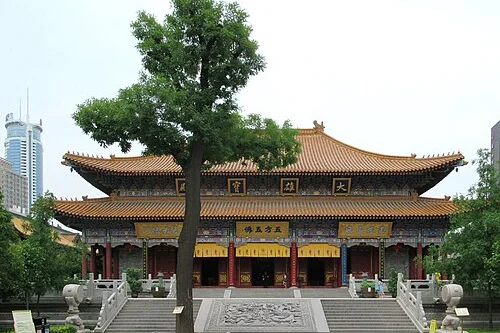
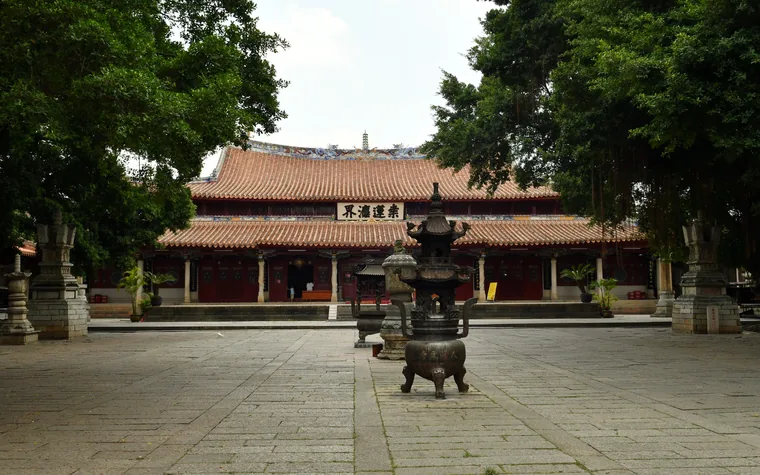
The main hall is also called the Hundred-Pillar Hall, with an interior organised partly by reducing columns. Its Five Direction Buddhas connect directions, Buddha realms and wisdom. This is distinct from the horizontal Three Buddhas, the Trikaya Buddhas or a Buddha flanked by two bodhisattvas.
Dougong, whose columns and beams are connected, is shaped into the image of Kalingbinga music performer. The bird's wings and the gesture of holding a musical instrument not only enter the Buddhist artistic imagination, but also play a role in the architectural structure. The interconnection between art and practicality is a particularly worthy place to take a closer look.
When seeing different Buddha statues and musical instruments, it is not necessary to assign each position or musical instrument as an exclusive wish. You can first understand the identity and image, and then focus on clarity, stability, consideration and practical actions, so that cultural understanding precedes simple performance-seeking labels.
The altar and the twin towers, clearly understand the etiquette system and stone construction techniques
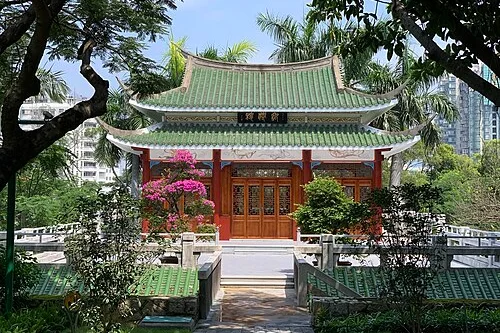
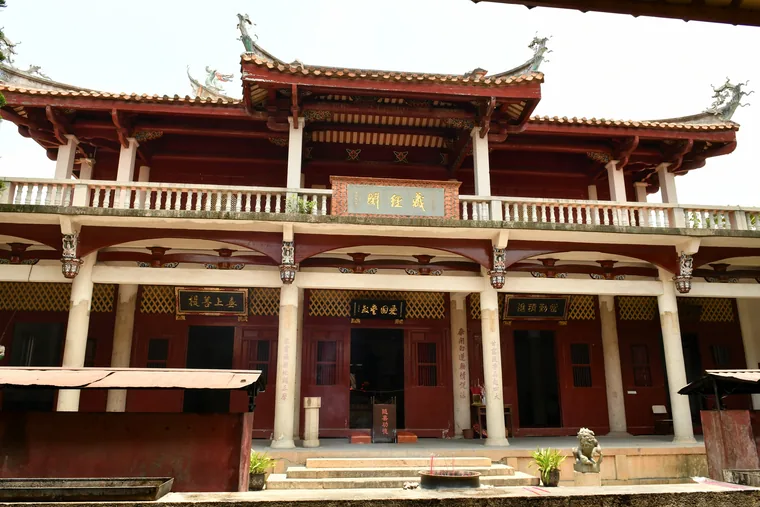
The Manna Altar was built in the Song Dynasty, and the existing building retains the level of reconstruction in the Qing Dynasty. The multi-layer pedestal, octagonal caisson and flying components together form a solemn space, presenting Buddhist precepts and study culture. For general visits, you can first get to know the architecture and statues. For formal ordination and specific training, it depends on the corresponding conditions, time and arrangements of the temple.
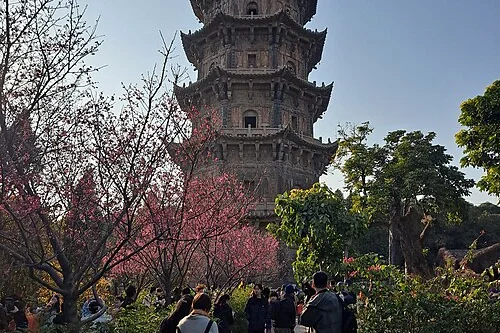
The existing stone structures of Zhenguo Pagoda and Renshou Pagoda were both formed in the Southern Song Dynasty, and are located on the east and west sides of the central axis courtyard respectively. The statues, bases and structural details of the two towers are different and are not identical copies; the early wooden tower, the later masonry reconstruction and the existing stone tower should also be recognized separately.
The towers, altars, halls and streets together make up the multiple values of Kaiyuan Temple. When wishing for family members, thanking teachers, or making wishes for a long trip, you can explain the topics you care about; if you want to visit, climb the tower, or participate in special activities, you need to communicate the actual conditions in detail.
In the ancestral city of Haigang, connect the long journey with the concerns of hometown
The name of Kaiyuan Temple appears in many places in China, and this page specifically refers to Quanzhou, Fujian. The history of the ancient city and harbor, the twin stone towers and diverse arts make this place not only a famous place for those who leave their hometown, but also a place that may connect family habits, childhood memories and departure.
The Five Directions Buddhas and the Nectar Ordination Altar in the Main Hall respectively unfold the themes of enlightenment, wisdom and perseverance; the Danyue Memorial also gives help and gratitude a specific character background. When it comes to your wishes in studying, running a business, or working overseas, you can write about clear direction, keeping promises, and cherishing the people you share the responsibility with.
Your choice may reflect hometown connections or an interest in Quanzhou's Buddhism and cultural exchange. To give thanks, return to the original temple and promise. Accounts of the twin pagodas, ordination platform and cultural objects do not mean a basic visit includes tower entry, ordination or every special activity.
Understanding the halls and the figures within them
| Palace or space | Figures and cultural roles |
|---|---|
| Main Hall·Hundred Pillars Hall | Vairocana Buddha, Akshay Buddha, Baosheng Buddha, Amitabha Buddha, Amitabha Buddha |
| Nectar Altar | Statues of Lusena Buddha and surrounding Buddhas, Bodhisattvas and Dharma protectors |
| Zhenguo Tower and Renshou Tower | Southern Song Dynasty twin stone pagodas, Buddhist figures and story carvings |
| Tan Yue Temple | Huang Shougong and the commemorative tradition of offering land to build a temple |
Main Hall·Hundred Pillars Hall
Principal figures: Vairocana Buddha, Akshay Buddha, Baosheng Buddha, Amitabha Buddha, Amitabha Buddha
The Buddhas of the five directions have Vairocana in the center, and Akho, Baosheng, Amitabha and Amitabha are connected to the east, south, west and north respectively. The Five Wisdoms tradition unfolds enlightenment into the wisdom of perfection, equality, discernment, and practice: Vairocana is associated with the Dharmakaya, Aksei is associated with the Immovable Name, Precious Life is associated with equality, Amitabha is associated with the light of the Pure Land, and Amitābha is associated with the Perfection. The whole expresses the vastness of wisdom.
Quanzhou Kaiyuan Temple The Five Directions Buddha in the Hundred Pillar Hall forms a distinct theme of the main hall. The reduced pillars and the Kalingpinga dougong in the hall make the space, statues and woodworking art complement each other. The culture of the Five Buddhas enables a clear mind to have a broad vision and different wisdom. When faced with the choice of school, work or family, we can pray for a more complete understanding, and we are also willing to learn to help ourselves and others.
Associated wishes: You can write down the situation you most want to see clearly, and pray for clarity, equal concern and peace of mind. If you need to coordinate the opinions of different people, you can also be willing to listen patiently, ask for advice and be kind, so that your wisdom and mind can cherish the true relationship.
Nectar Altar
Principal figures: Statues of Lusena Buddha and surrounding Buddhas, Bodhisattvas and Dharma protectors
In the explanation of Sambhogakaya, Lusena Buddha presents the solemnity achieved by practicing merits, which together with the precepts, practice and etiquette form the theme of the Nectar Ordination Altar. The statues of Buddhas, Bodhisattvas and Dharma protectors each have their own identities, and they respect the teachings and practices around the ordination altar. Understanding the culture of discipline can help us understand how people cherish their promises, moderate their words and deeds, and reduce harm, so that good intentions can have a sustainable behavioral direction.
The Manna Altar preserves the layers of being created in the Song Dynasty and renovated in the Qing Dynasty. The multi-layered pedestal and octagonal caisson provide a solemn space for practicing etiquette. Lusena in the altar and Vairocana in the center of the main hall have specific names and moral relationships respectively. Public visitors can learn about the culture through statues and buildings, formal ordination and learning programs are arranged by the temple, and personal wishes can be centered around serious practice and guardianship commitments. The Lusena Buddha in the Amrita Ordination Altar and the five Buddhas in the main hall belong to different spaces and combinations. The introduction of the Ordination Altar is not equivalent to an ordinary commission to arrange for ordination.
Associated wishes: It can be a constant wish to get along with integrity, correct habits and good intentions, indicating what you want to take seriously the most. If you wish to further participate in study or receive ordination, you should first understand the corresponding conditions and formal arrangements so that both worship and practical study can be in their proper place. The desire for career and study can express keeping promises, doing less harm and perseverance, so that promises can correspond to things that can be taken on in daily life.
Zhenguo Tower and Renshou Tower
Cultural role: Southern Song Dynasty twin stone pagodas, Buddhist figures and story carvings
Zhenguo Pagoda and Renshou Pagoda use Buddhist characters, stories and stone construction techniques to preserve faith and urban memory. The existing stone pagodas were formed in the Southern Song Dynasty. The two towers together constitute the important pattern of Quanzhou Kaiyuan Temple, and also connect their hometown in the cultural imagination of Quanzhou people at home and abroad. Understanding the carvings on the pagoda body can simultaneously cherish education, craftsmanship and long-term preservation, so that homesickness and gratitude can have a concrete place to pin down.
The two pagodas were developed from the early pagoda courtyard, and their respective structures and carving details retain different contents. Visiting cultural relics can start from the identity of the characters, stories and craftsmanship. Looking at the Twin Towers from a distance, you can also feel the relationship between the ancient temple and the city. Climbing the tower, close-up recording and special photography are arranged according to the on-site protection; cultural viewing can already express gratitude to the hometown, family members who have traveled far away and those who have supported the ancestors.
Associated wishes: You can use this to wish peace to relatives and friends far away, and also thank those who preserve the culture of your hometown. If you wish to arrange for designated tower views or cultural relic records, you can first explain your needs and then confirm the methods and scope allowed on site.
Tan Yue Temple
Cultural role: Huang Shougong and the commemorative tradition of offering land to build a temple
Tanyue is the Buddhist title for benefactors. The commemorative tradition of Huang Shougong dedicating land to build a temple connects the construction of the temple with social support. The donor is a person who participates in the support, and his contribution is commemorated. What is cherished is that someone is willing to give, so that those who come after him can have the space to learn and respect. Being grateful to family members, teachers and helpers can also be understood from this culture.
Kaiyuan Temple's patron shrine preserves local memories of Huang Shougong, with later repairs continuing that gratitude. Commemoration of a person is distinct from the main hall's Buddhas and bodhisattvas. Together they reflect mutual support between temple and community and invite appreciation for help received in one's own life.
Associated wishes: You can write down a family member, teacher or companion you want to thank most, and wish them well. If you have received help overseas, you can also express your willingness to continue helping in the future, so that remembering the kindness and continuing the goodwill become the same intention.
Write down the concerns in culture as your own wishes
Willing to see clearly and be generous to others
Main Hall·Five Directions Buddha Theme
The Buddhas of the five directions use different directions and wisdom to present the vastness of enlightenment, equality, discernment and success, etc., making people seek clarity and care about how to treat others. This combination of the main hall of Kaiyuan Temple in Quanzhou provides a background for wishes in complex situations: a wish to understand things and be less one-sided, and a wish to be generous and good-willed can enter into choices.
It can explain one of the most difficult things to see clearly recently, praying for discernment, patience and trustworthy guidance. If different cultures or family positions are involved, we can also hope to respect each other, seek wisdom, and care about the specific person's situation.
Example of wish expression
I hope that I can see clearly what is before me and be willing to understand different people; I hope that I will not rush to deny because of unfamiliarity, but make choices with a clear and generous heart.
Keep your promises and put your good intentions into action
Nectar Altar·Discipline and Study Culture
The Nectar Ordination Altar presents the weight of words and deeds through discipline and practice, and the theme of Lushena Sambhogakaya connects long-term practice with solemnity. Keeping promises can be understood as cherishing integrity, reducing harm and continuing to practice goodwill. Prayer can also include concentration, discernment, and support when facing family or work responsibilities.
You can write down an agreement that you want to fulfill most seriously, and pray for patience, wisdom and good cooperation. If you are correcting your habits, you can also express your willingness to be honest and cherish the trust of others, so that your long-term good wishes can be continued.
Example of wish expression
I hope that I will take the things I promise seriously and say less hurtful words; I will continue to do the little kindness I can and make honest corrections when there are shortcomings.
Departing from the ancient city, I hope that your journey and your family will be safe
Twin Towers and Ancient Harbor Temple·Travel Culture
The twin pagodas preserve the memory of Quanzhou Buddhism and the ancient city, and also allow overseas travelers to easily think of their hometown through familiar landmarks. Wishes for a safe journey can connect the culture of pagoda and temple protection with the family ties between the two places: I hope the journey will be safe, the family will be safe, and there will still be hope for reunion. The memory of place thus becomes a tender sustenance in distance. The twin towers may also be a concrete memory of hometown for overseas Quanzhou people; they hope that they can live a stable life outside, and they also hope that those who stay at home will be taken care of. The two concerns can be expressed together.
Describe the traveller's and family's circumstances, the support they need and hopes for staying connected. To give thanks, retain both Quanzhou and the original temple's full name.
Example of wish expression
I hope that I can work steadily, be trustworthy and responsible, and meet people who are willing to cooperate; I hope that my parents in my hometown can live a stable life and be taken care of, and that we can often keep in touch. I also remember to thank those who share the burden for the family.
Those who remember to help are willing to continue to help
Tan Yue Temple·Gratitude and public goodwill
Tan Yue Temple commemorates Huang Shougong's patronage and shows how a temple can be built and continued with social support. Gratitude thus has a specific character background, and also inspires people to cherish the help they have received in their growth. May the helpers have stability and goodwill continue to spread, and may they care about their families, teachers, and people who provide support in strange environments.
You can write down your next specific assistance, thank the other person for their time or patience, and wish them well. If you hope to be able to help others in the future, you can express your willingness to have the ability and wisdom to continue your kindness, and let gratitude become a gentle and long-lasting relationship.
Example of wish expression
Thanks to those who gave me opportunities and help. May I remember this support, and may I try my best to lend my hand to others when they need it.
In the image, continue to get to know each other Kaiyuan Temple
Quanzhou Kaiyuan Temple tourist attraction introduction, what is the relationship between Ziyun and Kaiyuan Temple? What is Sanglian? Quanzhou Kaiyuan Temple is called Big Kaiyuan Temple? The history of the East and West Towers? What is there in the Master Hongyi Memorial Hall? A video explains clearly
Learn about Quanzhou Kaiyuan Temple, East and West Towers and local culture from the author's introduction.
79大叔在泉州 · Bilibili · in Bilibili Watch original video
The video explores Kaiyuan Temple's name, twin pagodas and commemorative spaces. Distinguish traditional stories from architectural history, and historical monks from the Buddhas or bodhisattvas in the main hall.
If playback is restricted by the network or platform, the original video entrance can be used.
Commissioned services and fees
$220 USD · Basic service fee
At Kaiyuan Temple in Quanzhou, write down your thoughts for Qingming Festival, travel and gratitude
The basic commission includes tickets, incense, Buddha worship and making wishes; pictures and video visit records correspond to the specific temple, the selected offerings and this commission, and are delivered privately.
You can also entrust your family together. It is recommended that there be no more than 3 people per order, so that you can express your feelings one by one.
A private visit record will be provided 1-2 working days after the service is completed.
Anxin provides entrusted services independently and does not represent the temple. Formal ordination, specific rituals, tower climbing, and close-up photos of designated cultural relics are not automatically included in the basic commission.
Select your wish, desired date and offerings and submit the request, then add official customer service for verification. Submission does not mean successful reservation, payment or seat reservation.
Yes Submit request and confirm with our team . There is no need to log in for consultation; the appointment has not been successful after submission.
About Kaiyuan Temple , you may also want to know
In which city is Kaiyuan Temple located on this page?
This page refers to the Kaiyuan Temple on West Street in the ancient city of Quanzhou, Fujian. There are many temples with the same name. Please confirm with the city, temple name and specific location when entrusting.
Is the Main Hall a common combination of three Buddhas?
The main hall features the Five Direction Buddhas, including Vairocana, connecting the centre and four directions with wisdom.
Is a kalavinka a principal figure to whom visitors pray for a specific result?
Kalingbinga is presented here with Buddhist musical images and Dougong art, which has both modeling and structural value, integrating faith, craftsmanship and architecture.
Can I directly participate in ordination at the Amrita Ordination Altar?
Visiting the ordination altar is not equivalent to participating in formal ordination. Specific religious activities and study programs have their own arrangements and must be confirmed separately.
Are the East and West Pagodas intact wooden pagodas from the Tang Dynasty?
The two pagodas have gone through historical stages such as wood, brick, and stone. The existing stone structure was formed in the Southern Song Dynasty, and the wooden pagodas from the Tang Dynasty are not preserved as they were.
Does the basic commission include climbing the tower and taking close-up photos of designated ancient stone pillars?
Not included automatically. Cultural relics protection, open space and shooting range have their own conditions. Special needs should be stated before confirmation.
Many temples are called Kaiyuan Temple. How do I choose the right one for a visit or to give thanks?
Please keep the city and temple name at the same time, such as "Kaiyuan Temple, Quanzhou, Fujian", and add the original place or memory of worship. The same temple name cannot be used to directly replace other arrangements.
How can I express wishes for my career overseas and my parents back home together?
You can write about your parents' daily life and care first, and then write about your own work responsibilities, honest cooperation, and mutual care between the two places. Explain clearly the situations of different people, and remember to thank those who share the burden.