Quick understanding
- Which Bodhisattva is the Pusading Monastery centered on?
Manjusri is central here; the monastery has also been called Zhenrong Yuan and Great Manjusri Temple. Its Manjusri Hall connects with Mount Wutai's traditions of wisdom and Buddhist practice.
- Why does it look like a royal palace?
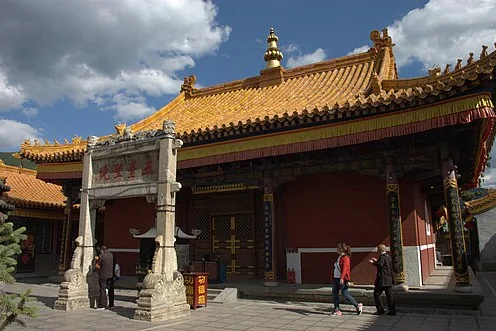
The royal ceremonials and temple construction in the Qing Dynasty made the yellow glazed tiles, imperial-titled archways and inscriptions important features of Pusading Monastery. Religious spaces and the history of royal interactions have combined to shape today’s cultural landscape.
- Is Pusading Monastery the top of a certain platform in Mount Wutai?
The Pusading Monastery is located at Lingjiu Peak in Taihuai Town, and is a specific monastery; the five summits of the east, west, south, north and middle of Mount Wutai are another group of geographical and ritual objects and cannot be referred to by the same name.
- Location
- Mount Wutai, Shanxi·Lingjiu Peak, Taihuai Town
- Temple name
- Pusading Monastery, Zhenrongyuan, Dawenju Temple
- Faith and inheritance
- Manjushri Belief and Tibetan Buddhism
- Building Identification
- Royal colors, yellow glazed tiles and royal monument
In Pusading Monastery, put the things you care about
Pusading brings Manjusri's wisdom, Tibetan Buddhist lineage and Qing imperial pilgrimage together. Consider the figures alongside the devotional customs familiar to you.
Learning and Discernment
Understanding learning, direction and choice from the Manjusri faith.
Continue to learn →In memory of the teacher
Distinguish the cultural roles of Buddhas and Bodhisattvas from patriarchs such as Tsongkhapa.
Continue to learn →Return to an original wish
Write down the original agreement between the original temple and the original, and then organize this thank you.
Continue to learn →A temple in Manjusri Dojo, with its own location and name
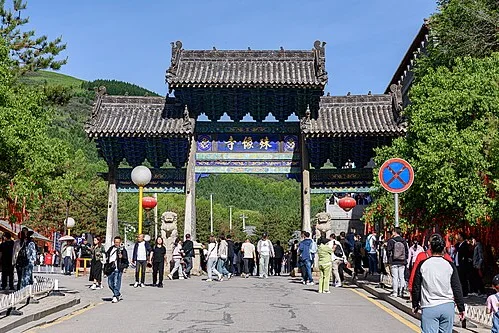
Mount Wutai is famous for the Manjushri Bodhisattva Ashram, and Pusading Monastery is a specific monastery in the Taihuai monastery complex. It is located on Lingjiu Peak to the north of Xiantong Temple. Other names such as Zhenrong Temple and Da Manjusri Temple all connect the temple with Manjusri belief. Only by recognizing the location clearly can one distinguish the relationship between a mountain holy place and a single temple.
The term ‘true appearance’ is associated with the traditional story of Manjusri appearing here. It belongs to religious legends and ritual memories, which make a mountain have meaning in faith; it is not necessary to convert legends into verifiable miracles in reality in order to understand its position in local culture.
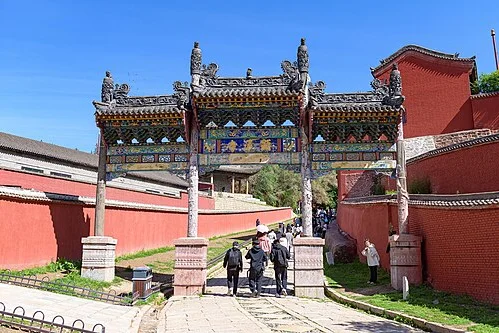
Looking up at the temple from the bottom of the mountain, stone steps, archways and temples unfold in layers. The upward spatial experience also participates in the ritual: people gradually leave the hustle and bustle of the streets and return their attention to their feet and in front of their eyes. For today's visitors, this can also be a process of sorting out their emotions.
Follow history and understand Pusading Monastery
- Northern Wei Dynasty
Early history of the temple
The founding history of Pusading Monastery can be traced back to the Northern Wei Dynasty, and subsequent construction continued gradually.
- Ming Dynasty
Temple expansion
Expansion and decoration allow the temple to continue to develop in the belief of Manjusri in Mount Wutai.
- During the Kangxi period of the Qing Dynasty
Royal construction and court rituals
Renovation in the Qing Dynasty, royal court ceremonies and imperial inscriptions have strengthened the palace-like architectural features of Pusading Monastery.
- Qianlong period of Qing Dynasty
Preservation of multi-text royal tablets
The relevant royal stele preserves Chinese, Manchu, Mongolian and Tibetan characters and has become an important material for understanding the history of the temple.
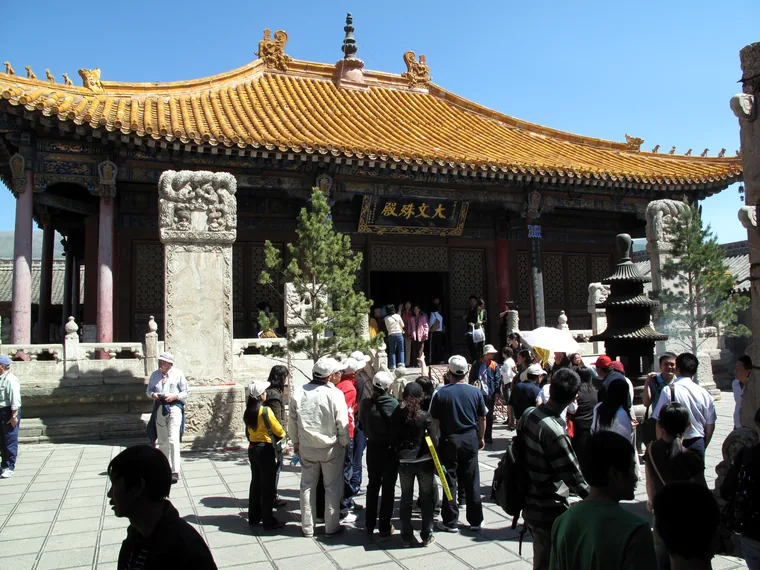
The red walls, yellow tiles and royal stele leave traces of court rituals from the Qing Dynasty
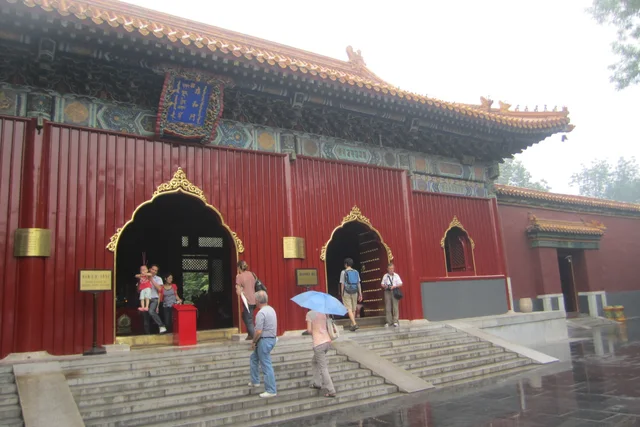
The royal character of Pusading Monastery is very noticeable in the color of the roof and the layout of the courtyard. The emperor of the Qing Dynasty once stayed here when he paid homage to Mount Wutai. The related construction gave the temple a palace-like appearance. The yellow glazed tiles, imperial-inscribed plaques and stone tablets are not isolated decorations, but historical materials linking the temple to the political and religious exchanges of the Qing Dynasty.
The multi-character royal tablet in the temple is particularly worthy of attention. Chinese, Manchu, Mongolian, and Tibetan characters appear in the same stele surface system, making the stele not only the emperor's calligraphy, but also a testimony of multilingual exchanges and the cultural relationship of the Qing Dynasty. By observing the glyphs and layout, we can approach the broader history from a specific cultural relic.
The majesty of the building also needs to be put back into the process of continuous construction. The early history of Pusading Monastery can be traced back to the Northern Wei Dynasty, and it was expanded and renovated in the Ming and Qing Dynasties; the royal color in front of you is mainly related to the construction of later generations, and the origin of the temple and the existing buildings do not come from the same time.
Manjusri, the Three Buddhas and patriarchs: distinct identities
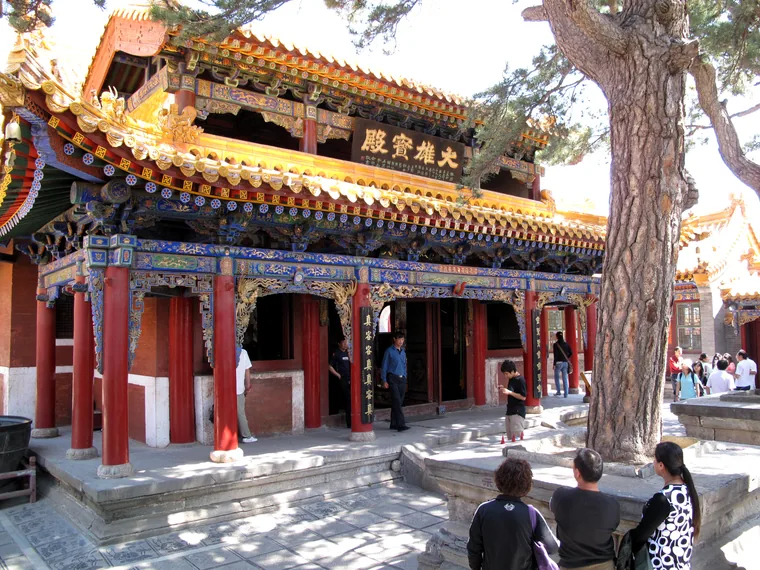
Pusading Monastery combines hall names familiar in Chinese temples with Tibetan Buddhist art and devotion. Manjusri Hall honours the bodhisattva; the main hall houses Shakyamuni, the Medicine Buddha and Amitabha; the Heavenly Kings Hall presents guardians. Identify the figures rather than assuming temples with the same hall names have identical arrangements.
Understanding the Gelug tradition here includes Tsongkhapa's teaching lineage. A patriarch is distinct from a Buddha or bodhisattva; lineage concerns how teaching is understood and passed on. Reading this background alongside the figures in the halls reveals different cultural themes within one monastery.
The wisdom theme of Manjusri can also go beyond the scope of seeking success in an exam. In the face of life choices, unfamiliar knowledge or cross-cultural communication, I wish to be more discerning and humble, and I wish to be able to understand different situations. These are all thoughts that echo the culture of this temple.
In addition to the belief in Manjusri, also understand the ritual tradition of Pusading Monastery
Manjushri Bodhisattva is an important clue to understanding Pusading Monastery. Tibetan Buddhism and royal rites form the unique monastic temperament here. Learning, career choice, and gratitude to teachers can all start from the cultural meaning of wisdom and inheritance; if you are familiar with the relevant salute traditions, this familiarity can also become a reason for your choice.
Pusading Monastery and Shuxiang Temple are in the same Wutai Mountain, but "both are related to Manjusri" does not mean that the content of the two pages should be the same. Shuxiang Temple highlights the statue of Manjusri riding a lion, while Pusading Monastery is suitable for getting to know the royal architecture, Manjusri Hall and the tradition of the ancestors. First understand the differences, and then clearly state the name of the temple you wish to visit.
If you previously made a wish at Pusading Monastery, note the original wish, the figure you honoured and any promise you made before arranging to give thanks. Basic visits follow this page's service list. Special ceremonies or rituals are not automatically included; our support team must confirm any additional request.
Understanding the halls and the figures within them
| Palace or space | Figures and cultural roles |
|---|---|
| Manjusri Hall | Manjushri Bodhisattva |
| Main Hall | Shakyamuni Buddha, the Medicine Buddha, Amitabha Buddha |
| Tianwang Palace | the Four Heavenly Kings |
Manjusri Hall
Principal figures: Manjushri Bodhisattva
Manjushri Bodhisattva is an important object of worship in Wutai Mountain belief, and wisdom is the core cultural clue to understand Manjushri Temple.
Pusading Monastery’s Manjushri worship together with the monastery’s Tibetan Buddhism and royal ritual background form a level of understanding. Readers can first understand the main deity, and then identify the patriarch and other protective figures; different characters still have their own inheritance meanings when they meet in the same temple.
Associated wishes: You can express hopes for learning, sound judgement, gratitude towards teachers and direction in life. To give thanks after a wish comes true, first recall what you said and promised here.
Main Hall
Principal figures: Shakyamuni Buddha, the Medicine Buddha, Amitabha Buddha
Shakyamuni, the Medicine Buddha and Amitabha Buddha respectively unfold the teachings of the Buddha and the clues of belief in the Oriental Glazed Pure Land and the Western Pure Land of Bliss. Shakyamuni connects enlightenment and wisdom, Bhaisajyaguru (the Medicine Buddha)'s twelve great wishes care about suffering and life needs, and Amitabha Buddha's infinite light and infinite life express light, peace and refuge. The three statues are juxtaposed, making peace, blessing, wisdom and care for life interconnected.
The three main Buddhas under the yellow glazed tiles are connected with the memory of the temple’s past sermons and rituals. Pusading Monastery The belief in Manjushri highlights wisdom, and the three Buddhas in the Mahavira Hall further develop the different concerns of study, well-being and pure land. By knowing each other along the hall, you can write about your parents' happiness and longevity, your own learning and growth, and your gratitude to relatives and friends. You can also see that Buddha worship and Sangha teaching continue in the same temple.
Associated wishes: You can pray to the Medicine Buddha for the well-being of your loved ones, to the Shakyamuni Buddha to express your intention to increase blessings and wisdom, and to discern your situation clearly, and to the Amitabha Buddha for your bright peace and long-term care. You can also thank the people who have taught you, and hope that good luck will accompany you and that what you have learned will be passed on.
Tianwang Palace
Principal figures: the Four Heavenly Kings
The Four Heavenly Kings are the guardians of the country in the east, growth in the south, wide eyes in the west and multi-hearing in the north. They are Buddhist gods who protect the Dharma and protect the four directions. His solemn image as a military commander emphasizes the protection of learning and stable order; when people salute the King of Heaven, they often express their desire for safe entry and exit, stability for relatives and friends, and support in times of trouble. They also understand protection as cherishing their fellow travelers and living together.
Pusading Monastery The Heavenly King's Hall in the front and the adjacent yellow tiled hall together form the entrance courtyard of the temple. The solemn image of the protector and deities is the prelude to the worship of Manjusri and the main Buddha in the back. Coming to the mountain to pay homage requires a journey, and it often affects the thoughts of family members far away; the tradition of support from all directions can therefore connect the desire for a stable journey, companionship and support, and to maintain stability in the face of changes.
Associated wishes: You can wish your relatives and friends who are traveling far, returning home, or studying abroad a safe journey, and also pray that you will encounter kind help during the journey and that your family will feel at ease. If it is an important tribute to express thanks, you can also write down the people who helped you, so that the desire to protect includes caring for each other.
Write down the concerns in culture as your own wishes
Purity of learning and judgment
Manjushri Bodhisattva
The wisdom of Manjushri and the learning tradition of Pusading Monastery make the desire to learn also include judgment and responsibility. You can pray for understanding new knowledge, seeing a choice clearly, or facing a learning process seriously; may your gratitude for the teacher's teachings remain in your heart.
First explain the learning stage you are in or the decision you need to see clearly, and then write down the changes you hope to happen and the actions you are willing to take seriously. You can use the example sentences below as a starting point and replace them with expressions that fit your life.
Example of wish expression
I wish to remain clear-headed in learning and making choices, be willing to listen to teachings, and take decisions seriously; I wish to turn the help I receive into the strength to continue learning and be kind to others.
Gratitude to teachers and continuation of what has been learned
Main Hall·Buddhist study theme; Gelugpa discipleship background
Pusading's Gelug lineage values hearing, reflection and practice. Its Buddhist figures express respect for awakening and teaching. Learning passes through generations of teachers and students, so gratitude towards teachers acknowledges personal help and the continuation of a tradition. Wishes for helpful teachers and useful learning can connect with this background when studying abroad or starting new training.
You can tell an inspiring experience, express your gratitude to your teachers, and pray for their stability and your own learning. If you want to continue to make progress, you can write down the topics you want to learn more about, the guidance you want to get, and how you want to cherish and share what you have learned, so that gratitude and growth can be connected.
Example of wish expression
Thanks to the teacher for showing me a new direction. May I learn solidly, stay honest, and leave the patience I have gained to those who come after me.
A safe journey and peace of mind for your family
Temple of the Heavenly King·Protective Theme
The Four Heavenly Kings are the deities of Buddhism who protect the four directions and uphold the Dharma. Pusading Monastery uses the Tianwang Hall as the front space when entering the main worship courtyard, making solemn protection the first level of understanding on the way up the mountain. People rely on the Dharma protector to ensure safe entry and exit, smooth travel, and care for their relatives and friends. This is to bring the belief in the protector into their journeys and daily life.
It can explain who will travel far, return home, or start a cross-border life, praying for a stable journey, help during changes, and making waiting family members less worried. If you are wishing for your child to set out alone, you can write about adapting to the new environment, meeting trustworthy mentors and friends, and maintaining care for each other.
Example of wish expression
I hope that my family will travel safely and have someone to help me when encountering changes; I also hope to make sufficient preparations and report that everything is safe in time.
Expressing gratitude and an open heart
Manjusri Temple Wisdom Belief; Temple Multilingual Cultural Memory
The belief in the wisdom of Manjusri reminds pilgrims to understand things and be humble and seek knowledge; the multilingual cultural memory retained by Pusading Monastery also shows how people from different backgrounds meet in the same monastery. Therefore, expressing gratitude can express gratitude for the guidance along the way, and also pray that you will have fewer prejudices and increase your knowledge. For those living overseas, this sentiment is not only related to the traditions of their hometown, but also related to respecting the cultural experiences of others.
You can thank the people who are willing to explain and help adapt to the environment during the journey, and pray that the good relationship will last long and that each other will be stable. If you are living in a cross-cultural family or team, you can also write down the most cherished understanding, express your hope for clear communication in the future, and your willingness to learn, so that the thank you for paying tribute has a concrete human feeling.
Example of wish expression
Thanks to everyone who was willing to explain and help me along the way. May I continue to have an open heart, not judge lightly, and cherish every sincere encounter.
In the image, continue to get to know each other Pusading Monastery
Pusading Monastery ~The largest monastery in Mount Wutai, Manjushri Bodhisattva ashram, leader of the Yellow Temple
Learn about the halls and courtyards of Pusading Monastery in Mount Wutai with on-site images.
别名林紫 · Bilibili · in Bilibili Watch original video
The author records a tour of the Pusading Monastery in Mount Wutai, Shanxi, and can observe the yellow tiles, halls and mountain spaces in conjunction with the text. The personal explanation and experience in the video are provided for cultural viewing reference.
If playback is restricted by the network or platform, the original video entrance can be used.
Commissioned services and fees
$242 USD · Basic service fee
On the Eagle Peak, express a sincere wish
The basic commission includes tickets, incense, Buddha worship and making wishes; pictures and video visit records correspond to the specific temple, the selected offerings and this commission, and are delivered privately.
You can also entrust your family together. It is recommended that there be no more than 3 people per order, so that you can express your feelings one by one.
A private visit record will be provided 1-2 working days after the service is completed.
Anxin is an independent commissioning team and does not represent the temple. Ordinary entrustment does not automatically include initiation, Tibetan special rituals or temple rituals, special needs must be confirmed separately.
Select your wish, desired date and offerings and submit the request, then add official customer service for verification. Submission does not mean successful reservation, payment or seat reservation.
Yes Submit request and confirm with our team . There is no need to log in for consultation; the appointment has not been successful after submission.
About Pusading Monastery , you may also want to know
Why is Pusading Monastery also called True Beauty Monastery?
This name is associated with the traditional story of Manjusri's true appearance. It can be understood as a cultural understanding of temple beliefs and rituals. What is shown in the story is not a guarantee of the actual outcome.
Which of the five towers is the Pusading Monastery located on?
This temple is located on Lingjiu Peak in Taihuai Town. It is not one of the five summits in the east, west, south, north and middle. Temple rituals and Wutai court rituals each have specific scopes.
What is the relationship between yellow glazed tiles and royal history?
The royal ceremonials and construction of the Qing Dynasty made the yellow glazed tiles, imperial-titled archway, and inscriptions become important cultural identifiers of Pusading Monastery, which should be understood in the context of the relationship between the temple and the royal family at that time.
Is Master Tsongkhapa Buddha or Patriarch?
He is an important patriarch in the Gelugpa lineage of Tibetan Buddhism. The statue of the ancestor shows study and inheritance, and his identity is different from that of Buddha and Bodhisattva.
Why does the imperial stele have multiple characters?
The Chinese, Manchu, Mongolian and Tibetan characters record the history of cultural exchanges between different languages in the Qing Dynasty, making the inscriptions also have the reading value of calligraphy, religion and cultural exchanges.
Does the basic commission include specialized Tibetan rituals?
Not included automatically. You can first explain the need for worship and blessing; if it involves initiation, specific rituals or temple ceremonies, you should understand and confirm the specific arrangements separately.
How do Manjusri traditions at Pusading and Shuxiang differ?
The common object of understanding is the wisdom of Manjusri; the temple tradition, statues and space each have their own characteristics. Pusading Monastery can combine Tibetan Buddhism and royal rites, and Shuxiang Temple uses statues of Manjusri riding a lion as a distinctive clue. When choosing, take into account the relationship with the original temple and worship habits.
I want to express my gratitude to my teacher, how can I write a wish?
Write out the teaching you are grateful for, how it helped you, and how you hope to continue learning and treating others in the future. A mentor can be a teacher, a family member, or someone who has helped you along the way. You don't have to just write a test wish.