Quick understanding
- Who do you mainly worship in Shuxiang Temple?
The centerpiece of worship is the lion-mounted Manjushri Bodhisattva in the Manjushri Hall. On the back of the statue, there are also themes such as Guanyin from the South China Sea, Shancai Boy and Dragon Girl, respectively showing the faith meaning of wisdom and compassion.
- Why is Manjusri connected with the desire to study?
Manjushri Bodhisattva represents wisdom in Buddhism. Scholarship thus places the desire for understanding, concentration, and discernment; wisdom also includes identifying biases, seeking knowledge honestly, and applying what you learn to your life.
- Is this the same place as Shuxiang Temple in Chengde?
No. This page refers to Shuxiang Temple in Taihuai Town, Wutai Mountain, Shanxi. The temple of the same name in Chengde and the related Manjusri statues in Beijing during the Qing Dynasty were influenced by the images of Mount Wutai, but the location, architecture and history should be understood separately.
- Location
- Wutai Mountain, Shanxi·Taihuai Town
- Salute Center
- Statue of Manjushri Bodhisattva riding a lion
- Existing clues to the main hall
- The Wenshu Hall built during the Hongzhi period of the Ming Dynasty
- Cultural Identification
- Wisdom belief and the spread of Manjusri images
In Shuxiang Temple, put the things you care about
The statue of Manjusri riding a lion in Shuxiang Temple gives wisdom and learning a clear understanding; the prayers here can also be extended to career choices, children's growth and gratitude for teachers.
Study and Examination
Understand the cultural meaning of Manjusri’s wisdom, and write preparation and concentration into your wishes.
Continue to learn →Making important decisions
Organize the choices you are facing, the things you need to see clearly, and the responsibilities you are willing to take.
Continue to learn →Continue the original wish of Mount Wutai
Confirm which temple it was originally, not just "Mount Wutai".
Continue to learn →A statue of Manjusri riding a lion becomes the center of the temple’s name
Shuxiang Temple is famous for its statues of Manjusri. The main statue in the center of the Manjusri Hall sits on the back of a lion, wearing a crown and holding Ruyi; the lion's body, rosette, Bodhisattva and backlight together form a tall statue group. The juxtaposition of volume and expression here: the tension of the lion holds up Manjusri’s calm face, giving ‘wisdom’ both strength and calmness.
Manjusri is not a god who keeps test scores. In the Buddhist context, wisdom is related to the understanding of things, the identification of troubles, and the choice of the direction of practice. When students come here, what they rely on can be memory and concentration, or they can be willing to admit when they encounter problems that they don't know and are willing to continue learning.
Behind the backlight of the main image are other themes such as Guanyin of the South China Sea, Shancai, and the Dragon Girl. Looking at the front and back, you can read two clues of wisdom and compassion in the same palace; they echo each other, reminding people to understand the situation of others and also include it in their understanding of "smart".
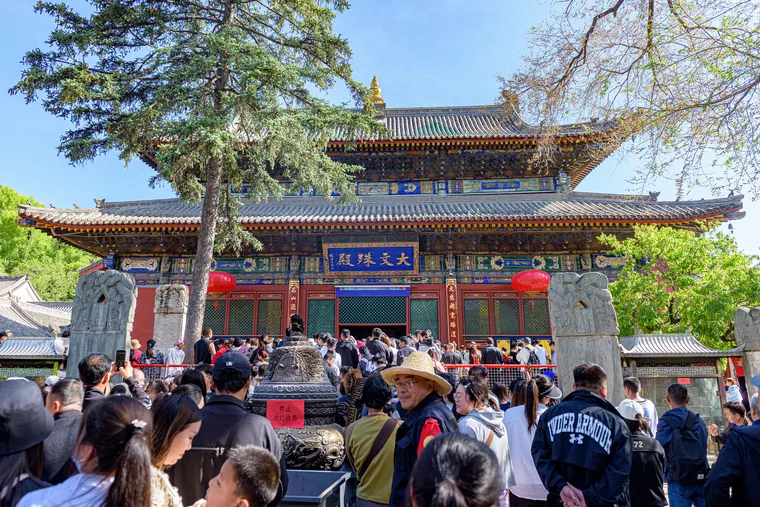
Follow history and understand Shuxiang Temple
- Tang Dynasty
Early clues to the temple’s history
The history of Shuxiang Temple can be traced back to the Tang Dynasty, and it has been continuously rebuilt in later generations.
- Yuan Yanyou period
Temple reconstruction
The history of the temple records the reconstruction during this period, forming a link in its continued development.
- Hongzhi period of Ming Dynasty
Construction of Manjusri Hall
The existing cultural clues of the main hall and the statue of Manjusri riding a lion are concentrated in this stage of construction.
- Qianlong period of Qing Dynasty
Manjusri image spreads outward
The image of Manjusri in Shuxiang Temple in Wutai Mountain has influenced related temples in Beijing and Chengde through court rituals, imitations and imitations.
From Wutai Mountain to the Royal Garden, the path traveled by images
The history of the temple can be traced back to the Tang Dynasty, and it was rebuilt in the Yuan Dynasty and the Ming Dynasty. The clues to the construction of the existing Wenshu Hall date back to the Hongzhi period of the Ming Dynasty. Therefore, the origin of the ancient temple, the architecture of the main hall and the tradition of statues need to be read separately. Just because the name of a temple lasts for thousands of years does not mean that all the parts in front of it are from the same era.
The belief in Manjusri in Mount Wutai also influenced the royal gardens of the Qing Dynasty. Emperor Qianlong's court ceremony at Shuxiang Temple later imitated the image of Manjusri, and the related statues at Baoxiang Temple in Xiangshan, Beijing, Zhengjue Temple in Yuanmingyuan, and Shuxiang Temple in Chengde formed an interconnected architectural and image context. Shanxi's prototype thus entered the wider artistic and political cultural space.
Such spread is not a reason why several monasteries are interchangeable. The name of the pavilion of Shuxiang Temple in Chengde, the old photos of Zhengjue Temple in Yuanmingyuan, and the site of Shuxiang Temple in Mount Wutai all belong to their respective places. Understanding the relationship between prototype and imitation can help us see the uniqueness of each heritage more clearly.
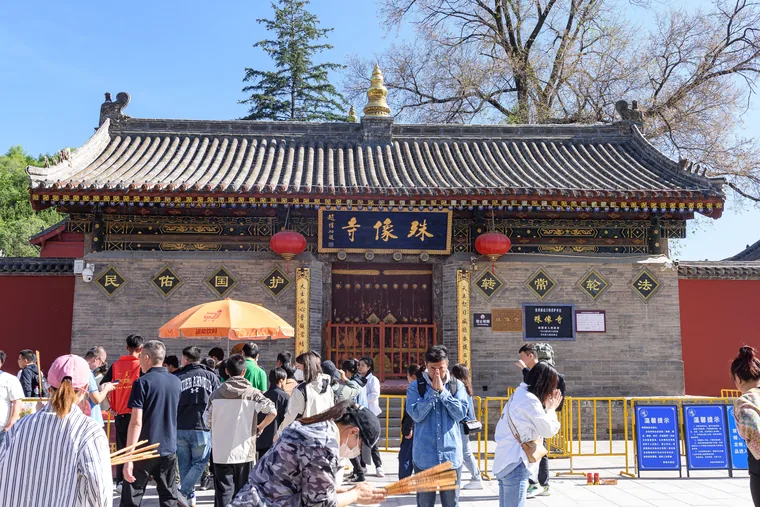
The story of buckwheat noodles and the wishes you can make today
"Buckwheat Head Manjusri" is a widely circulated story in Shuxiang Temple: When the craftsman was having trouble completing the face of the Bodhisattva, he saw it appearing in the clouds, so he molded the head out of the buckwheat noodles on hand. It uses simple food and the plight of the craftsman to tell stories of inspiration and piety, preserving local folklore; the actual materials for the statues belong to another level of craft knowledge.
Legend makes sacred images accessible, and existing statues provide objects for artistic observation. Looking at the proportions between the crown, Ruyi in the hand, the body of the lion, and the figure, you can feel how ancient craftsmen organized their beliefs with the body; there is no need to interpret the story as a rule that can be exchanged for efficacious results by purchasing a certain offering.
Today’s wish can be very specific: I hope to reduce panic before exams, be honest when doing research, and understand the importance of career choices. Putting expectations and willing actions together, the wisdom of Manjusri does not just stop at "seeking a good result."
Both in Mount Wutai, how to choose between Shuxiang Temple and Pusading Monastery
If you want to pray for your studies or life choices in Mount Wutai, you can first distinguish between mountains and temples: Mount Wutai is a holy place and temple complex for Manjusri belief, and Shuxiang Temple is one of the temples with specific statues and spaces. Writing the place you wish to go to as "Shuxiang Temple" can clearly connect your wishes with this lion-riding Manjusri and this temple.
Shuxiang Temple and Pusading Monastery are both related to the Manjusri faith, but their understanding of the focus is different. Shuxiang Temple can start with the lion-riding Manjusri and the statues in the temple; Pusading Monastery also requires an understanding of Tibetan Buddhism, royal rites and temple architecture. If you already have memories of the original temple, choose according to your original wishes; if you are learning about it for the first time, you can compare your own worship habits with the cultural objects you want to know.
Studying is about more than just test results. Re-entering campus, changing majors, preparing for vocational qualification exams, or making job decisions all require a clear view of the problem and continuous learning. You can write about the abilities you hope to grow for yourself or your family, thank you for the teaching and support, and describe how you would like to prepare.
Understanding the halls and the figures within them
| Palace or space | Figures and cultural roles |
|---|---|
| Facade of Manjusri Hall | Statue of Manjushri Bodhisattva riding a lion and his attendants |
| Behind the backlight of Manjusri Hall | Nanhai Guanyin, Shancai Boy, Dragon Girl, etc. |
Facade of Manjusri Hall
Principal figures: Statue of Manjushri Bodhisattva riding a lion and his attendants
Manjushri Bodhisattva is revered for his wisdom, and the statue of him riding a lion constitutes one of the most distinctive objects of cultural recognition at Shuxiang Temple.
Looking at this group of statues, you can first distinguish the relationship between the main deity Manjusri, the lion he rides on, and the surrounding attendants. The lion and Manjushri together form a visual expression of the theme of Buddhist wisdom; understanding the image and its belief background will help you understand the temple better than just remembering "study".
Associated wishes: Examinations, studies, career studies and important choices can all be expressed around discernment, focus and courage; when thanking teachers or previous help, you can also write wishes.
Behind the backlight of Manjusri Hall
Principal figures: Nanhai Guanyin, Shancai Boy, Dragon Girl, etc.
The Guanyin in the South China Sea on the back of the main statue of Manjusri is related to the compassionate tradition of Guanyin (Avalokiteshvara) who hears the voice and saves the suffering; the boy with good fortune is familiar in Buddhist stories for constantly visiting and studying, and the dragon girl is a common theme of Guanyin accompanying him. Compassion, seeking knowledge and closeness to good deeds meet in the same set of statues, making the wisdom theme of Manjusri Temple also have the aspect of caring for others and understanding life situations.
Manjusri riding a lion on the front and Guanyin on the back belong to Shuxiang Temple, a Manjusri hall. Looking from front to back, one can read how the whole statue is organized into two types of religious meanings: Manjusri leads people to seek wisdom, Guanyin reminds people of care, and good wealth carries clues of learning throughout. Blessings for the growth of children, the stability of distant family members, or blessings for a mentor during their studies can all start from this relationship.
Associated wishes: You can express your feelings for the well-being of your family and the safe growth of your children, and you can also pray for yourself to be more empathetic in learning and getting along. If your child is studying abroad alone, I hope that he will gain knowledge, meet trustworthy teachers and friends, have someone to take care of him, and hope that he will know how to care for his fellow travelers.
Write down the concerns in culture as your own wishes
Stability before studying and taking exams
Manjushri Bodhisattva
Manjushri Bodhisattva symbolizes wisdom and the desire to learn can revolve around understanding, discernment and practical preparation. When praying for your child, you can see his learning stage and real difficulties; when praying for yourself, you can also make it clear about changing majors, returning to school, or vocational studies.
First explain the stage of learning, the ability to expect growth and realistic preparations, and then write about the changes you hope to happen, and the actions you are willing to take seriously. You can use the example sentences below as a starting point and replace them with expressions that fit your life.
Example of wish expression
I hope that my child can focus on understanding when reviewing, and be willing to ask questions when encountering difficulties; I hope that I will patiently support and accompany him to prepare for the next stage.
Discernment in life choices
Manjusri Hall·Wisdom and Fearlessness Theme
Manjusri is known for his wisdom, and the image of riding a lion gives wisdom the power to face confusion. The Buddhist understanding of wisdom involves seeing clearly worries and attachments, which enables the desire for wisdom to move beyond the classroom and into work, relocation, and family choices. When coming to Shuxiang Temple, people can use Manjusri to express their hope of clearly distinguishing between priorities, becoming less confused, and finding a direction commensurate with their responsibilities in the midst of changes.
You can explain the opportunities you are weighing, your family's concerns, and your most cherished values, praying for clear judgment, credible advice, and the courage to face uncertainty. If you are overseas and choose to live in two places, you can write down the people and arrangements you want to take into account, so that seeking wisdom becomes a solemn and concrete intention.
Example of wish expression
I wish I could see more clearly between opportunities and responsibilities, not be pushed away by temporary comparisons, and be willing to take responsibility seriously after making a choice.
Child growth and family care
Behind the backlight of Manjusri Hall·Guanyin, Shancai, and Dragon Girl themes
The themes of wisdom and compassion before and after the Manjusri Hall provide two connected cultural clues for children's growth. Manjushri represents understanding and discernment, Guanyin cares about the sufferings of different sentient beings, and Shancai is familiar with the story of studying and visiting. Such wishes can not only hope that the child will achieve academic success, but also hope that he will be cared for tenderly, meet good friends, and gradually learn to understand the needs of others.
You can write down the age and stage of your child, wishing you success in school, physical and mental stability, and patient teachers and peers. If the family lives in different countries, they can also express the hope that family ties will not be estranged due to distance; let curiosity, kindness and the feeling of being supported become the content of this growth wish.
Example of wish expression
May children learn with curiosity and know how to be considerate of others; may we as parents push less and listen more patiently to him.
Gratitude to teachers and honest pursuit of knowledge
Manjusri Hall·Studying Wisdom
Manjusri's wisdom belief includes the emphasis on understanding things and eliminating doubts. The backlit theme of philanthropy makes the process of seeking advice visible. From this, I understand that my teacher’s gratitude is not only for a good result, but also for having someone patiently explain and help me see the problem clearly. The statue of Manjusri and the image of studying at Shuxiang Temple can convey the spirit of cherishing teachings, being honest in seeking knowledge, and using what you learn.
You can tell about a teaching that really benefited you, and thank your teachers, elders or colleagues for how they helped you. You can also pray that you will remain humble and dare to ask for advice in future research, examinations or professional studies, and write down the people and things you want to give back to, so that respect for wisdom also includes gratitude for the teacher.
Example of wish expression
Thanks to the teacher for explaining repeatedly when I didn’t understand. I hope that in the future I will not be unscrupulous in my pursuit of knowledge, and I also hope that I will leave my patience to those who come after me.
In the image, continue to get to know each other Shuxiang Temple
Wutai Mountain · Shuxiang Temple | Manjusri’s Ancestral Temple, auspicious and natural
Understand Wutai Mountain Shuxiang Temple and the visual expression of Manjusri belief through images.
三身望山 · Bilibili · in Bilibili Watch original video
This piece of work with the theme of Shuxiang Temple in Wutai Mountain, Shanxi Province provides visual supplements for reading about the Wenshu Hall and the temple environment.
If playback is restricted by the network or platform, the original video entrance can be used.
Commissioned services and fees
$240 USD · Basic service fee
Leave a sincere expression for studying and worrying about the distant place
The basic commission includes tickets, incense, Buddha worship and making wishes; pictures and video visit records correspond to the specific temple, the selected offerings and this commission, and are delivered privately.
You can also entrust your family together. It is recommended that there be no more than 3 people per order, so that you can express your feelings one by one.
A private visit record will be provided 1-2 working days after the service is completed.
Anxin provides entrusted services independently and does not represent the temple; ordinary entrustment does not mean a special blessing ceremony for the temple, nor does it promise examination, further education or career results.
Select your wish, desired date and offerings and submit the request, then add official customer service for verification. Submission does not mean successful reservation, payment or seat reservation.
Yes Submit request and confirm with our team . There is no need to log in for consultation; the appointment has not been successful after submission.
About Shuxiang Temple , you may also want to know
What does the ‘special image’ in the name of Shuxiang Temple refer to?
Points to the famous Manjusri statue in the temple. This page introduces the image of Manjusri riding a lion in the Wenshu Hall in Wutai Mountain and its related belief culture.
Can the buckwheat head story prove that the head is really made of buckwheat noodles?
It is a folk legend about the statue of a craftsman and the manifestation of Manjusri. Legends can illustrate local beliefs and cultural memories, but cannot directly replace professional identification of statue materials.
Is Shuxiang Temple only for students' wishes?
No. Manjushri wisdom can also be linked to research, judgment, communication and life choices. Adults can also pray for discernment and courage and write down actions they would like to take.
What is the relationship between the statue of Guanyin at the rear and Manjusri riding a lion?
They are sculpture subjects at different positions in the same Manjusri Hall, from the front to the backlight. Manjusri takes wisdom as its theme, while Guanyin embodies compassion and care. You can refer to each other when reading.
Why do Mount Wutai and Shuxiang Temple in Chengde have the same name?
The construction of royal temples in the Qing Dynasty was influenced by the images of Manjusri in Shuxiang Temple in Mount Wutai. There are historical and artistic connections between the two places, but the temple locations, buildings and statues cannot replace each other.
Must I specify an exam ranking when asking you to convey wishes for my child?
Not required. It can express concentration, peace, self-confidence and the desire for support, and it can also explain the difficulties you are facing; expression does not constitute a guarantee of further education or grades.
Shuxiang Temple and Pusading Monastery both offer Manjusri, how to choose?
You can first look at the traditional and specific statues: Shuxiang Temple highlights the clues to the understanding of Manjusri riding a lion, and Pusading Monastery also connects Tibetan Buddhism and royal rites. The temple where you originally made your vows and which ritual customs your family is familiar with are also worthy of priority.
What can I include besides hoping my child's exam goes well?
You can add the learning stage that your child is facing, as well as specific expectations such as concentration, understanding, mentality, or asking for help; parents can also write down the support they are willing to give to keep their wishes close to the growth process.