Quick understanding
- Which principal figures are venerated at Xiyuan Temple?
The main hall of the Mahavira worships Shakyamuni, the Medicine Buddha and Amitabha Buddha; the Guanyin Hall and the Arhat Hall present different Guanyin statues respectively. The Arhat Hall is famous for the Guanyin with thousands of hands and eyes on all sides and the Five Hundred Arhats.
- Are Xiyuan Temple and Jiezhuanglu Temple two places?
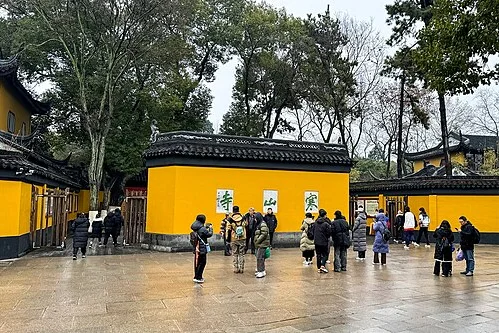
This page refers to Xiyuan Jiechuang Vinaya Temple in Xiyuan Lane, Liuyuan Road, Suzhou. It is called Xiyuan Temple for short, and the name of the temple is related to the tradition of taking the precepts as the foundation and the law as the sect.
- Does counting arhat with different expressions mean good or bad luck?
The expression of the arhat statue is first and foremost an image of art and learning. You can use viewing as an opportunity to understand yourself, and determine your fortune by not judging the smile, anger, or sadness on your face.
- Location
- Xiyuan Lane, Liuyuan Road, Suzhou, Jiangsu
- Complete temple name
- Xiyuan Jiechuang Vinaya Temple
- Bright statue
- Guanyin and the Five Hundred Arhats
- Cultural characteristics
- Vinaya studies and temple gardens
In Xiyuan Jiechuang Vinaya Temple, put the things you care about
Xiyuan Jiechuang Vinaya Temple in Suzhou displays different images of practice and compassion with the Three Buddhas, Thousand-Armed Guanyin and Arhat Hall. The stability of the family, the understanding and the promise of protection in the relationship can all start from a clear object of respect.
Seeing the needs of family members
From Three Buddhas and Thousand Hands Guanyin, write about care, companionship and caregiver support.
Continue to learn →Distinguish between arhat and bodhisattva
The practitioners and Guanyin in the arhat hall have their own identities and do not infer personal good or bad luck based on their expressions.
Continue to learn →Compare Wuhan Guiyuan Temple
Both have arhat culture, but the city and palace layout are still different.
Continue to learn →The temple is in the garden, and the name of the temple also reminds people how to live.
Xiyuan Temple was called Guiyuan Temple in the early days. In the Ming Dynasty, it was once converted into a residence garden, and later the garden was turned into a temple. In 1635, lawyer Maolin became the abbot and promoted the discipline of law. The name of Jie Zhuang Law Temple was linked to the precepts as the foundation and the law as the sect; the elegance of the garden and the order of the dojo had a common life background.
After the war in 1860, the temple underwent long-term restoration by Guang Hui and others. Today, the main temple has the level of reconstruction in the late Qing Dynasty and the early Republic of China. The origins of the Yuan Dynasty, the gardens of the Ming Dynasty, and the palaces of later generations each have their own epochs, and together they constitute today's courtyard. Different generations have continued to support it, allowing the continuation of legal studies, etiquette, and garden life.
The compilation of ancient books and Buddhist education in modern times also enable Xiyuan to maintain the tradition of learning. In 1996, he founded the Jiedang Buddhist Research Institute to undertake sutra theory and study life. By getting to know the ancient temple, you can not only appreciate the gardens, but also respect the teachings and daily lessons that continue to take place here.
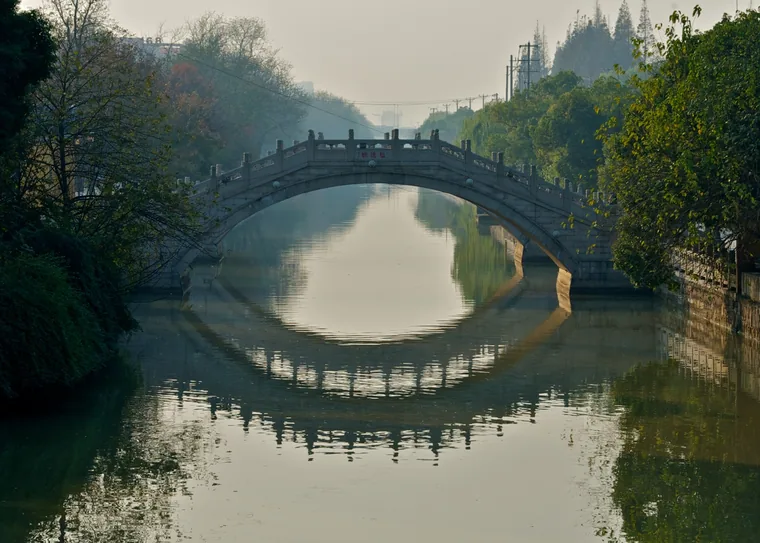
Follow history and understand Xiyuan Jiechuang Vinaya Temple
- Yuan Dynasty
Early History of Guiyuan Temple
The early temple constitutes a historical clue to the subsequent development of Xiyuan Temple.
- Ming Dynasty
The house garden and the house garden are temples
The Xu garden and the restoration of the temple formed an intertwined spatial history of the garden and the temple.
- 1635
Promote the discipline of law, the name of the precepts pillar
Lawyer Maolin is the abbot, and the temple has gradually formed the tradition of the Vinaya Dojo.
- After 1860
War and long-term reconstruction
Guang Hui and others continued to restore the temple, and the main temple has the level of the late Qing Dynasty and the early Republic of China.
- 1996
Founded Jie Chuang Buddhist Research Institute
The education and study undertakings continue the monastery’s tradition of scriptures and vindication.
Three Buddhas, Guanyin and Dharma protectors have their own identities in different halls
The Mahavira Hall has Shakyamuni in the center, the Medicine Buddha and Amitabha Buddha respectively, forming a horizontal combination of the Three Buddhas. The teachings of our master, the Oriental Glazed Pure Land and the Western Pure Land of Ultimate Bliss jointly develop the Buddhist worldview, and also provide a clear place for wisdom, the well-being of relatives and friends, and gratitude to the ancestors.
There is a group of Guanyin sculptures on the island behind the main hall. The independent Guanyin hall also has a wooden sculpture of the seated Guanyin showing the image of mercy. The temples, materials, postures and accompanying figures have their own characteristics, and not all Guanyin come from the same period or the same form of sculpture.
Maitreya, Weituo and the Four Heavenly Kings in the entrance hall connect generosity with protection. Distinguish Buddhas, bodhisattvas, disciples and guardians rather than assigning images to a vague wish label.
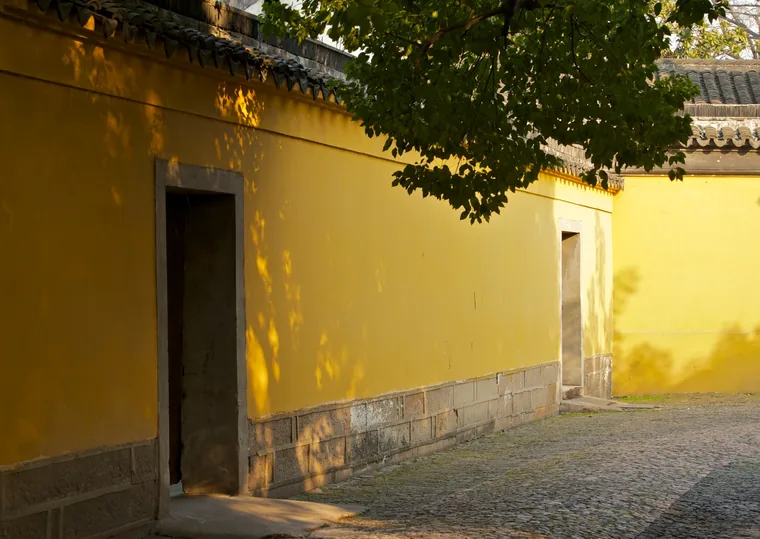
arhat Tang’s expression and the flowing water in the garden
The arhat hall unfolds in a field-shaped space, and the postures, folds of clothes and expressions of the Five Hundred Arhats vary. When facing these statues, you can pay attention to how people's emotions and joys are shaped; the identity of arhat is related to practice, and there is no need to regard a certain appearance as a judgment on one's future.
The four-sided Thousand Hands and Thousand Eyes Guanyin in the main hall are carved from camphor wood, with many hands and eyes linking compassion and wisdom. The four Guanyin statues here have their own spaces respectively with the seated statues of Guanyin Hall and the island group of sculptures in the main hall; the same cultural theme is richly expressed through different materials and layouts.
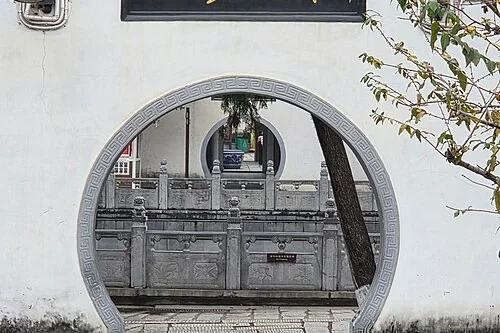
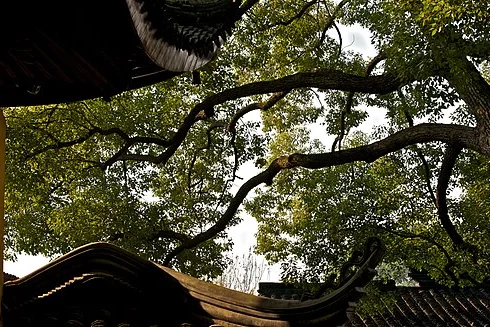
The pond, curved bridges and pavilions in the West Garden provide an additional layer of reflection after paying homage. Pool scenery can make people think about caring for life and cherishing the environment, but there is no need to put animals, touch cultural relics, or buy certain items to prove your intentions. Caring can also be patience and responsibility for specific lives in life.
Get to know arhat and Guanyin, let the care fall on specific people
Xiyuan Jiechuang Vinaya Temple is located in Suzhou, Jiangsu Province. The Arhat Hall and Thousand-Hand Guanyin are the distinct entrances to understanding. Arhat belongs to Buddhist practitioners, and Guanyin belongs to the theme of Bodhisattva worship; being in the same space does not mean that each statue can be explained by "Guanyin" or some kind of personal fortune.
For the stability of the family, you can write about daily life, recuperation and timely support from the care of the pharmacist and Guanyin; for the relaxation of the relationship, you can express listening and be less impatient; for the precepts and learning traditions, there is a specific cultural origin for keeping promises, reducing harm and continuous learning.
Xiyuan Temple in Suzhou and Guiyuan Temple in Wuhan both offer an introduction to arhat traditions, but keep the city, original connection and family customs in mind. To give thanks, recall the original place and promise. Customs such as counting arhats do not automatically include divination interpretation, fortune-telling or special rituals in the service.
Understanding the halls and the figures within them
| Palace or space | Figures and cultural roles |
|---|---|
| Main Hall | Shakyamuni Buddha, the Medicine Buddha, Amitabha Buddha |
| arhat upright | Guanyin and the Five Hundred Arhats |
| Guanyin Temple | Guanyin Bodhisattva and Shancai, Dragon Girl |
| Tianwang Palace | Maitreya, Skanda and the Four Heavenly Kings |
Main Hall
Principal figures: Shakyamuni Buddha, the Medicine Buddha, Amitabha Buddha
Shakyamuni, the Medicine Buddha and Amitabha Buddha respectively unfold the teachings of the Buddha and the clues of belief in the Oriental Glazed Pure Land and the Western Pure Land of Bliss. Shakyamuni connects enlightenment and wisdom, Bhaisajyaguru (the Medicine Buddha)'s twelve great wishes care about suffering and life needs, and Amitabha Buddha's infinite light and infinite life express light, peace and refuge. The three statues are juxtaposed, making peace, blessing, wisdom and care for life interconnected.
Xiyuan Jiechuang Vinaya Temple The main hall is mainly composed of three Buddhas carved in wood and gilded with gold, with Sakyamuni in the middle, the Medicine Master and Amitabha in rows, and there is a group of Guanyin Island sculptures on the back. The rich layers of Buddhism, the care of the pharmacist and the peace and happiness of the Pure Land form a rich layer, which makes the family well-being, learning, discernment and gratitude for the ancestors. Different people in the same temple make compassion and learning complement each other.
Associated wishes: You can express blessings to relatives, friends, studies, or people you miss based on the current situation, and pray for stability and wisdom. If your family members are affected by life in two places overseas, you can also write down the understanding you most hope to gain, so that your wishes retain the true relationship and details.
arhat upright
Principal figures: Guanyin and the Five Hundred Arhats
Thousand Hands and Thousand Eyes Guanyin is the visual expression of Guanyin (Avalokiteshvara)'s compassionate will: the many eyes symbolize seeing the different sufferings of all living beings, and the many arms symbolize the widespread relief. It turns the sound of rescuing the suffering into a visible image, so that family members can be healthy, have support in difficult situations, and have someone to take care of them, which has become a familiar prayer for the public. It also reminds people to cherish their ability to care for others. Arhat is a saint who has achieved success in Buddhist practice. The group of statues preserves the appearance of his disciples, practice, and inheritance of teachings. Guanyin and arhat therefore have their own identities.
The West Garden arhat hall is centered on Guanyin carved from camphor wood on four sides, and the Five Hundred Arhats each show their expression in the field-shaped space. The juxtaposition of extensive compassion and diverse practitioners allows viewing to not only care for relatives and friends, but also to think about one's own understanding, habits and growth. Understand the group portraits through the relationship between the characters, and you can cherish listening, asking for advice and self-examination, so that a prayer has the dual content of compassion and learning. The Thousand Arms and Thousand Eyes Guanyin in the arhat hall and the group of arhat statues have their own roles, and they should be recognized separately from the statues in the Guanyin hall separately to avoid treating different spaces as the same work.
Associated wishes: You can wish that your relatives and friends will be taken care of and have support in difficulties, and you can also pray that you will increase your awareness and patience. If a certain look resonates, you can write down your true feelings and let the viewing experience help you understand the situation, while your life choices still respect your specific needs. You can explain who needs to be heard most and what kind of help is most timely, allowing compassion to remain specific to the person and situation.
Guanyin Temple
Principal figures: Guanyin Bodhisattva and Shancai, Dragon Girl
The name Guanyin (Avalokiteshvara) is associated with hearing the suffering of all living beings and responding with compassion. Different images of Guanyin allow this relief and care to enter various life situations, so people often pray for the well-being of relatives and friends, safe travels, and help in difficulties. Compassion also includes understanding the needs of others, so family relationships, thoughts and gratitude can all become concrete and intimate thoughts in Guanyin worship. Shancai and Dragon Girl often serve as attendants in the Guanyin statues of Han Dynasty, accompanying the main figure as a close figure, forming a familiar picture of compassion and respect.
The seated wood carvings of the Guanyin Hall in the West Garden. The standing statues of Guanyin and Thousand Arms in the Arhat Hall each have their own artistic characteristics. The main image retains clues from the wood carvings of the Ming Dynasty, and the temples have layers of construction in later generations. Different images jointly express Guanyin's compassion, and also allow people to see how ancient statues and buildings continue separately. Wishes for family togetherness, care and understanding can be expressed by this close combination.
Associated wishes: You can write down the care that your family needs most, and pray for health, smooth care and peace of mind. If there is a misunderstanding or incomplete thanks, you can also write down what you want to say, so that the blessings can be heard with human touch and warmth.
Tianwang Palace
Principal figures: Maitreya, Skanda and the Four Heavenly Kings
Maitreya, free translation of Cishi, is the future Buddha in Buddhism. The familiar image of joy is associated with generosity, good deeds and future harmony. Wei Tuo is the heavenly general who protects the Dharma and the temple; the Four Heavenly Kings, Zhi Guo, Zeng Zeng, Guang Mu, and Duo Wen respectively contact the guardians of the four directions. Maitreya's compassion and the solemnity of the protector together form the theme of welcome and protection, giving cultural suspense to the new stage of auspiciousness, family harmony and safe entry and exit.
In the Temple of the Heavenly Kings in the West Garden, Maitreya, Wei Tuo behind and the Heavenly Kings on both sides spread out in front to pay homage. Compassion and support jointly introduce the subsequent themes of the Three Buddhas, Arhat and Guanyin. Generosity enables us to get along with each other, and support enables us to have a stable foundation for our studies. May our family be happy, have a safe journey, and have perseverance in our responsibilities, all of which can be understood from the identity of the character.
Associated wishes: You can wish peace to relatives and friends who are traveling far away, and also pray for patience and good luck for family relationships. If you are facing a new stage, it can mean that you most want things to be carried out steadily. I hope that those who are traveling with you will be considered and that your family will feel at ease.
Write down the concerns in culture as your own wishes
For the stability of the family, we are also willing to share the burden in time
Main Hall·Three Buddhas Care Theme
The Medicine Buddha's twelve great wishes care about suffering and daily happiness. The three Buddhas in the main hall and the Guanyin on the back allow care and compassion to echo each other. Xiyuan hopes for stability for his family, so he not only hopes for recovery, but also hopes that the support needed will be continued and that the feelings of his loved ones will be understood. Families in two places overseas can use these specific cultures to express their concerns during the distance.
You can write down what kind of care your family needs most at the moment, and pray for physical and mental stability and smooth care. You can also thank those who continue to accompany you, wishing them good health, and let the blessings remember both the giving and receiving care.
Example of wish expression
May your family live a stable life and be taken care of when needed. I also hope that I can be more patient in contacting and sharing, and not let my concern only stay in my heart.
Seeing the need, may mercy take action
arhat Tang·Thousand Hands and Thousand Eyes Guanyin
Surrounded by Thousand Hands and Thousand Eyes Guanyin expresses seeing and responding to a wide range of needs with multiple hands and eyes, and the arhat hall also presents introspection and understanding with group portraits of practitioners. The combination of West Garden enables Mercy to care about others and how to learn to listen and understand the situation. May relatives and friends be helped to cherish both good deeds and the ability to care. Seeing needs also includes the caregiver's fatigue, the loved one's feelings of not being able to speak easily, and one's own willingness to respond in a timely manner.
Write down the people you care about, the care you need and the companionship you want to pass on; if you want to express your gratitude, write down an experience in which you have received help.
Example of wish expression
I hope that my family will be listened to when they are in need, and receive appropriate care when they are tired; I also hope that the caregivers will work less hard, and that I can respond to the needs of my loved ones in a timely manner, and turn gratitude into ordinary concern.
Get along well with each other, so that those close to you will be less aggrieved.
Tianwang Hall and Guanyin Hall·Kuanhe Listening Theme
Maitreya carries generosity and hope as a Tzu-shi and the future Buddha, Guanyin's compassion and attention to hearing different situations. These salute themes in the West Garden allow families to not only hope for harmony in getting along, but also to cherish the feelings of those close to them, hoping that there will be less impatience and misunderstandings and a gentle response. The same can be said for relationships in a new environment or life in two places.
You can write down a relationship that you want to cherish the most, and pray that each other can communicate patiently and listen to the difficulties. If you have gratitude or apology, you can also use familiar words to express it, so that your expectation of continuing to be together can be understood by both parties.
Example of wish expression
May we have something to say. May I slow down a little, listen to the whole sentence, and express my concern with understanding and respect.
Guard the promise and continue to learn
Jie Zhuang Temple · Precepts and learning traditions
The Vinaya culture of Jiedang Vinaya Temple attaches great importance to precepts and practice, and arhat, as a practitioner, maintains the appearance of continuous practice. Therefore, the commitment to guardianship and study can be connected: I hope that my words and deeds can be reliable and my understanding will be deeper. I also hope to be guided by teachers and friends, so that goodwill can continue through daily accumulation. Family, work and professional studies can all enter into this wish.
You can write down an ongoing commitment or study direction, and pray for concentration, patience, and a good relationship with a good teacher. You can also thank the people who have given you reminders, and hope that you will cherish your trust and let what you have learned become support for being kind to others.
Example of wish expression
May I take seriously the exercises I can complete every day, and keep what I promise others; be willing to ask for advice when I encounter shortcomings, and let growth fall into my life.
In the image, continue to get to know each other Xiyuan Jiechuang Vinaya Temple
Reject nonsense and take you to Xiyuan Temple in Suzhou in 5 minutes
Follow the guided tour to learn about the space and features of Xiyuan Jiechuang Vinaya Temple in Suzhou.
南京张小品 · Bilibili · in Bilibili Watch original video
This is an explanation about Xiyuan Temple in Suzhou; the three Buddhas, the arhat hall and the different Guanyin statues each have their own positions and themes. The expression of prayer is combined with the main text, and folk sayings are not regarded as a guarantee of results.
If playback is restricted by the network or platform, the original video entrance can be used.
Commissioned services and fees
$221 USD · Basic service fee
At Saionji Temple, make a wish to live a caring, tolerant and conscientious life
The basic commission includes tickets, incense, Buddha worship and making wishes; pictures and video visit records correspond to the specific temple, the selected offerings and this commission, and are delivered privately.
You can also entrust your family together. It is recommended that there be no more than 3 people per order, so that you can express your feelings one by one.
A private visit record will be provided 1-2 working days after the service is completed.
Anxin provides entrusted services independently and does not represent the temple. Special pujas, study camps, ordination, specific arhat numbers and special garden experiences are not automatically included in the basic entrustment.
Select your wish, desired date and offerings and submit the request, then add official customer service for verification. Submission does not mean successful reservation, payment or seat reservation.
Yes Submit request and confirm with our team . There is no need to log in for consultation; the appointment has not been successful after submission.
About Xiyuan Jiechuang Vinaya Temple , you may also want to know
Are Xiyuan Temple and Jiezhuanglu Temple in the same place?
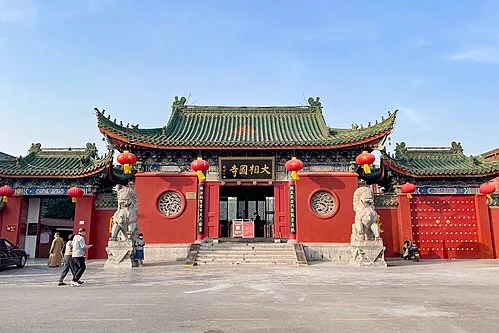
This page refers to Xiyuan Jiechuang Vinaya Temple in Xiyuan Lane, Liuyuan Road, Suzhou, referred to as Xiyuan Temple; do not confuse it with temples of the same name in other cities.
Are the Three Buddhas in this main hall the Trikaya Buddhas?
This group brings Shakyamuni, the Medicine Buddha and Amitabha together as Buddhas of different realms. It is distinct from the Trikaya Buddhas, which express Dharmakaya, Sambhogakaya and Nirmanakaya.
Are the Thousand-Armed Guanyin and the Guanyin Hall Seated Statue the same work?
No. The standing Thousand-Hand Statue in Arhat Hall, the seated statue in Guanyin Hall and the island group sculptures in the main hall each have their own shapes and spaces.
Is counting an arhat with an angry face unlucky?
Different expressions are part of the art of sculpture and should not be used to judge personal good or bad; you can understand your own emotions and situation from watching.
If I want to express my feelings about caring for a student, do I have to release it myself?
No need to. Care can be expressed through harm reduction, responsible care and cherishing the environment. Specific religious activities should be communicated according to actual arrangements.
Does the basic commission include participation in graduate courses or training camps?
Not included automatically. Teaching, study camps and ordination each have their own objects and arrangements, which need to be explained and confirmed separately.
Both Xiyuan Temple and Guiyuan Temple have arhat halls. What should you look for when choosing?
First check the locations in Suzhou and Wuhan, and then look at your connection with the temple, family habits, and the temples you want to know more about. Similar arhat culture does not mean that the two original wishes are directly interchangeable.
I want to express my gratitude to nursing students. Do I need to purchase additional items to complete it?
You can first write about reducing harm, taking care of your family, and cherishing your helpers. Optional offerings are chosen according to one’s wishes, and the solemnity of ordinary Buddha expressions is not judged by the number of additional purchases.