Quick understanding
- Which White Horse Temple is this page on?
This is White Horse Temple in Luoyang, Henan, with a founding tradition dating to 68 CE. It is distinct from temples of the same name in other cities; their buildings and figures are not interchangeable.
- Which principal figures are venerated at White Horse Temple?
Different halls have different combinations: the Great Buddha Hall is centered on Shakyamuni, the Main Hall is for the Three Buddhas, the Jieyin Hall is for the Three Saints of the West, the Pilu Pavilion is for the Three Saints of Huayan; the Heavenly King Hall also has Maitreya, the Four Heavenly Kings and Wei Tuo.
- What is ‘Shiyuan Ancestral Court’?
This title emphasizes the role of White Horse Temple in the early introduction, translation and dissemination of Buddhism. The existing temple preserves the history of continuous construction by later generations.
- Location
- Luoyang, Henan
- History of temple construction
- The eleventh year of Yongping in the Eastern Han Dynasty (68 years)
- Cultural status
- An important ancestral home for the introduction of Buddhism and the tradition of translating scriptures
- Hall reading
- Multiple courtyards on the central axis and different combinations of three saints
At White Horse Temple, put your concerns to rest
In addition to the Buddhist propagation and scripture translation and memory of White Horse Temple, the combination of the Western Three Saints, Buddhas, Bodhisattvas and disciples can also help you organize your family care, learning and growth, and thoughts and gratitude.
Family peace and care
Understand the Hall of Correspondence from the mind of compassion and care.
Continue to learn →Learning and mentorship
Understanding and seeking knowledge from the spread of Buddhism, translation of scriptures and the relationship between Buddha and his disciples.
Continue to learn →Thoughts and thanks
Write clearly how you miss your loved ones, and then understand the scope of the agreement.
Continue to learn →The meaning of ‘interpretation of the source’ lies between communication and translation
The history of White Horse Temple usually begins in the 11th year of Yongping in the Eastern Han Dynasty. The narrative formed around Shemo Teng, Zhu Falan and the White Horse Carrying Sutra connects travel, translation and the spread of Buddhism. To understand this period of history, we must not only recognize the position of temples in the memory of Han Buddhism, but also separate ancient legends from architectural artifacts that can still be observed today.
Translating the Bible is not just about changing words into another language. When new concepts enter local life, they need to go through explanation, learning and long-term communication. The White Horse Temple is therefore suitable as a gateway to understanding the encounter between civilizations: how people approach unfamiliar ideas and how they find expression in new contexts.
Qingliang Terrace has long been connected with the memory of eminent monks living there, translating and storing scriptures. The story about Emperor Ming of the Han Dynasty studying in the summer is of a legendary nature; the existing courtyard and Pilu Pavilion on the platform are architectural spaces that can be read in detail. These two clues together constitute its cultural thickness, rather than replacing each other.
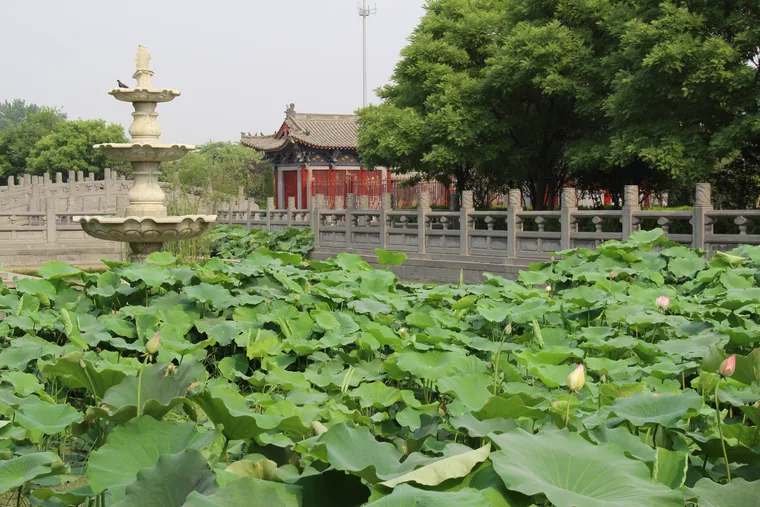
Follow history and understand White Horse Temple
- 68 years
The historical starting point of temple building in the Eastern Han Dynasty
White Horse Temple The history of building the temple can be traced back to the 11th year of Yongping, and it has become an important memory of the early introduction of Buddhism to China.
- Yuan Dynasty
Clues to the construction of Daeungjeon Hall
The architectural history of Daxiong Hall can be traced back to the Yuan Dynasty, and it was rebuilt in the Ming and Qing Dynasties.
- Ming Dynasty
Multiple courtyard pattern finalization
The central axis courtyard with the Buddhist hall as the main body forms an important architectural foundation for the existing temple.
- During the Guangxu Period of the Qing Dynasty
Reconstruction of Jieyin Hall
Jieyin Hall was rebuilt after a Tongzhi-period fire and retained its Western Triad theme.
- 20th century
Important statue relocation protection
A batch of dried lacquer statues with crotch seals were transferred from the Forbidden City in Beijing and have become an important part of today’s understanding of White Horse Temple’s statue art.
The Great Buddha Hall and the Main Hall are adjacent to each other, but they are not the same hall.
The existing layout of White Horse Temple is based on the multiple courtyards renovated in the Ming Dynasty. The central axis unfolds the Tianwang Hall, the Great Buddha Hall, the Daxiong Hall, the Jieyin Hall and the Pilu Pavilion on the Qingliang Terrace in sequence. The Great Buddha Hall and the Main Hall with similar names are actually two buildings: the former uses Sakyamuni, his disciples, and Bodhisattvas to form a sermon scene, and the latter uses the Three Buddhas to form a worship center.
Shakyamuni, the Medicine Buddha and Amitabha in the main hall represent different Buddha realms. Dry-lacquer sculptures are built up in layers of lacquer, ramie and other materials. Important images were transferred from Beijing's Palace Museum in the twentieth century, connecting devotion, craft and the movement of cultural objects in today's hall.
It is also worth distinguishing the three groups of ‘Three Saints’: the Three Saints of Sakyamuni in the Great Buddha Hall are connected with Sakyamuni, Manjusri, and Samantabhadra; the Three Saints of the West in the Jieyin Hall are Amitabha Buddha, Guanyin, and Mahasthamaprapta; and the Three Saints of Huayan in the Pilu Pavilion are centered on Vairocana Buddha. The names are similar, and the doctrinal relationships and worship spaces they reflect have their own belongings.
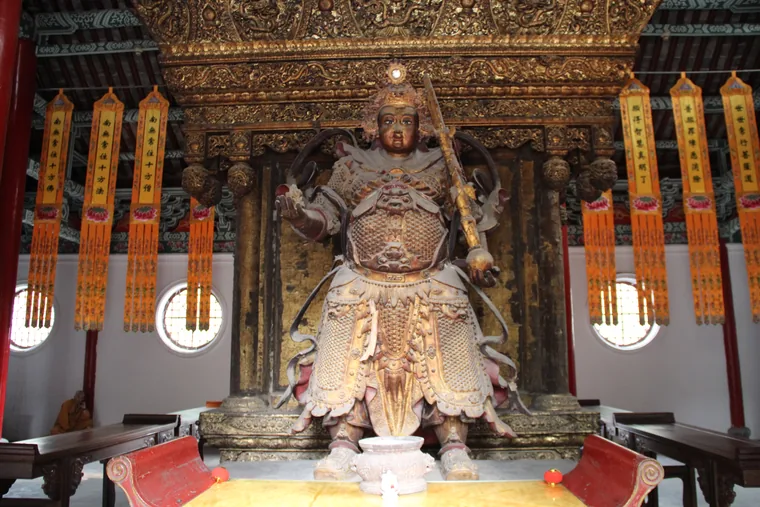
From the expression of the Buddha statue to the specific content of the wish
The image of Maitreya in front of the Temple of the Heavenly King brings acceptance and openness to the first space upon entering the temple; the statue of the protector is associated with protection and protection. Continuing towards the Buddhist temple, one encounters different expressions about practice, compassion and the Pure Land. Understanding these themes reveals the structure of White Horse Temple's beliefs better than assigning each temple to a practical benefit.
The Medicine Buddha is associated with bodily and mental wellbeing, Amitabha with the Pure Land, Guanyin with compassion and Mahasthamaprapta with the strength of wisdom. Express concerns for family, remembrance after loss or hopes for the future in your own words rather than copying wording unrelated to your circumstances.
White Horse Temple also reminds people to cherish the specific labor behind inheritance: translation, construction, sculpture and repair all require the investment of generations. Expressing gratitude to teachers, wishing oneself to seek knowledge honestly, or passing on the help one has received to others are all sentiments that echo the ancestral culture.
Understand the different wishes in White Horse Temple from different temples
The names of the Great Buddha Hall, Daxiong Hall, Jieyin Hall and Pilu Pavilion are similar, but the combination of statues has different points of recognition. When reading White Horse Temple, you can clearly understand the relationship between Buddha, Bodhisattva, and disciples in the order of "temple name—main deity—accompanying statue—cultural meaning"; the same wish for family peace can gain a more concrete understanding.
If you choose between White Horse Temple and Shaolin Temple, you can first look at the two main historical lines: White Horse Temple is connected with the introduction of Buddhism and the translation and spread of scriptures, while Shaolin Temple is known for its Zen ancestral court and Zen martial arts culture. Regarding the pursuit of knowledge, mentorship, and personal growth, both are worth reading, but they do not need to be written in the same monastery interchangeably.
If you want to express your longing for your deceased loved one, you can first organize the people you miss, the memories you cherish, and the goodwill you hope to continue. There are different arrangements for daily salutations and special recommended pujas, and the latter are not automatically included in the basic services; please explain your intentions first, and then check the actual service items.
Understanding the halls and the figures within them
| Palace or space | Figures and cultural roles |
|---|---|
| Tianwang Palace | Maitreya, the Four Heavenly Kings and Skanda |
| Big Buddha Hall | Shakyamuni, Manjusri, Samantabhadra, Ananda, Kasyapa, etc. |
| Daeungjeon | Shakyamuni, the Medicine Buddha, Amitabha Buddha and protector, arhat |
| Jieyin Hall | Amitabha Buddha, Guanyin and Mahasthamaprapta Bodhisattva |
| Pilu Pavilion | Vairocana Buddha, Manjushri and Samantabhadra Bodhisattva |
Tianwang Palace
Principal figures: Maitreya, the Four Heavenly Kings and Skanda
Maitreya, free translation of Cishi, is the future Buddha in Buddhism. The familiar image of joy is associated with generosity, good deeds and future harmony. Wei Tuo is the heavenly general who protects the Dharma and the temple; the Four Heavenly Kings, Zhi Guo, Zeng Zeng, Guang Mu, and Duo Wen respectively contact the guardians of the four directions. Maitreya's compassion and the solemnity of the protector together form the theme of welcome and protection, giving cultural suspense to the new stage of auspiciousness, family harmony and safe entry and exit.
White Horse Temple The first major hall on the central axis has Maitreya facing it, with the Four Heavenly Kings on both sides, and Wei Tuo behind to form an order of statues; the Maitreya statue is also related to the art of dry lacquer in the temple. This welcoming space makes people who are new to the ancestral home feel not only joyful and close, but also feel the solemnity of protection. A smooth new life, a happy family, and safe travels can be understood from the two cultural clues of compassion and protection.
Associated wishes: You can wish for good luck when you go abroad, move to a new city, or first arrive in a new city. You can also pray for stability and harmony for your family. When facing interpersonal differences, you can express your hope that you will be more tolerant, communicate more gently, and at the same time cherish the care given by those around you.
Big Buddha Hall
Principal figures: Shakyamuni, Manjusri, Samantabhadra, Ananda, Kasyapa, etc.
The Great Buddha Hall is centered on Shakyamuni, with Manjusri and Samantabhadra accompanying each other, constituting the Three Saints of Sakyamuni; Ananda, Kasyapa and other disciples present the relationship between listening and inheritance. Sakyamuni represents enlightenment and teaching, Manjusri is known for his wisdom, and Samantabhadra emphasizes broad aspirations. The different identities of the Lord Buddha, Bodhisattvas and disciples jointly connect the understanding of teachings, inquiry and practice into one teaching scene.
The second principal hall at White Horse Temple presents Shakyamuni holding a flower, connected with a tradition of teaching without words, with Guanyin behind. These images connect awakening and compassion. Alongside Qingliang Terrace's translation history, they give context to learning, professional growth and gratitude towards teachers.
Associated wishes: You can place your thoughts and judgments on Manjusri, express your willingness to persevere in learning and good deeds to Samantabhadra, and express your respect to the Buddha and the lineage of his disciples. You can also write a solemn and specific wish to express your gratitude to teachers, relatives, or people who have helped you adapt to life abroad.
Daeungjeon
Principal figures: Shakyamuni, the Medicine Buddha, Amitabha Buddha and protector, arhat
Shakyamuni, the Medicine Buddha and Amitabha Buddha respectively unfold the teachings of the Buddha and the clues of belief in the Oriental Glazed Pure Land and the Western Pure Land of Bliss. Shakyamuni connects enlightenment and wisdom, Bhaisajyaguru (the Medicine Buddha)'s twelve great wishes care about suffering and life needs, and Amitabha Buddha's infinite light and infinite life express light, peace and refuge. The three statues are juxtaposed, making peace, blessing, wisdom and care for life interconnected.
White Horse Temple The Main Hall is dominated by three Buddhas, with protectors in front and arhats on both sides, so that the roles of the main deities, guardians and practitioners are spread out in one hall. The history of the production and relocation of the dried lacquer statuettes also connects faith and the preservation of cultural relics. Understanding the life care of the pharmacist, the teachings of Sakyamuni, and the pure land image of Amitabha can give you a clearer focus on the health of your family, your own direction, or your gratitude to your relatives and friends.
Associated wishes: For elderly parents, you can pray for longevity and health, and for those who are experiencing difficulties, you can wish for physical and mental stability and support in life. When you are making an important decision, you can also express your wish to increase your happiness and wisdom, and be less confused, so that your family and personal growth wishes can be united in a respectful manner.
Jieyin Hall
Principal figures: Amitabha Buddha, Guanyin and Mahasthamaprapta Bodhisattva
Amitabha Buddha, Avalokitesvara and Mahasthamaprapta Bodhisattva in the Hall of Enlightenment constitute the Three Saints of the West, connecting Pure Land beliefs and aspirations.
This group of statues is different from the combination of the main deity and Bodhisattva in Pilu Pavilion, and also different from the relationship between Buddha, disciples and Bodhisattvas in the Great Buddha Hall. Recognizing the combinations helps to understand the religious themes of different temples, rather than treating them as the same group just because three images appear in them.
Associated wishes: The salute can be understood from the perspective of peaceful abiding intention, compassionate care and thoughts and thanks; if it involves special pujas, the actual arrangements need to be confirmed separately.
Pilu Pavilion
Principal figures: Vairocana Buddha, Manjushri and Samantabhadra Bodhisattva
Vairocana Buddha, Manjusri and Samantabhadra Bodhisattva are collectively known as the Three Saints of Huayan. Vairocana is associated with the Dharmakaya and perfect enlightenment, Manjusri represents the wisdom of knowing things, and Samantabhadra emphasizes putting what you know and want into practice with his vast aspiration. This combination connects awareness, wisdom and action. It is not only suitable for academic studies and literary thoughts, but also can carry long-term goals, responsibility and good wishes.
Pilu Pavilion stands in the Qingliang Terrace courtyard, associated with memories of scripture translators She Moteng and Zhu Falan. The figures' themes of Dharmakaya, wisdom and practice meet the temple's translation history: new teachings must be understood and lived. Wishes for knowledge, wider perspectives and understanding across cultures can connect with this background.
Associated wishes: You can pray for a deeper understanding and meet a good mentor when studying abroad, or you can pray for mutual respect and gentle communication for a cross-cultural family. You can also pray to Samantabhadra that your good wishes will last and that what you have learned can help others, so that your intention to learn about the new world also includes a sense of responsibility.
Write down the concerns in culture as your own wishes
Family health and stability care
Daeungjeon · the Medicine Buddha and the Three Buddhas
Family wellbeing can concern care at home or support between loved ones living apart. White Horse Temple's halls present compassion, protection and aspiration as cultural settings for that care. Learn about the particular figures, then describe your relative's actual circumstances.
First explain the family you care about and the care you hope to give, and then write down the changes you hope to happen, and the actions you are willing to take seriously. You can use the example sentences below as a starting point and replace them with expressions that fit your life.
Example of wish expression
May my family live a stable life and be cared for and supported when facing difficulties; may I remember each other’s needs and implement gratitude and care in my daily life.
Seeking knowledge, mentorship and new understanding
Great Buddha Hall·Three Saints of Sakyamuni; Memory of Qingliangtai Bible Translation
The three saints of Sakyamuni in the Great Buddha Hall connect the Buddha’s teachings, the wisdom of Manjusri and the Samantabhadra’s vows. The statues of disciples also retain the relationship between hearing and inheritance; the memory of Qingliangtai’s translation of scriptures allows these themes to enter the ancestral history of White Horse Temple. The desire to study and be mentored is therefore not only about a grade, but also about how to gain understanding, cherish teachings, and make what you learn valuable in a new environment.
You can write down the direction you are studying, the doubts you hope to overcome, and pray for clarity of thought and patient guidance. You can also thank a teacher or someone who helped you overcome the language barrier. May you learn to be honest, understand more deeply, and remember to share your beneficial experiences.
Example of wish expression
Thanks to the teacher who introduced me to the new world. May I continue to learn with humility, without giving up just because I don’t understand something, and without pretending that I already understand it.
Missing the deceased and peace of mind
Jieyin Hall·Three Saints of the West
Amitabha Buddha, Guanyin and Mahasthamaprapta in the Hall of Acceptance combine the brightness, happiness, compassion and wisdom of Pure Land belief together. The image of "receiving and guiding" carries thoughts about life's destiny, so people often use salute to express their remembrance, blessings and unspoken gratitude. For those who are unable to say goodbye in time due to distance, this kind of cultural sustenance can also accommodate a period of solemn longing.
You can write down the names of your loved ones, a small thing you remember together and the gratitude you want to say. May this gratitude be preserved tenderly. You can also wish your family members who are still living together that their hearts will gradually stabilize and that they can take care of each other; let the memorial have its own rhythm, without the need to compress complex emotions into one sentence and put them down immediately.
Example of wish expression
May our loved ones be remembered tenderly in our memories. Thank you for taking care of me in those ordinary days, and hope that the family members left behind will slowly settle down.
Living in different places and understanding each other
Pilu Pavilion·Huayan Three Saints; White Horse Temple cultural exchange tradition
White Horse Temple's translation memory tells how thoughts transcend language and geography; Pilu Pavilion's Huayan Sansheng provides religious clues for understanding and action through enlightenment, Manjushri wisdom and Samantabhadra practice. When the two meet, the prayer of living in a different place can be as much about adapting to a new environment as it is about respecting people from different backgrounds and turning what you learn into sincere exchanges.
You can explain the language, academic or family changes you are adapting to, and pray for mutual understanding and good luck and help. If you are from a different culture than your partner or companion, you can also write down your most cherished understanding and the arrangements you hope to make stable together, so that you can cherish your hometown and your new life at the same time.
Example of wish expression
I hope that I can keep an open heart in the new city, be able to express my needs clearly, and treat people from different places sincerely.
In the image, continue to get to know each other White Horse Temple
In eight minutes, I will take you to the White Horse Temple in Luoyang from a first-hand perspective and tell you the route and precautions!
Walk into the White Horse Temple in Luoyang from a first-hand perspective and observe the relationship between the courtyard and the temple.
淼淼说洛阳 · Bilibili · in Bilibili Watch original video
The author uses a field trip to introduce the White Horse Temple route and the visiting experience at that time, which can help understand the central axis space in the text.
If playback is restricted by the network or platform, the original video entrance can be used.
Commissioned services and fees
$225 USD · Basic service fee
Bring your heart to Luoyang Shiyuan Ancestral Court
The basic commission includes tickets, incense, Buddha worship and making wishes; pictures and video visit records correspond to the specific temple, the selected offerings and this commission, and are delivered privately.
You can also entrust your family together. It is recommended that there be no more than 3 people per order, so that you can express your feelings one by one.
A private visit record will be provided 1-2 working days after the service is completed.
Anxin is an independent commissioning team and does not represent White Horse Temple. Ordinary basic entrustment does not automatically include salvation, special rituals or special temple ceremonies, and must be confirmed separately when related needs are involved.
Select your wish, desired date and offerings and submit the request, then add official customer service for verification. Submission does not mean successful reservation, payment or seat reservation.
Yes Submit request and confirm with our team . There is no need to log in for consultation; the appointment has not been successful after submission.
About White Horse Temple , you may also want to know
White Horse Temple Are all the existing buildings left over from the Eastern Han Dynasty?
No. The temple was founded in AD 68. The surviving layout mainly reflects later rebuilding, especially during the Ming dynasty; some buildings were repaired in the Ming, Qing and modern periods.
What is the difference between Daibutsujeon and Daeungjeon?
They are two adjacent halls on the central axis. The Great Buddha Hall has Sakyamuni, his disciples, and Bodhisattva as the main theme of the Dharma, while the Main Hall has Sakyamuni, the Medicine Master, and the Three Buddhas as the main group.
Are the Three Saints of the West and the Three Saints of Huayan the same group?
No. The three Western saints in the Jieyin Hall are Amitabha Buddha, Guanyin, and Mahasthamaprapta; the three Huayan saints in Pilu Pavilion are Vairocana Buddha, Manjusri, and Samantabhadra.
Why are the dried lacquer sculptures in a piece of paper worth seeing?
It is shaped with materials such as lacquer and muslin, and the craftsmanship is different from ordinary clay sculptures. The important statues in the temple also have a history of being moved and protected, so they should be understood from both the art and cultural relic preservation aspects.
What is the relationship between Qingliangtai and Bible translation?
Qingliang Terrace is associated with the residence of two early eminent monks, their translation of scriptures, and the subsequent tradition of Tibetan scriptures. The content about Emperor Ming of the Han Dynasty studying during the summer is of a legendary nature and should be understood separately from the existing buildings.
Is it possible to express remembrances of a deceased loved one at White Horse Temple?
You can first consult about expressions of respect, thoughts and thanks in independent commissions. It is different from the temple's special salvation ritual. The specific needs, visit record and service scope should be confirmed before arrangement.
White Horse Temple and Shaolin Temple are both in Henan. How to choose for your studies?
You can first compare the cultures you want to know about: White Horse Temple focuses on the spread of Buddhism, scripture translation and different combinations of statues, while Shaolin Temple links Zen learning, ancestors and long-term practice. If you have already contacted the original temple, priority will be given to the original wish; you can also choose after reading two pages separately.
To express condolences to the deceased family members, does the basic commission include super recommended puja?
The basic commission is arranged according to the listed items and does not automatically include special rituals or memorial tablets. You can write down your thoughts and thanks first, and then ask customer service to confirm whether the specific request is within the scope of existing services.